
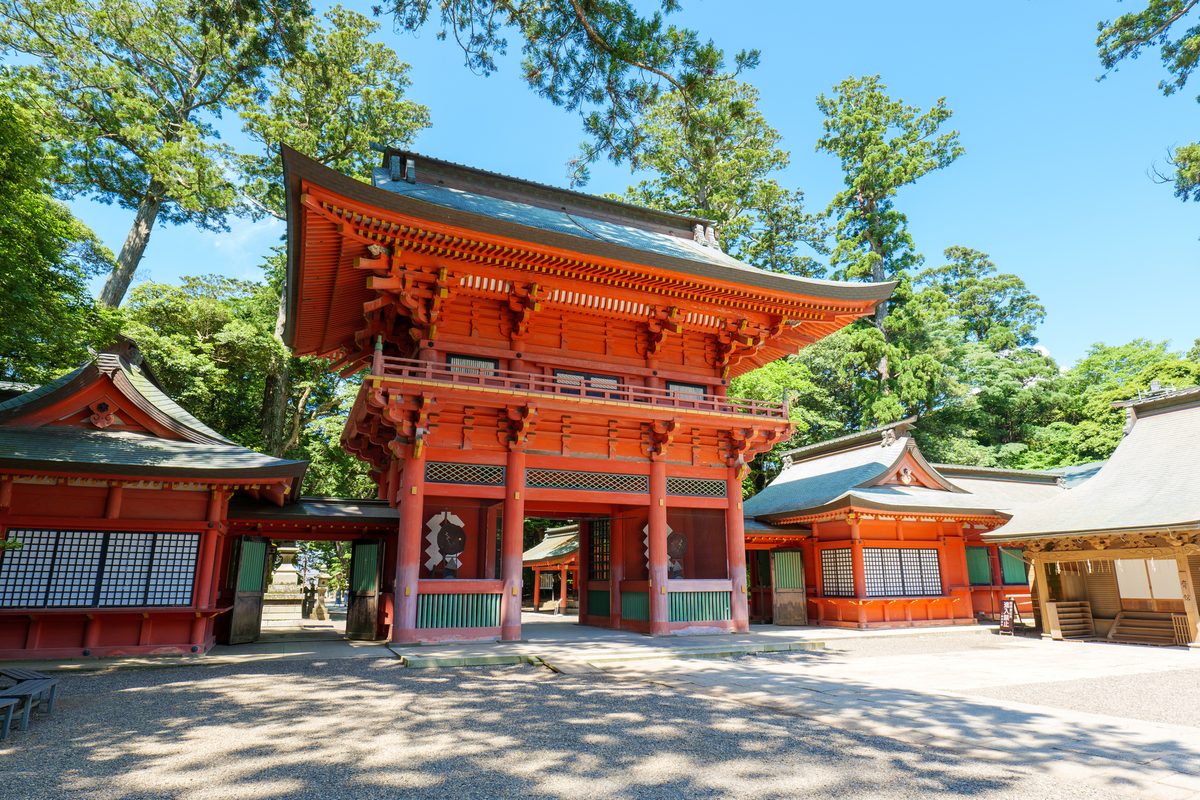
Kashima Jingu
One of the oldest and most important shrines in eastern Japan — the patron deity of martial arts and military victory, Kashima Shinkage-ryu (Japan's oldest surviving sword school) was born here. The approach through the Kashima Forest is 2km of cedar trees 500–1,000 years old, and the ancient stone lanterns lining it are covered in centuries of moss.
1–1.5 hours
Free
Shrine grounds: 24 hours; inner sanctuary: 8:30–16:30; Treasure Hall: 8:30–16:30
Year-round
Kashima Jingu Station on Kashima Rinkai Railway (approx. 75–80 min from Mito)
Location
Why Visit
- 1
Birthplace of Kashima Shinkage-ryu — Japan's oldest surviving sword martial art
- 2
2km cedar forest approach with lanterns covered in 500 years of moss
- 3
The deer park beside the shrine — the deer are sacred messengers of the war deity
Local Tips
One of Japan's most ancient shrines with a 2,600-year history. The approach path of giant cedars is one of the most impressive in the country. The treasure hall contains a rare straight sword (chokuto) and the stone that legend says suppresses earthquakes. Combine with Naritasan Shinshoji and Sawara historic district for a full Northern Chiba day.
Add to your AI itinerary
Let AI build a multi-day trip around this spot.
Advertisement
More in Ibaraki
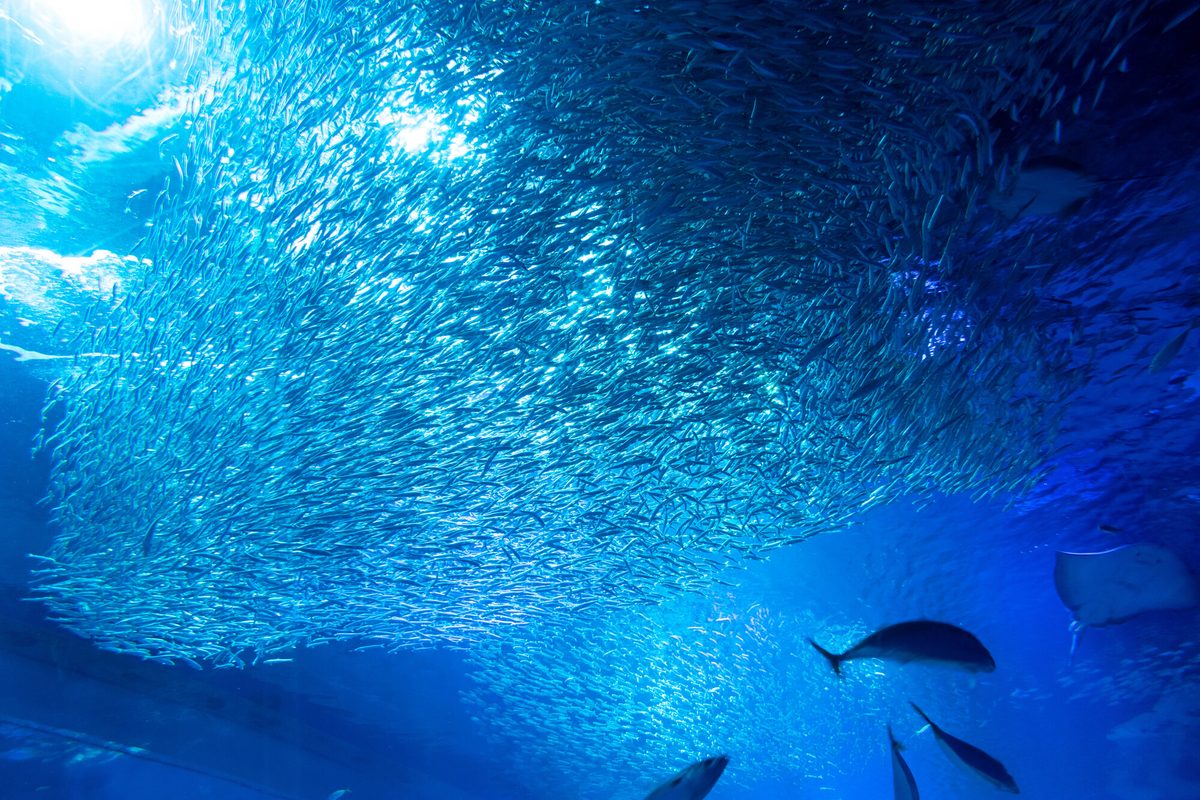
Aqua World Ibaraki — Oarai
Japan's largest aquarium by number of shark species — 58 varieties of shark in a massive open-ocean tank, including whale sharks and sand tiger sharks. The facility's research programs are conducted in collaboration with Hitachi marine science and the exhibits explain the Pacific Current ecosystems of Ibaraki's coastline.
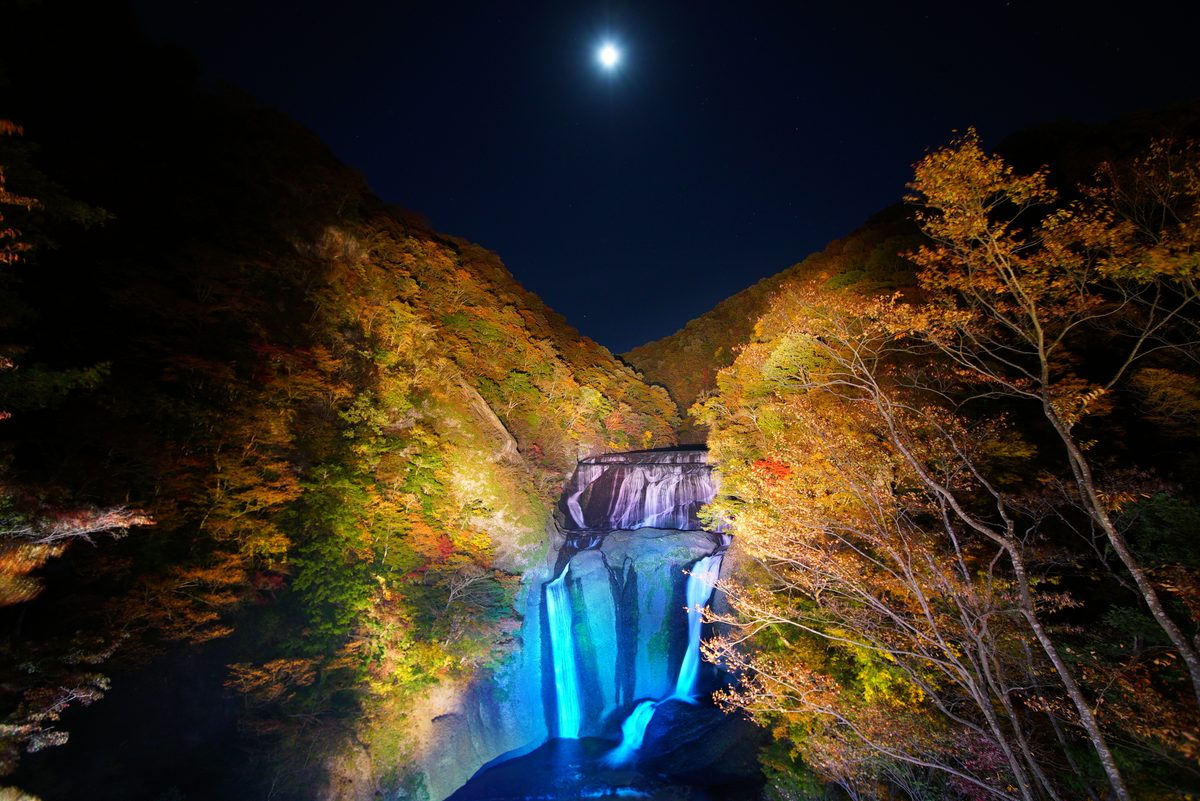
Fukuroda Falls
One of Japan's three great waterfalls — a four-tiered cascade of 120 metres total height in a narrow gorge accessible through a 110-metre observation tunnel bored directly into the cliff face. Each season transforms the falls: spring snowmelt rages white, summer shows the full green gorge, autumn turns the cliff trees red, and winter freezes the tiers into blue ice columns.
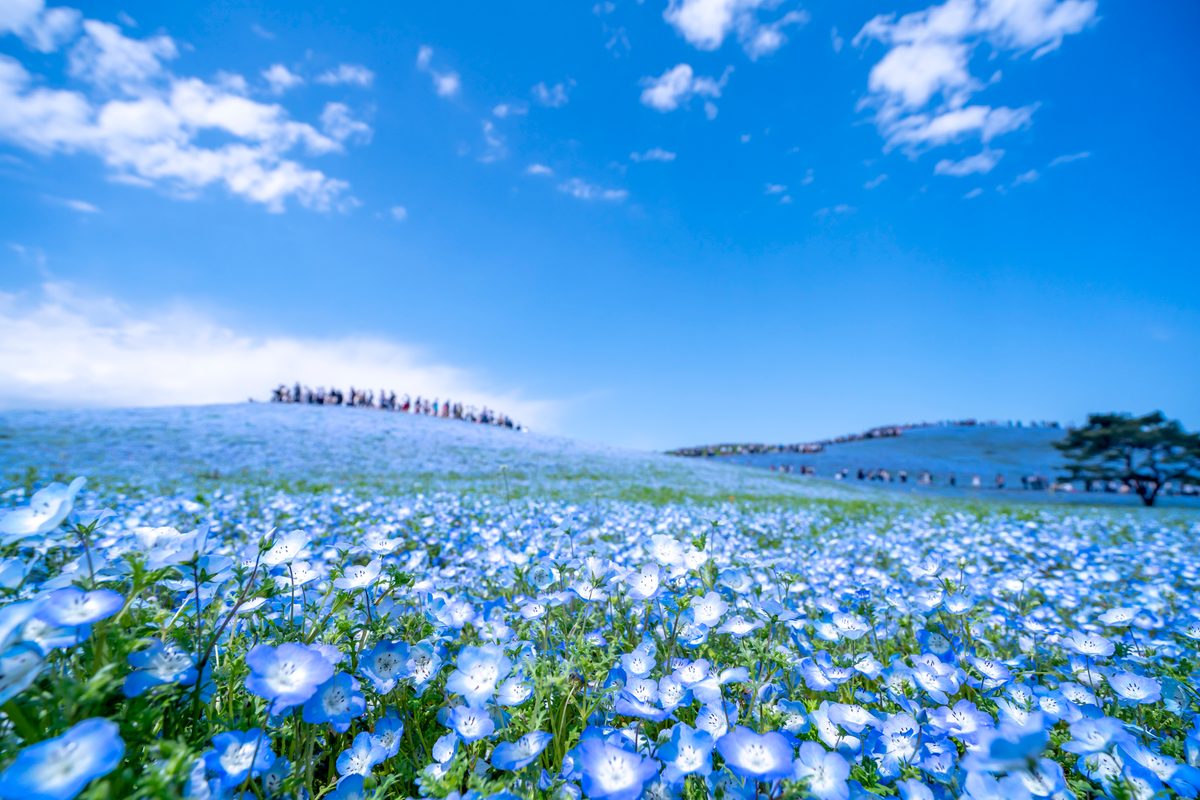
Hitachi Seaside Park
Japan's most photographed seasonal landscape — approx. 5.3 million nemophila (baby blue eyes) covering an entire hillside in mid-May, turning it an ocean-like blue that contrasts with the Pacific behind. The same hill turns scarlet with 30,000 kochia (fireweed) bushes in October. One of the top flower spectacles in Asia.