
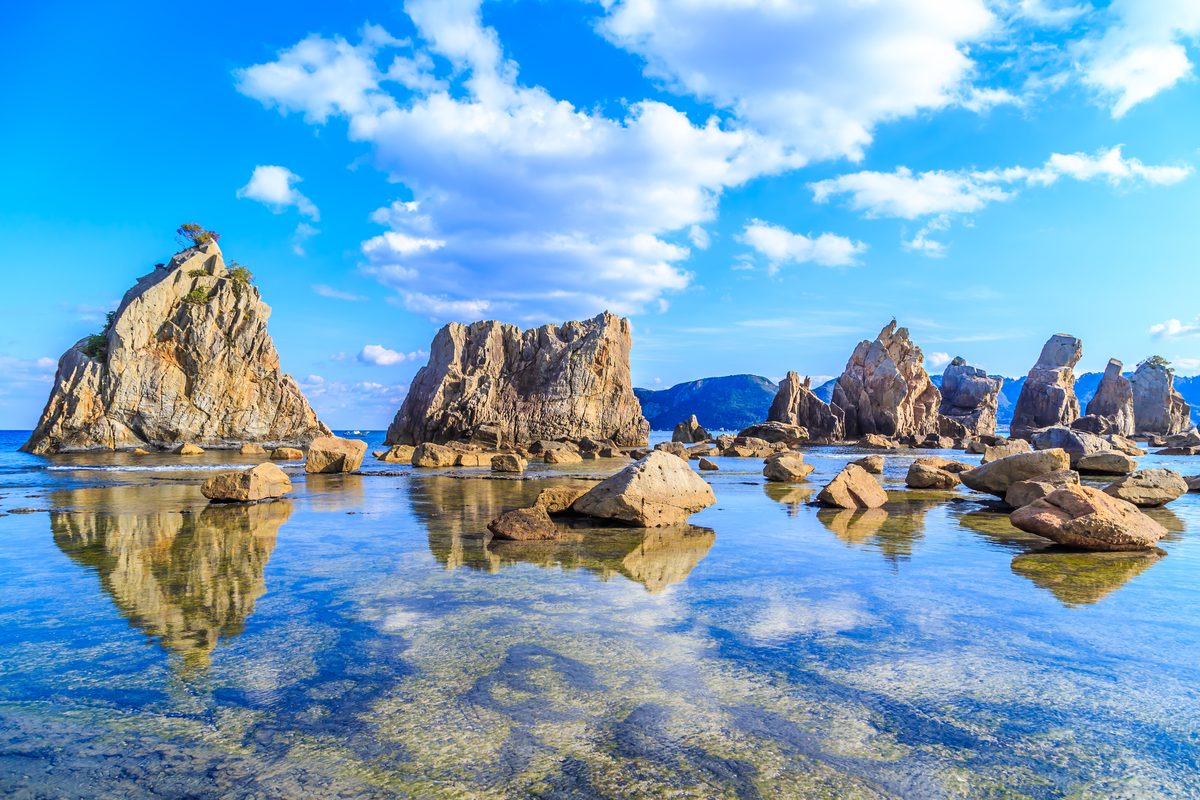
Hashigui Rocks
A row of 40 eroded basalt sea stacks stretching 850 metres into the Pacific — named "bridge piles" because legend says the Buddhist monk En no Gyoja tried to build a bridge to Oshima Island overnight and the cocks crowed before it was finished. The rocks form a near-perfect line at low tide and are spectacular at sunrise.
45–60 min
Free
Always open (outdoor coastal area)
Year-round
Bus from Kushimoto Station (JR Kisei Line, 10 min)
Location
Why Visit
- 1
40 basalt stacks in a nearly straight line stretching into the Pacific — geological mystery
- 2
The most southern point of Honshu island is a 10-minute drive away at Cape Shiono-misaki
- 3
Sunrise over the Pacific from the rocks is rated among Japan's top coastal sunrise spots
Local Tips
The rocks are believed to be the leftover pilings of a bridge built by Kobo Daishi in a single night. Sunrise and sunset are both spectacular, but the line of rocks is particularly photogenic at low tide. Combine with Cape Shio-no-Misaki (Japan's southernmost point on Honshu) 20 min south for a full coastal Wakayama day.
Add to your AI itinerary
Let AI build a multi-day trip around this spot.
Advertisement
More in Wakayama
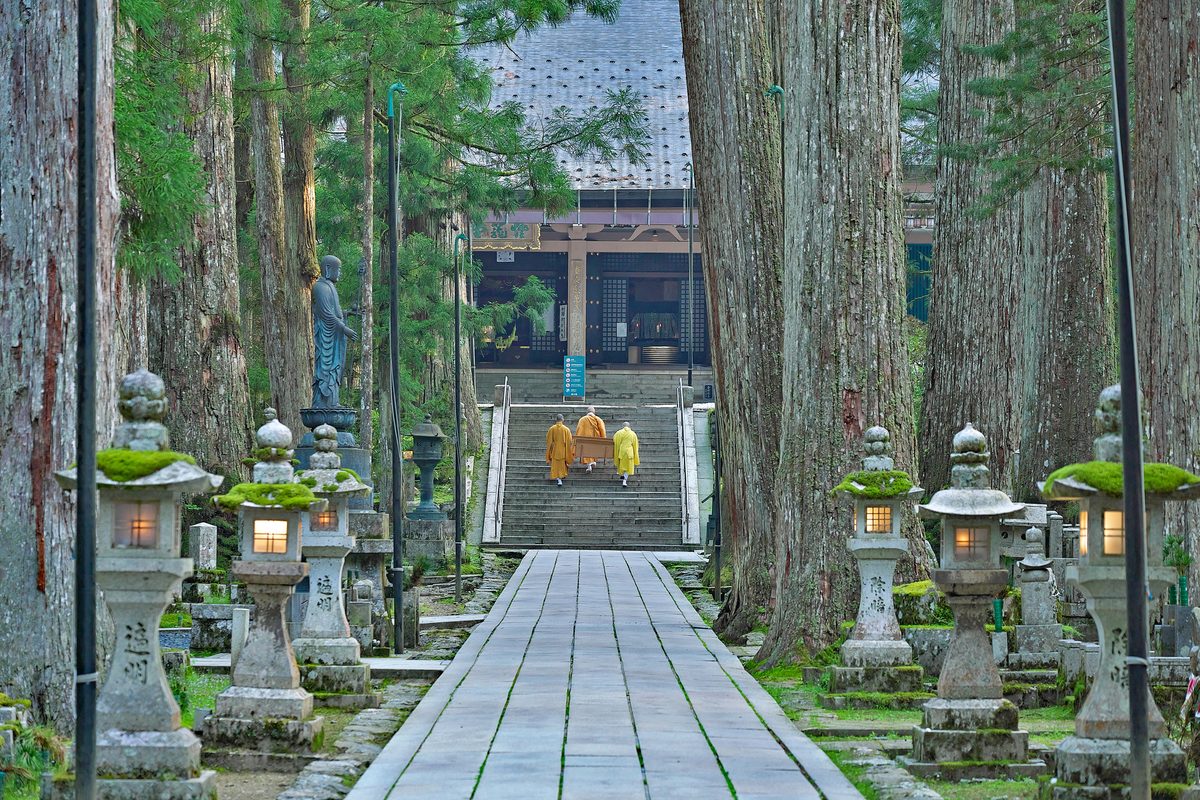
Koyasan — Mount Koya
Japan's most sacred mountain — the headquarters of Shingon Buddhism, founded by Kobo Daishi (Kukai) in 816 CE. Over 100 temples cover the mountaintop plateau, and the Okunoin cemetery contains over 200,000 tombstones beneath 1,000-year-old cedar trees. Staying overnight at a shukubo (temple lodging) for vegetarian monks'meals is transformative.
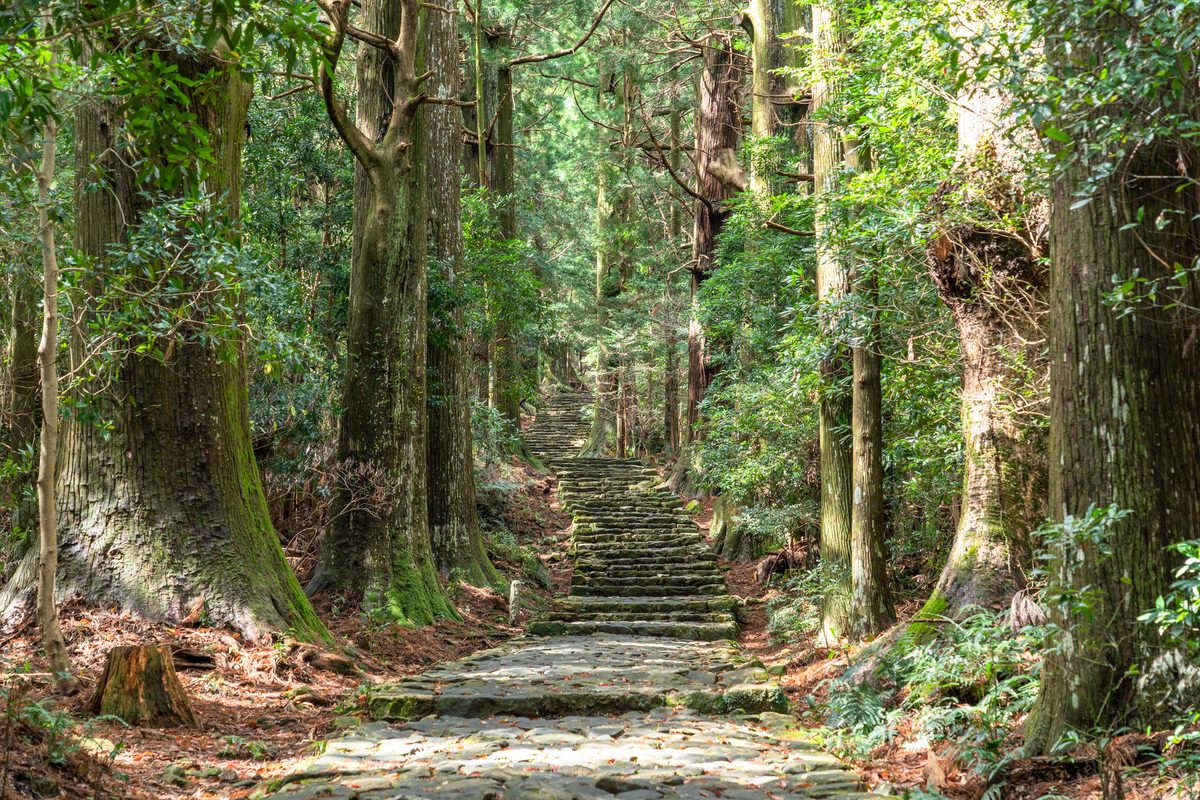
Kumano Kodo Pilgrimage Trail
One of the world's only two dual-listed UNESCO pilgrimage routes (the other being the Camino de Santiago). The Nakahechi route through cedar forests and mountain passes to the three Kumano Grand Shrines has been walked by emperors, monks, and ordinary pilgrims for 1,200 years. Two days of walking from Tanabe to the Hongu shrine is transformative.
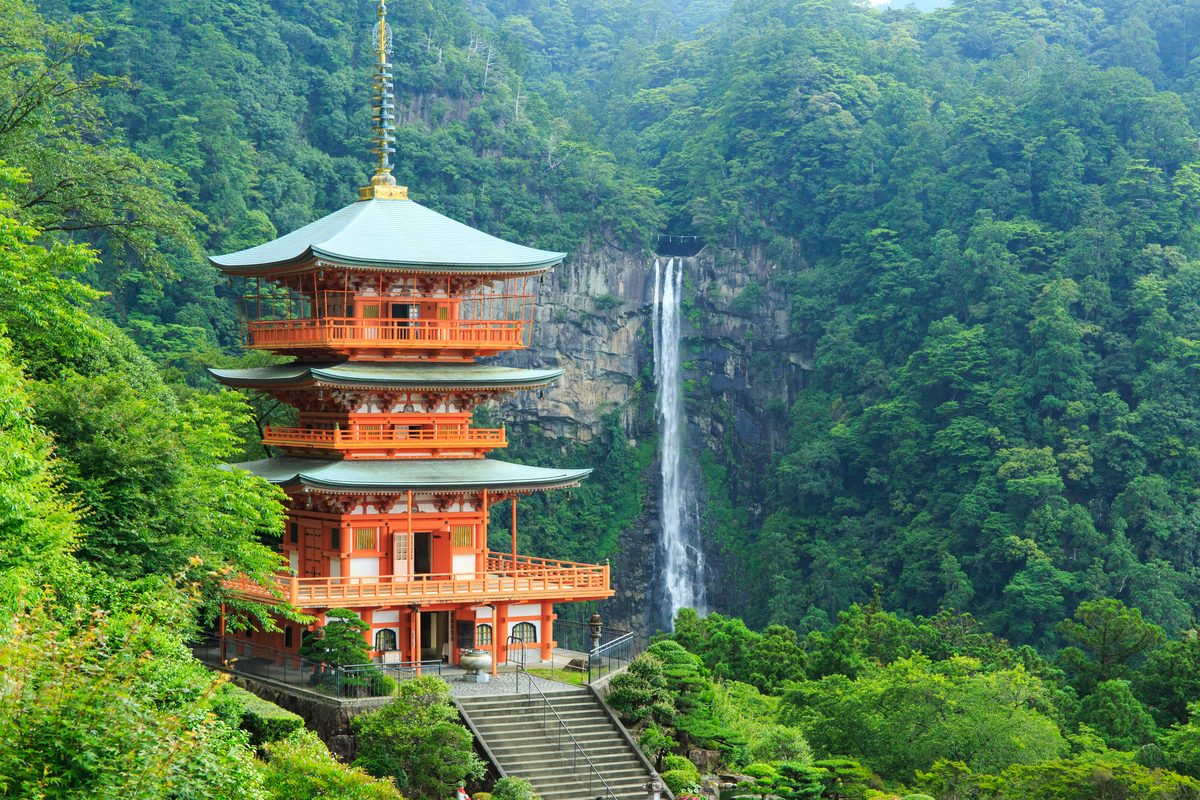
Nachi Falls
Japan's tallest single-drop waterfall at 133 metres — a UNESCO World Heritage site as part of the Kumano pilgrimage. The Kumano Nachi Taisha shrine and three-storey vermilion pagoda frame the waterfall perfectly in photographs. The falls have been worshipped as a deity for over 1,000 years and are still an active religious site.