
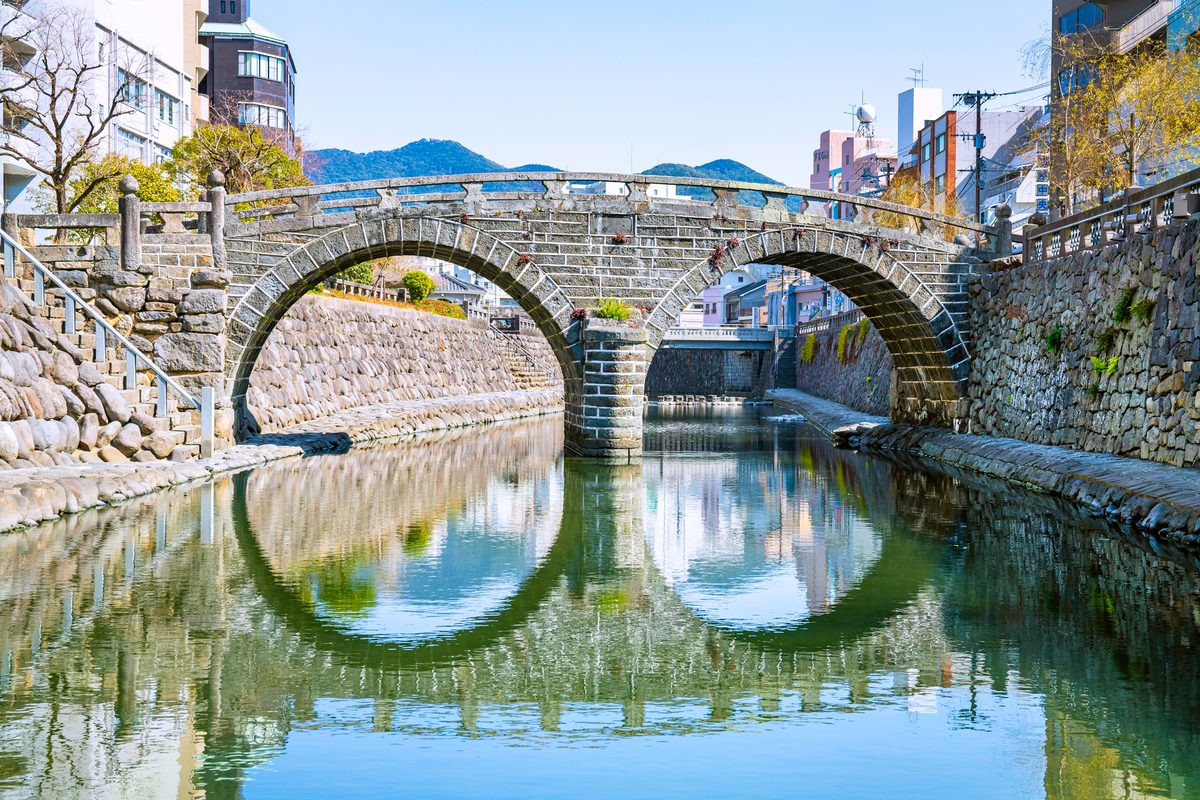
Meganebashi (Spectacles Bridge)
Japan's oldest stone arch bridge, built in 1634 by a Chinese Zen monk. When the Nakashima River is calm, the twin arches reflect perfectly in the water below, creating the "spectacles" (megane) shape that gave the bridge its name. The bridge survived the 1945 atomic bombing intact and remains the heart of Nagasaki's historic riverside quarter.
20–30 min
Free
Always accessible
Year-round; spring for cherry blossoms over the river
10 min walk from Nagasaki Station
Location
Why Visit
- 1
Best photographed at dawn before tour groups arrive — the reflection requires still water and soft light
- 2
Look for the heart-shaped stones embedded in the riverside walls — said to bring love luck if you find them
- 3
The riverside path has seven historic bridges in total — walk all of them for a 45-minute architectural tour
Local Tips
Japan's oldest stone arch bridge (1634) creates a perfect circle reflected in the Nakashima River — the 'spectacles' effect. The stretch of river has nine historic bridges; walk all of them (30 min). The area is particularly atmospheric after rain when the river level rises. Combine with Dejima and Glover Garden for a complete Nagasaki history day.
Add to your AI itinerary
Let AI build a multi-day trip around this spot.
Advertisement
More in Nagasaki
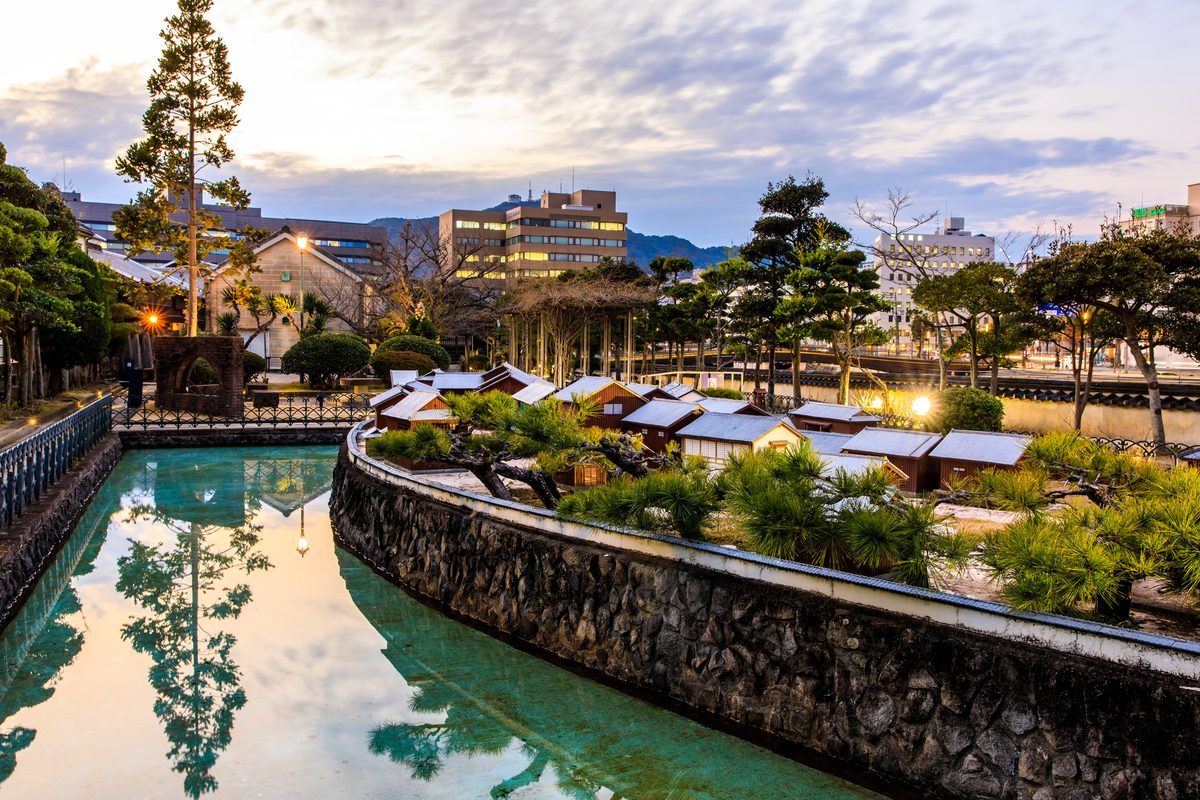
Dejima Dutch Trading Post
For 200 years during Japan's isolation period, this tiny fan-shaped artificial island was the only point of contact between Japan and the Western world. Dutch traders lived here under strict conditions; their books, clocks, and scientific instruments slowly changed Japan. The island has been meticulously reconstructed to its 1820s appearance, complete with furnished warehouses, a VOC flag, and Dutch gardens.
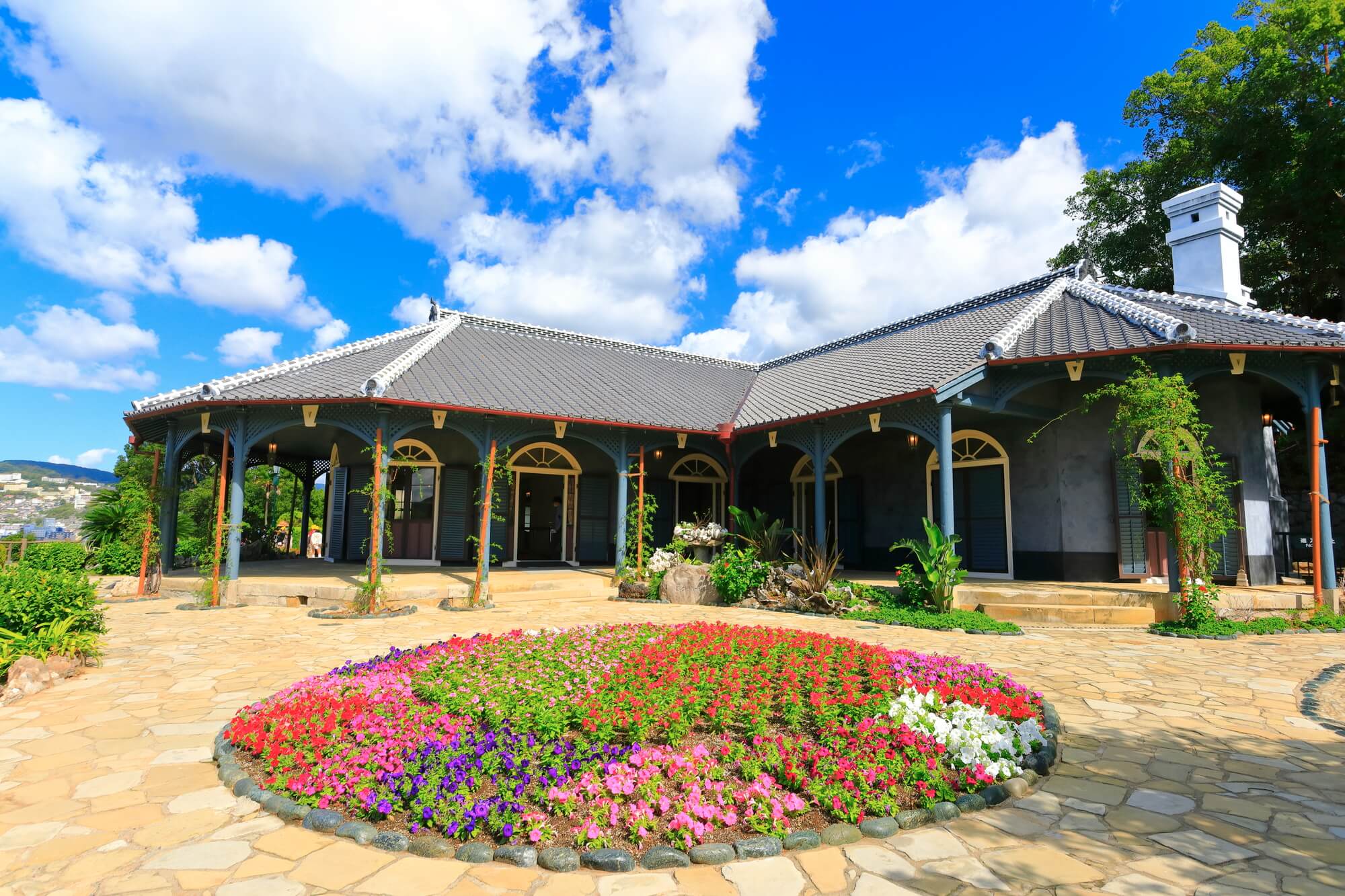
Glover Garden
An open-air hilltop museum of Western-style residences built by Meiji-era foreign merchants. Thomas Glover's stone villa (1863) is Japan's oldest surviving Western-style house, with sweeping harbor views.
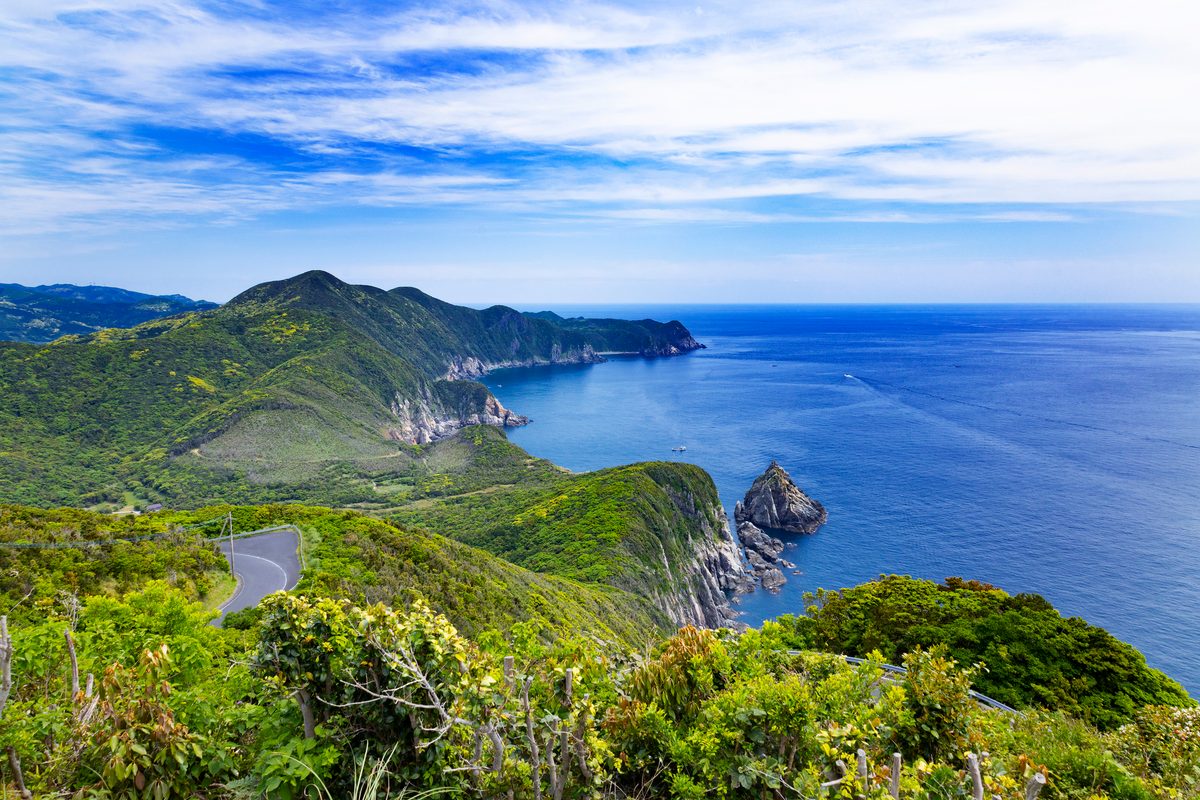
Goto Islands
An archipelago of 140 islands where 30,000 "hidden Christians" (kakure kirishitan) secretly maintained their faith for 250 years under the death penalty. The UNESCO-listed churches, set in fishing villages against a backdrop of spectacularly clear emerald sea, represent one of the world's most extraordinary stories of religious perseverance.