
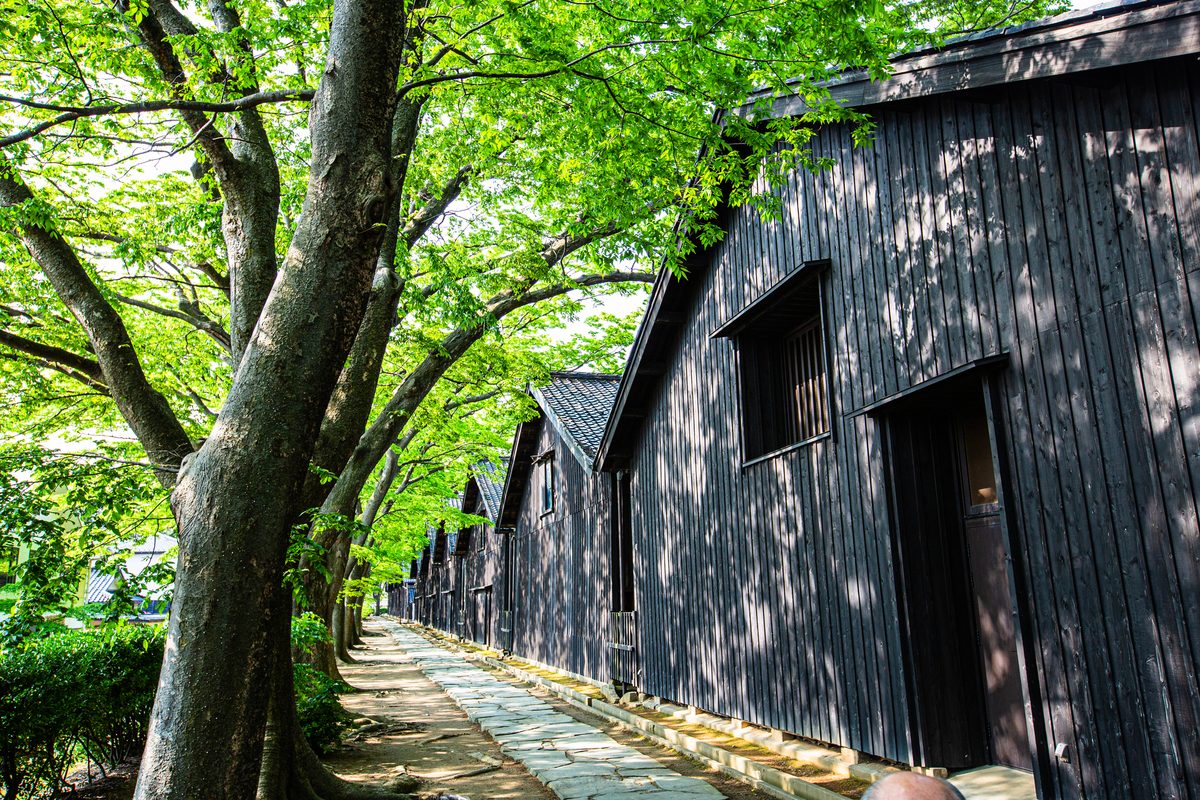
Sakata Sankyo Warehouses
A row of elegant 120-year-old double-roofed rice storage warehouses beside the Mogami River mouth, built with a clever double-layer roof to keep rice cool in summer. Zelkova trees line the approach in a perfect symmetry.
1–2 hours
Free (exterior grounds); exhibition facilities temporarily closed (as of 2025)
Exterior grounds: always accessible; Shonai Film Village (nearby): check for current hours
Year-round; April–May (cherry)
Approx. 20-min walk or short bus ride from Sakata Station
Location
Why Visit
- 1
The ten warehouses are still owned by the Honda family whose merchant empire was based here
- 2
The zelkova trees lining the approach are 270 years old — planted when the warehouses were built
- 3
A small museum inside explains how Sakata merchants controlled rice distribution across Japan
- 4
The Mogami River sunset from the warehouse wharf is a photographer's classic
Local Tips
The row of black cedar-shingled warehouses along the Minamoto River — used to store Shonai rice before shipping — is one of Tohoku's most photogenic historic industrial sites. The Homma Art Museum nearby has an outstanding traditional garden. Combine with Ginzan Onsen (1.5 hours by car) for a Yamagata cultural day.
Add to your AI itinerary
Let AI build a multi-day trip around this spot.
Advertisement
More in Yamagata
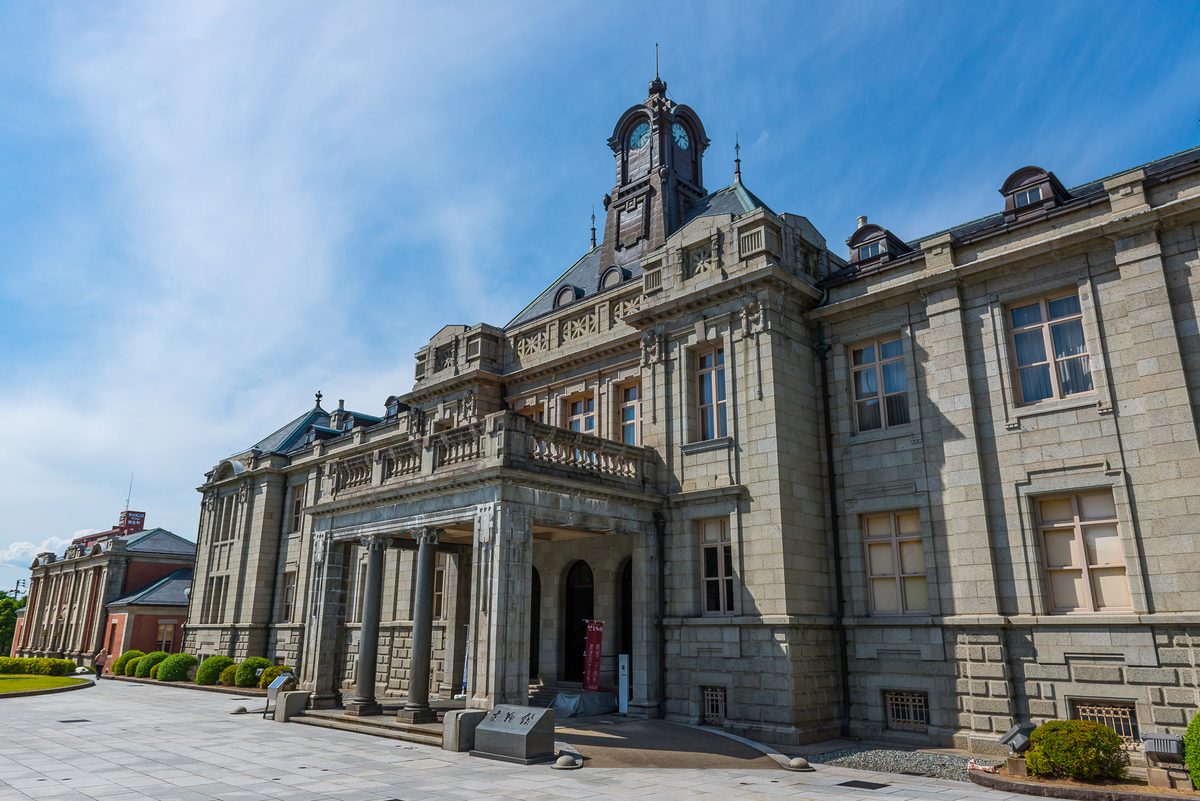
Bunshokan — Yamagata Prefectural Museum
Bunshokan is a striking red-brick building completed in 1916, originally serving as the Yamagata Prefectural Office and Assembly Hall before being designated an Important Cultural Property of Japan. The Taisho-era Western-style architecture, complete with a central clocktower, stands in sharp contrast to the castle walls of the adjacent Kajo Park, offering a window into a different chapter of Yamagata's history. Today the building functions as the Yamagata Prefectural Museum of Art, housing rotating exhibitions and permanent displays, and remains one of the most recognisable landmarks in the city.
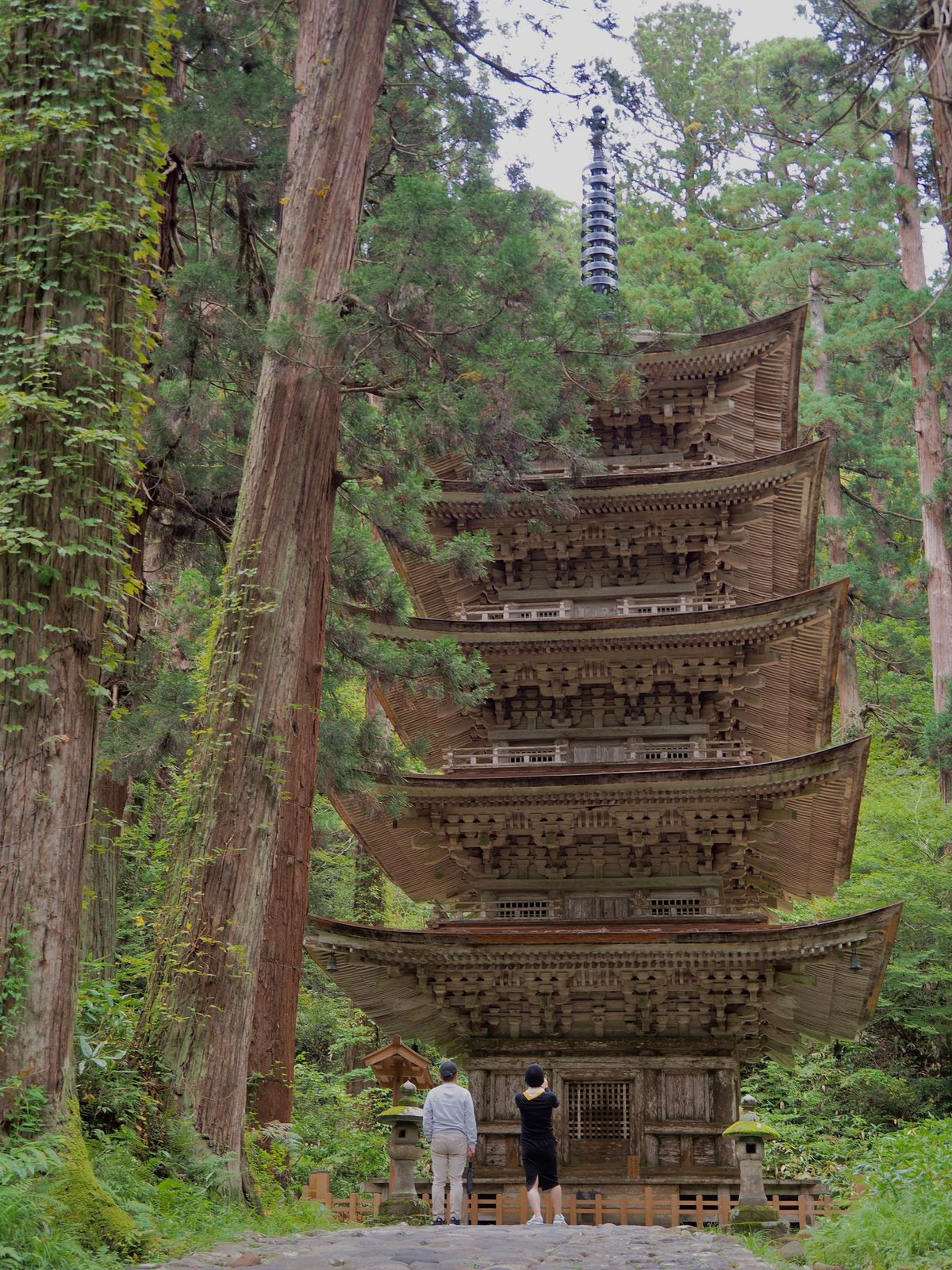
Dewa Sanzan
Three sacred mountains — Haguro (birth), Gassan (death) and Yudono (rebirth) — pilgrimage circuit of the ancient yamabushi mountain ascetics. The Haguro-san five-storey pagoda among 600-year-old cedar trees is one of Japan's most atmospheric.
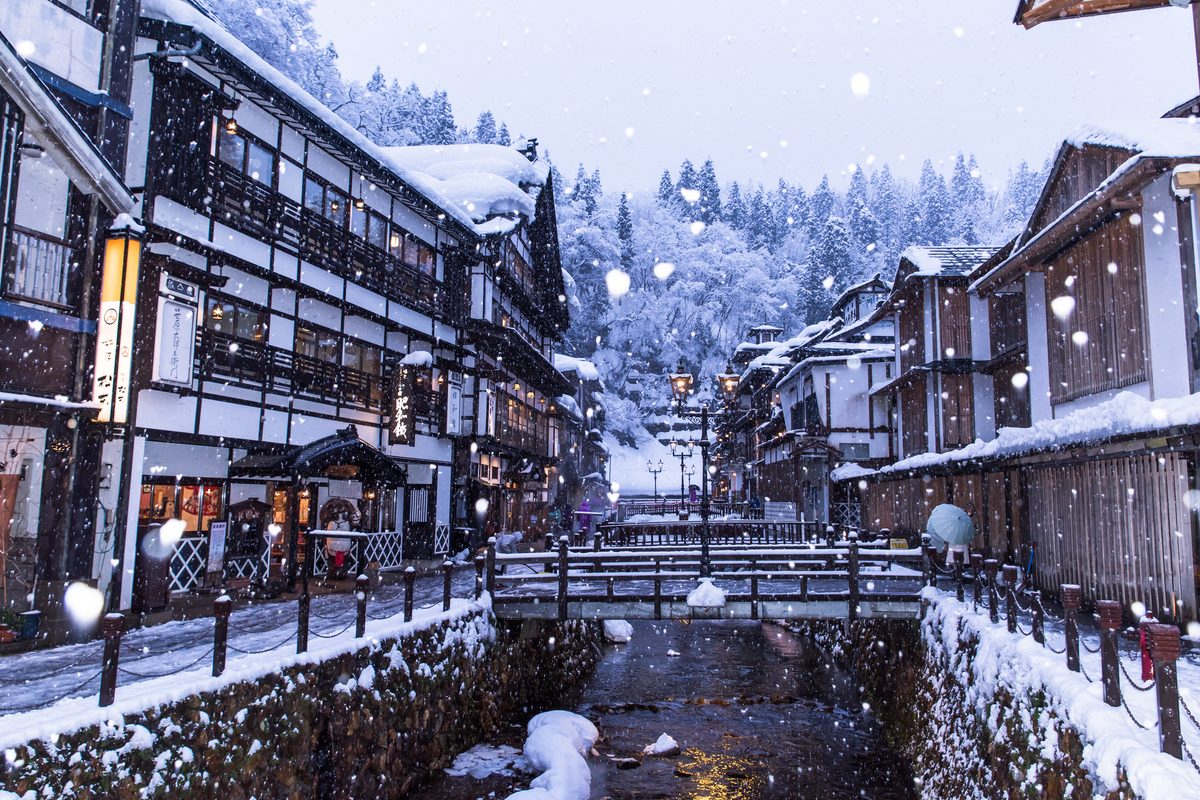
Ginzan Onsen
Japan's most photogenic hot spring village — Taisho-era multi-storey wooden ryokan line both banks of a narrow mountain stream, their gas lanterns glowing golden on the water at dusk. Snow transforms it into a perfect winter world.