
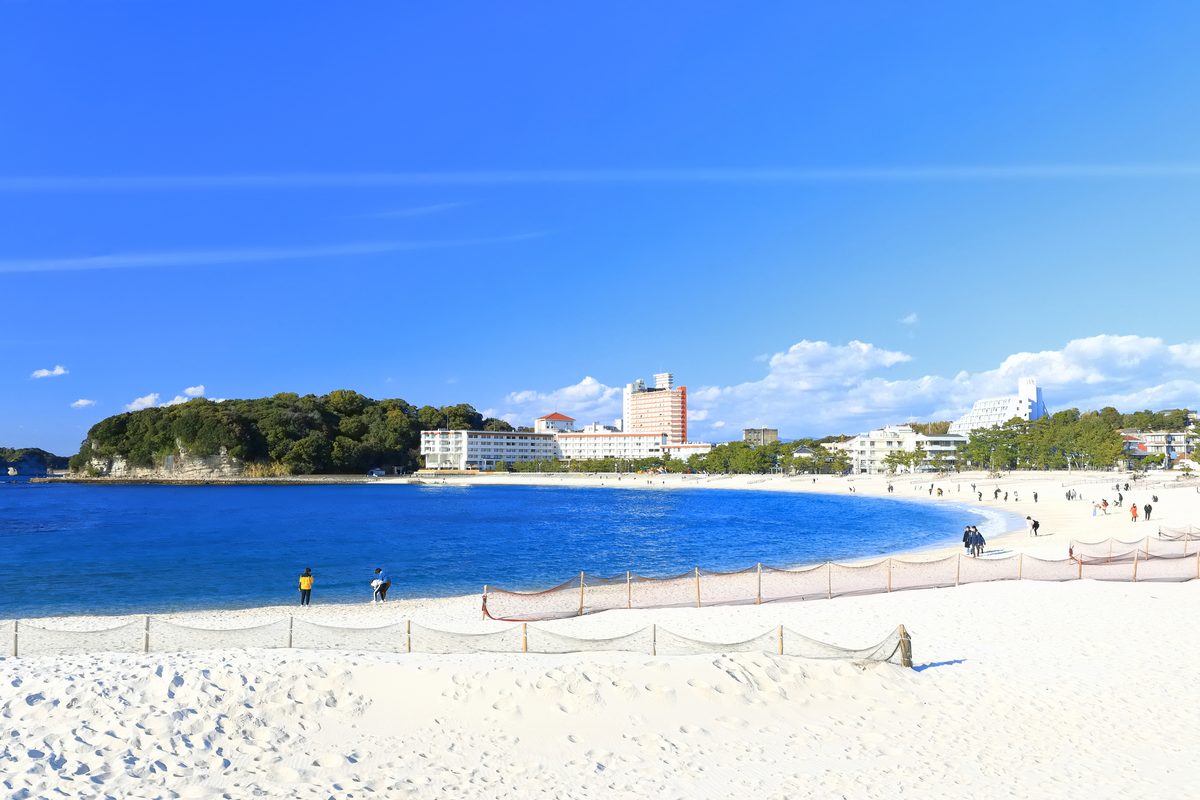
Shirahama Beach
Kansai's most beautiful white sand beach — Shirahama means "white beach" and the quartz-sand shore lives up to the name. The resort town has offshore hot spring water piped into beachfront baths. Cliff coastline walks to Sandanbeki (the Sea Cave Cliffs) and Senjojiki (Rock Terrace) frame the Pacific dramatically.
1–2 days
Free (beach), onsen ¥440–1,000
Beach: always open; Saki-no-Yu (cliff-top public bath): seasonal hours, e.g. Oct–Mar 8:00–17:00, Apr–Jun & Sep 8:00–18:00, Jul–Aug 7:00–19:00; no regular weekly closing (check for maintenance).
July–August (beach), Year-round (onsen)
Shirahama Station on JR Kisei Line (2h 40m from Osaka)
Location
Why Visit
- 1
Kansai's finest sandy beach — white quartz sand imported from Australia in the 20th century now replenished naturally
- 2
崎の湯 (Sakino-yu) — an outdoor cliff-edge onsen bath open directly to the Pacific Ocean
- 3
Sandanbeki sea caves have a hidden pirate legend and a 50m cliff-edge viewing platform
Local Tips
The white sand beach (the name means 'white beach') is one of Japan's finest on the Pacific coast — the colour contrast between the sand and deep blue sea is beautiful. The Saki-no-Yu open-air foot bath perched on the cliff above the ocean is free and one of Japan's most dramatic onsen settings. Combine with Senjo-jiki rock platform and Sandanbeki cliffs for a full Shirahama day.
Add to your AI itinerary
Let AI build a multi-day trip around this spot.
Advertisement
More in Wakayama
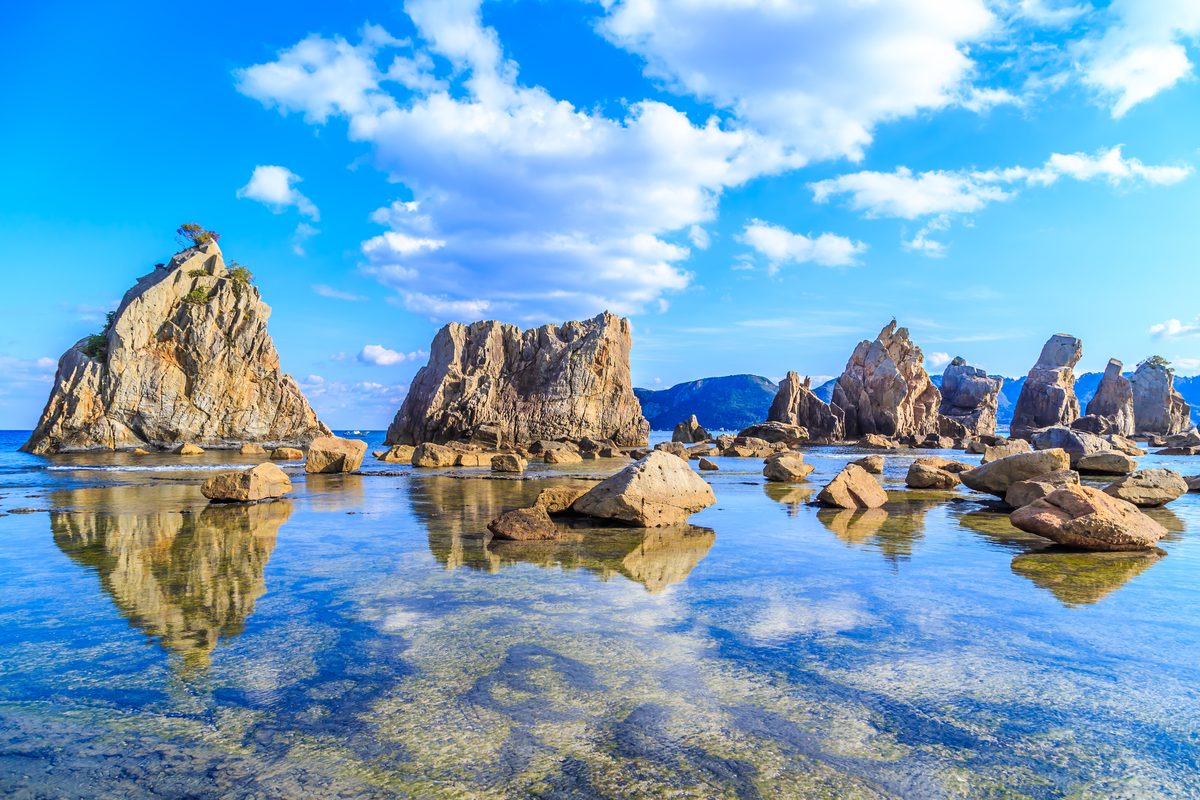
Hashigui Rocks
A row of 40 eroded basalt sea stacks stretching 850 metres into the Pacific — named "bridge piles" because legend says the Buddhist monk En no Gyoja tried to build a bridge to Oshima Island overnight and the cocks crowed before it was finished. The rocks form a near-perfect line at low tide and are spectacular at sunrise.
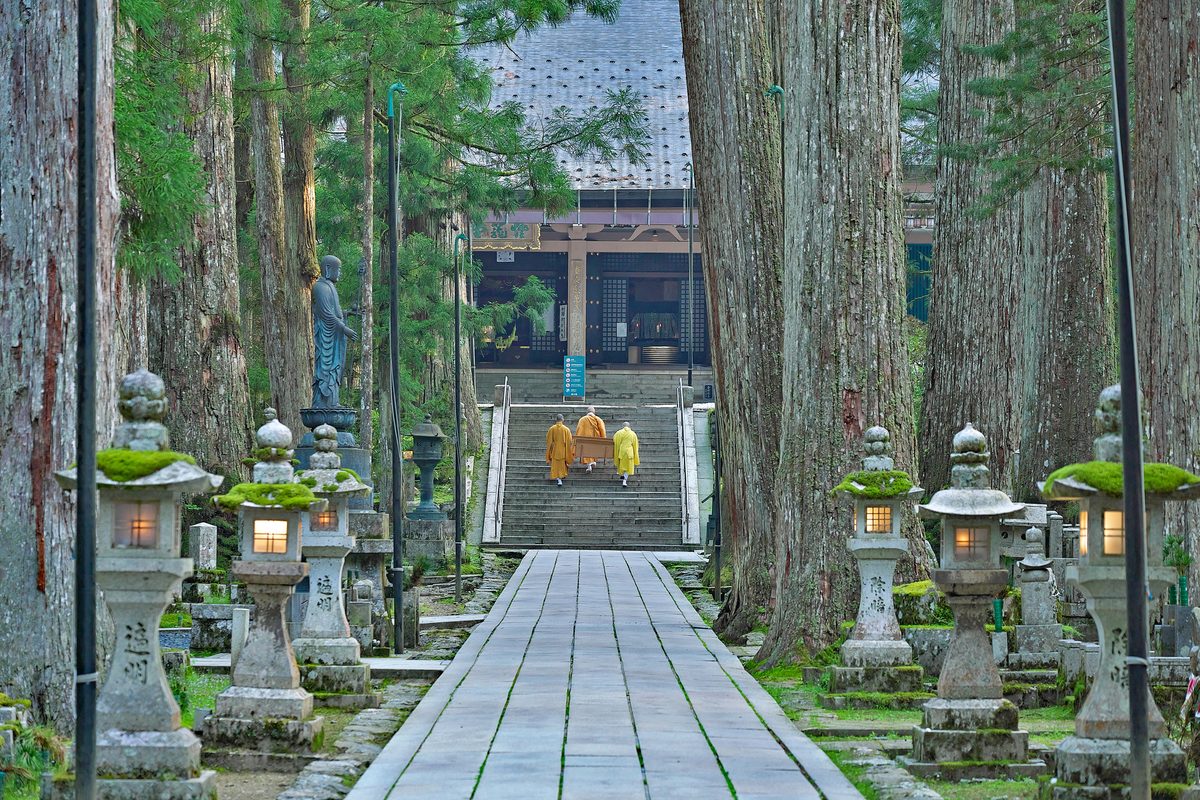
Koyasan — Mount Koya
Japan's most sacred mountain — the headquarters of Shingon Buddhism, founded by Kobo Daishi (Kukai) in 816 CE. Over 100 temples cover the mountaintop plateau, and the Okunoin cemetery contains over 200,000 tombstones beneath 1,000-year-old cedar trees. Staying overnight at a shukubo (temple lodging) for vegetarian monks'meals is transformative.
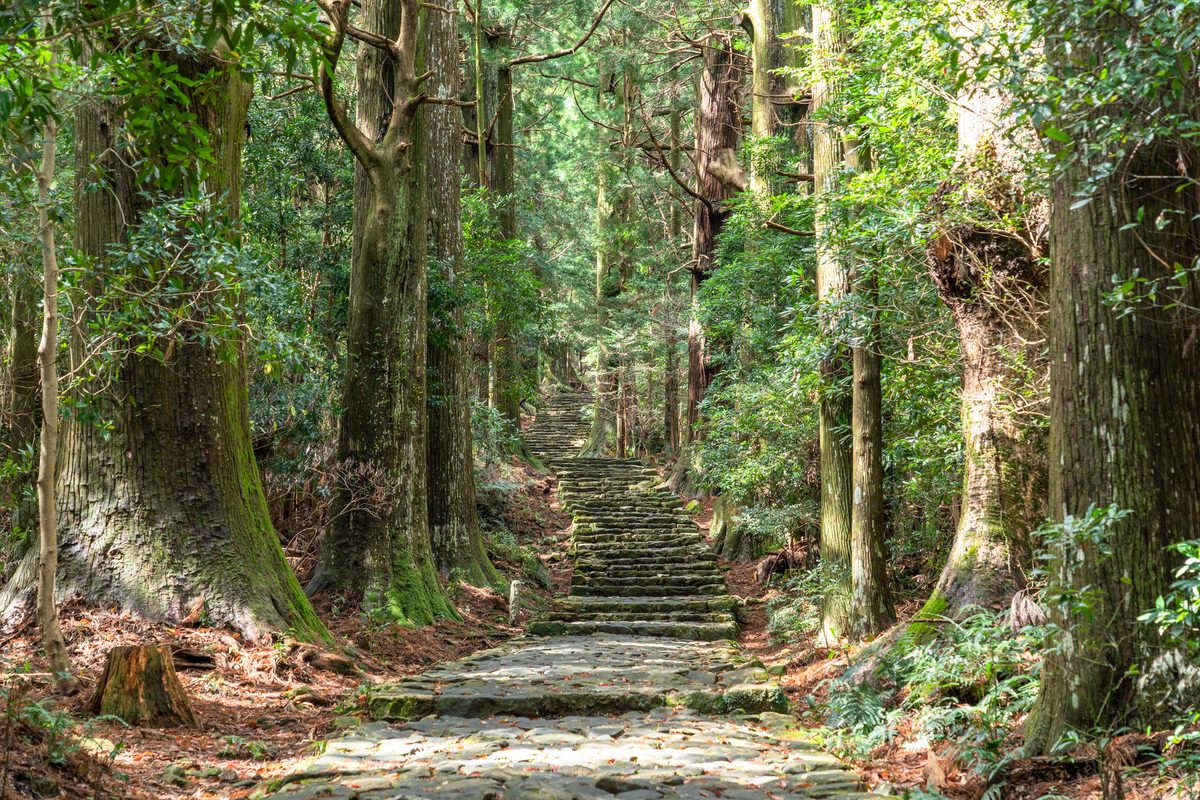
Kumano Kodo Pilgrimage Trail
One of the world's only two dual-listed UNESCO pilgrimage routes (the other being the Camino de Santiago). The Nakahechi route through cedar forests and mountain passes to the three Kumano Grand Shrines has been walked by emperors, monks, and ordinary pilgrims for 1,200 years. Two days of walking from Tanabe to the Hongu shrine is transformative.