
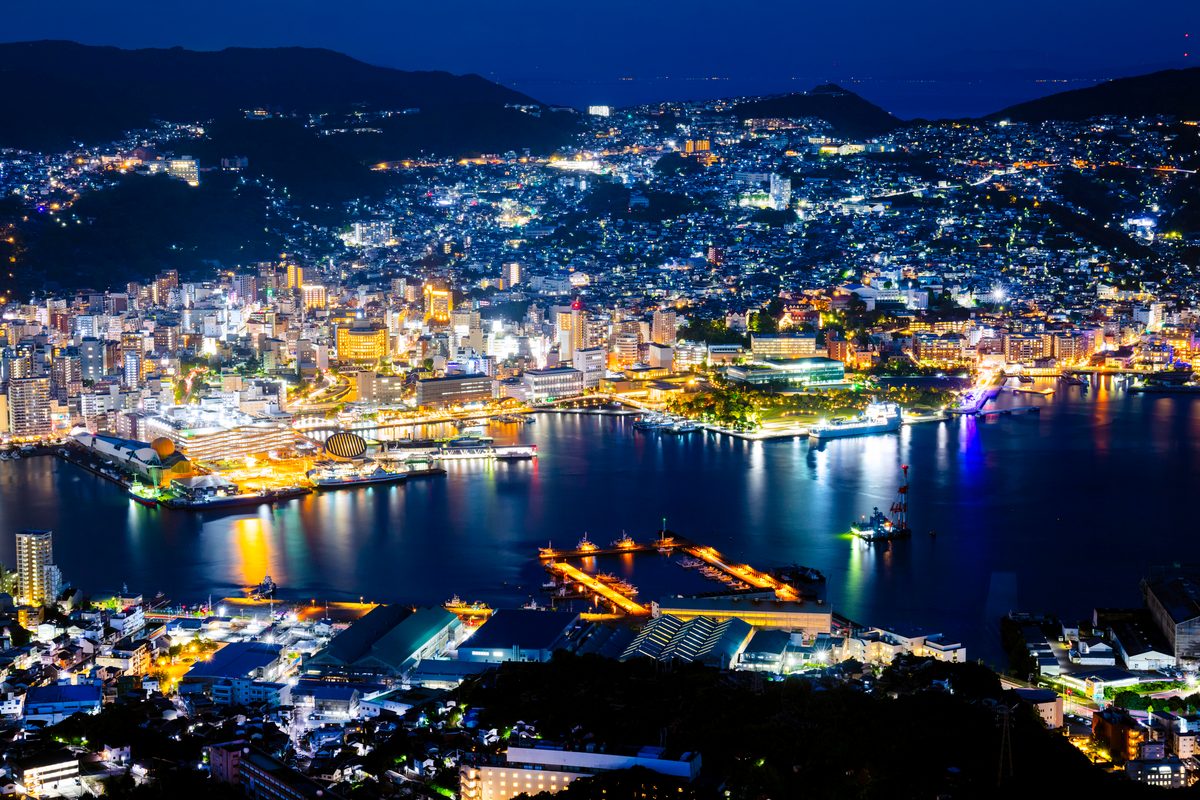
Mount Inasa Night View Observatory
One of Japan's three great night views — Nagasaki's harbor, peninsula, and islands create a "million-dollar night view" when seen from 333m. The city's geography (built on hills around a narrow bay) produces a more complex, layered nightscape than flat cities like Kobe or Hakodate, making this arguably the finest of the three.
1 hour
Ropeway ¥1,250 round trip
Ropeway: 9:00–22:00 (last ascent 21:30)
Year-round; clearest winter nights October–March
Tram to Fuchi Station, then 10 min walk to ropeway base
Location
Why Visit
- 1
The ropeway takes just 5 minutes — sunset is the best time to arrive, watching the city transition from day to night
- 2
In winter, the air is crisp and visibility extends to the islands 20 km away
- 3
The observatory has a heated viewing room for rainy nights — the rain on the glass creates a dreamy soft-focus effect
Local Tips
Ranked one of Japan's three great night views alongside Hakodate and Kobe — the descent of Nagasaki's terraced hillside houses into the harbour, seen from 333m, is genuinely spectacular at night. The ropeway summit building has a cafe with full window views. Visit 30 minutes after sunset for the transition from twilight to full city lights.
Add to your AI itinerary
Let AI build a multi-day trip around this spot.
Advertisement
More in Nagasaki
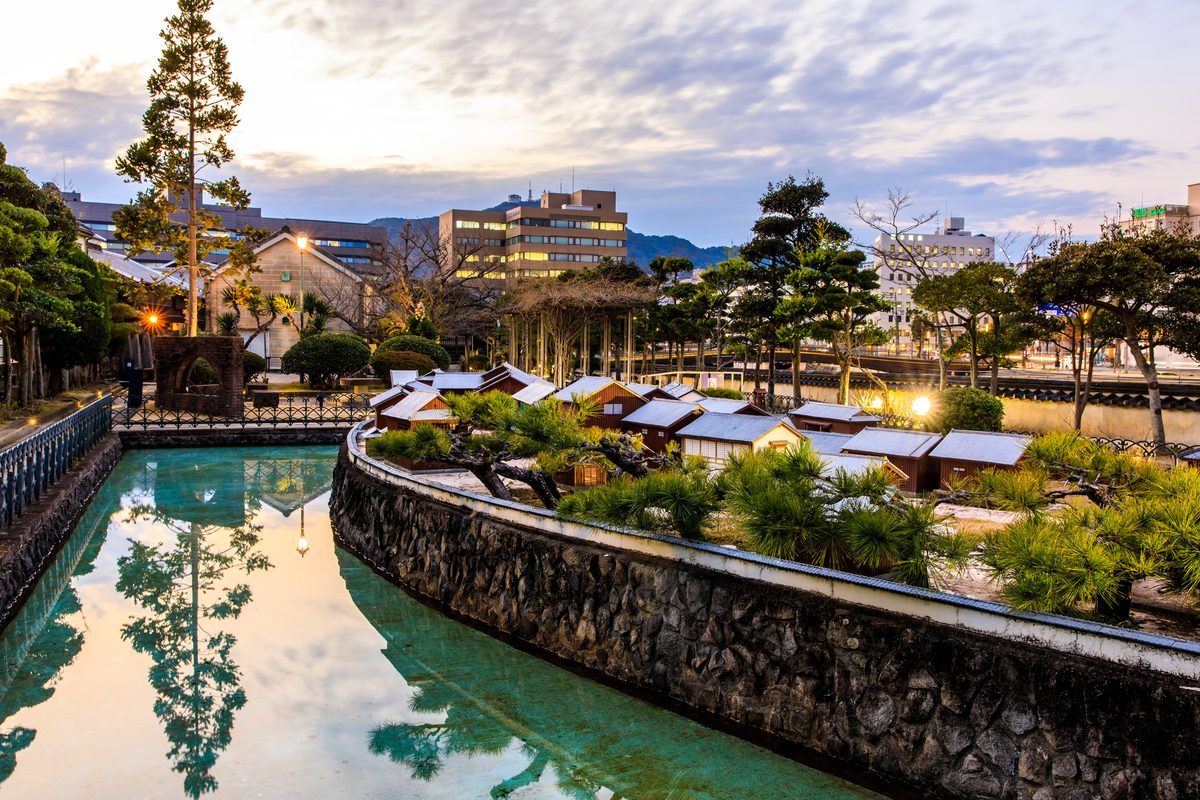
Dejima Dutch Trading Post
For 200 years during Japan's isolation period, this tiny fan-shaped artificial island was the only point of contact between Japan and the Western world. Dutch traders lived here under strict conditions; their books, clocks, and scientific instruments slowly changed Japan. The island has been meticulously reconstructed to its 1820s appearance, complete with furnished warehouses, a VOC flag, and Dutch gardens.
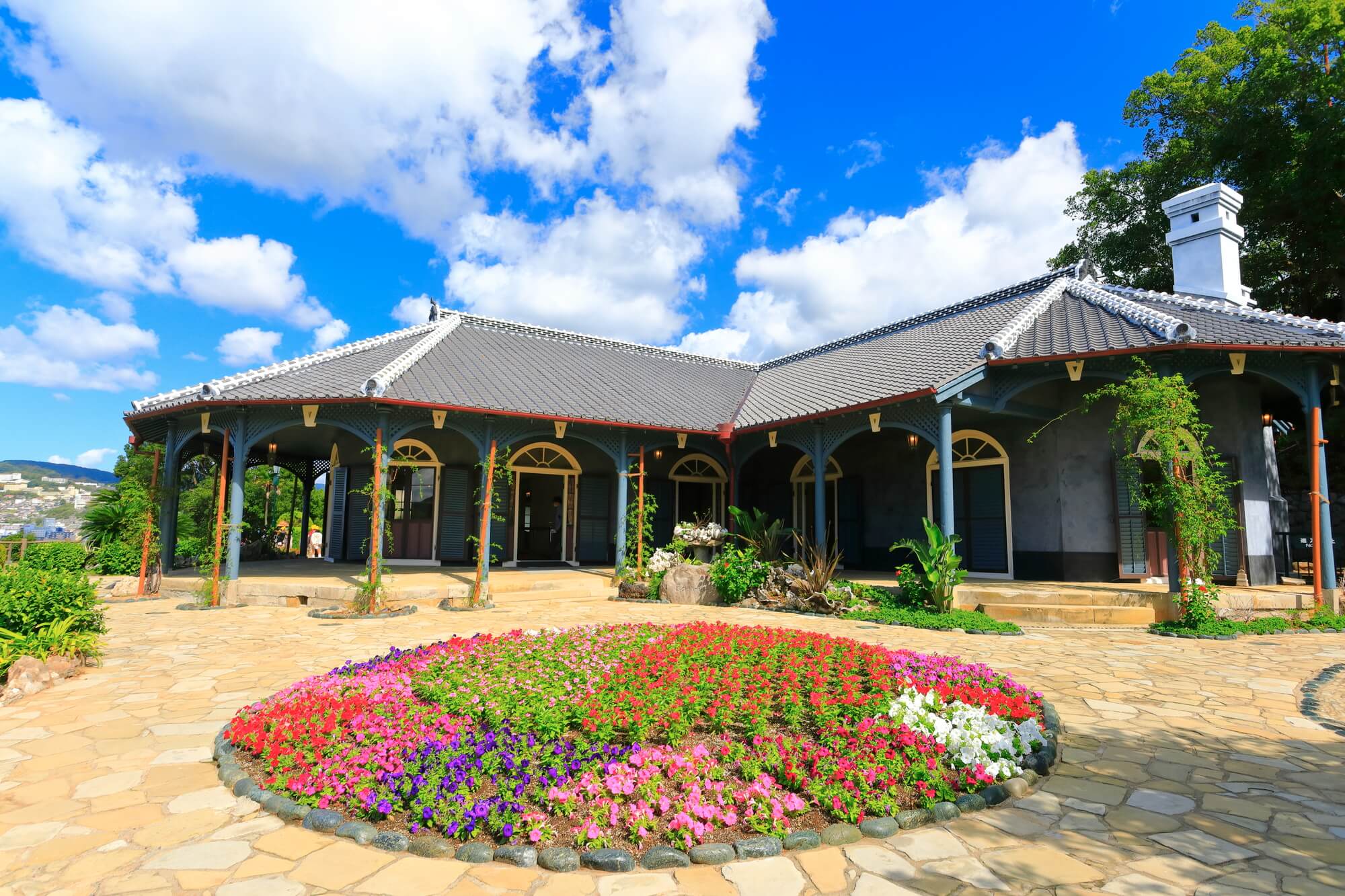
Glover Garden
An open-air hilltop museum of Western-style residences built by Meiji-era foreign merchants. Thomas Glover's stone villa (1863) is Japan's oldest surviving Western-style house, with sweeping harbor views.
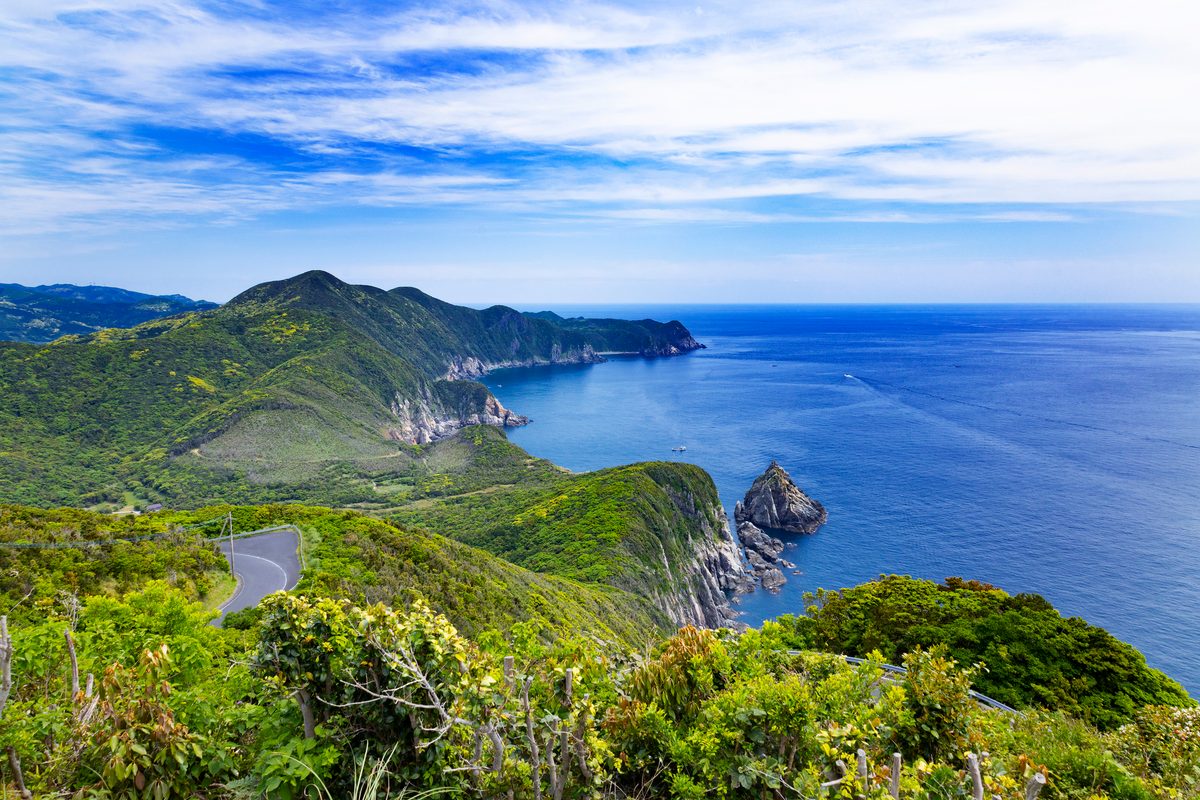
Goto Islands
An archipelago of 140 islands where 30,000 "hidden Christians" (kakure kirishitan) secretly maintained their faith for 250 years under the death penalty. The UNESCO-listed churches, set in fishing villages against a backdrop of spectacularly clear emerald sea, represent one of the world's most extraordinary stories of religious perseverance.