
Tokushima: Whirlpools, the Valley That Time Missed, and Japan's Loudest Dance
Tokushima is where Shikoku begins and where a significant portion of it remains hidden. The coast facing Osaka and the ferry routes is accessible; the interior — Iya, the Yoshino River headwaters, the mountain forests above the pilgrimage route — is something else entirely. The prefecture produced the indigo that dyed much of Edo Japan's clothing, the whirlpools that still pull boats off course in the Naruto Strait, and a dance festival so loud and specific that it has no real analogue anywhere else in the country. It is not trying to be convenient, which is mostly an advantage.
Tokushima is the entry point to Shikoku from the east and the setting of some of the island's most extreme geography. The Naruto Strait produces whirlpools visible from above; the Iya Valley hides behind ridges steep enough that the outside world arrived late and left some things unchanged. Awa Odori, the August dance festival, draws over a million visitors to a city of 250,000 for four nights every year. The first temple of the Shikoku Pilgrimage is here. The prefecture is smaller and stranger than most people expect.
Tokushima City — Castle Ruins, Puppet Theatre, and the Festival That Defines August
Tokushima City occupies the Yoshino River delta at the base of the mountains, and its street plan still reflects the castle town that the Hachisuka clan administered for three centuries. The castle itself is gone — the ruins on Shiroyama hill are a park — but the stone walls and the view over the city and river delta give a sense of how the domain was positioned.
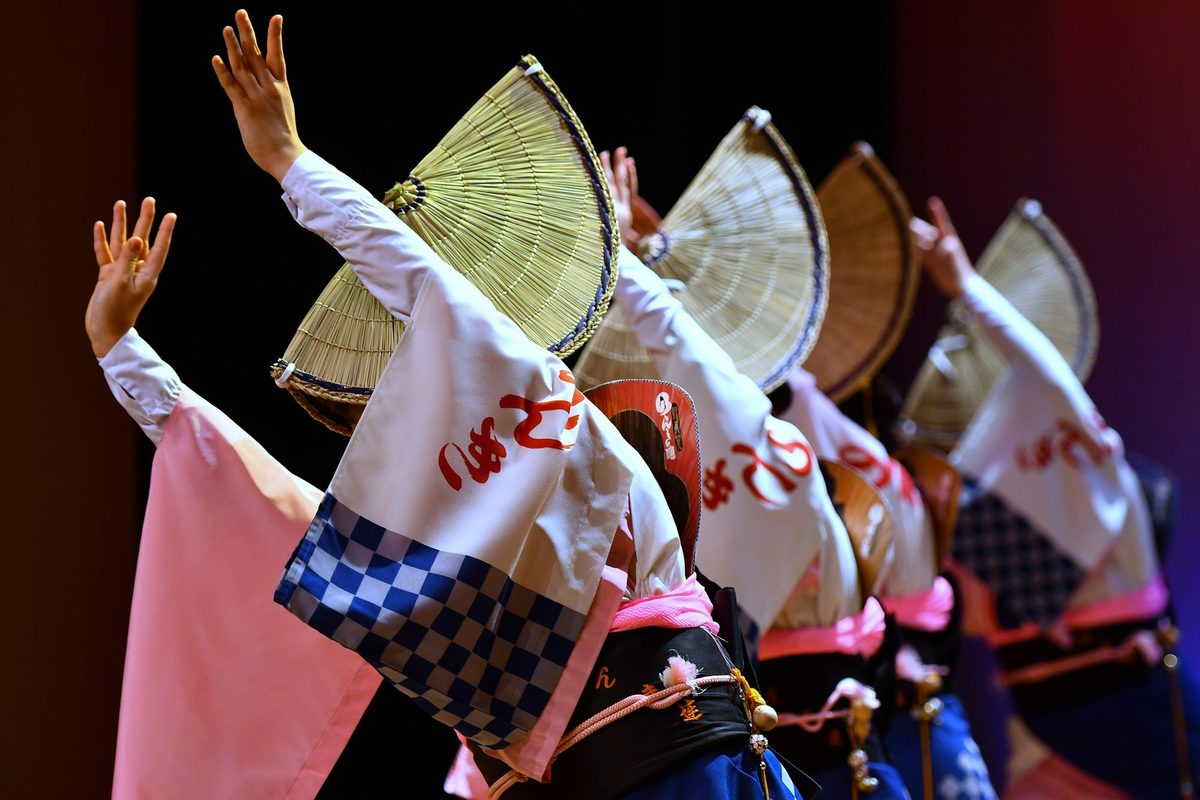
Awa Odori, held 12–15 August, is the event that defines Tokushima nationally. The dance is simple enough that anyone can join in, loud enough to be heard from several blocks, and sustained over four nights with enough different groups — ren — performing that the performances never feel identical. The city fills far beyond its hotel capacity; most visitors stay in Naruto, Matsuyama, or Takamatsu and commute in.
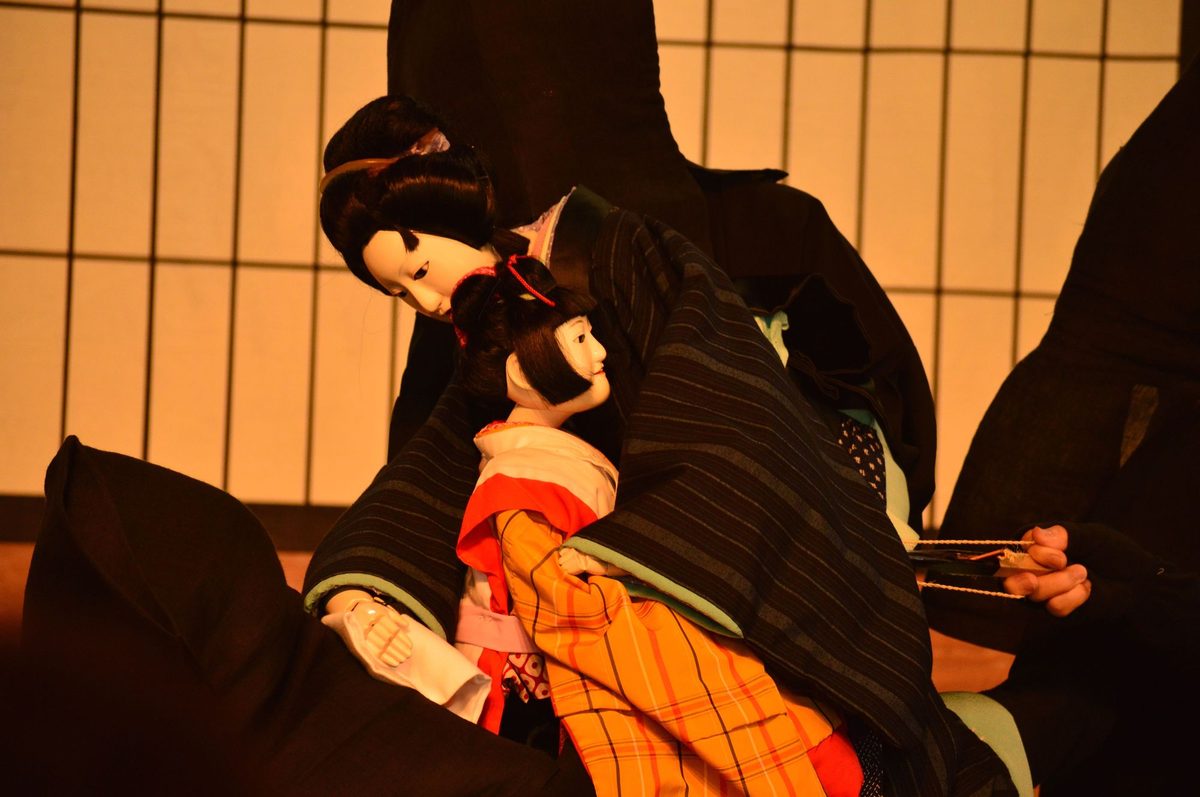
Awa Jurobe Yashiki preserves the tradition of Awa Ningyo Joruri — a regional form of puppet theatre related to the Bunraku tradition, with mechanical puppets handled by puppeteers in full view. Performances run on a fixed schedule; the hall is small and the technique serious enough to justify a morning visit before the city's other distractions.
Explore Tokushima City spots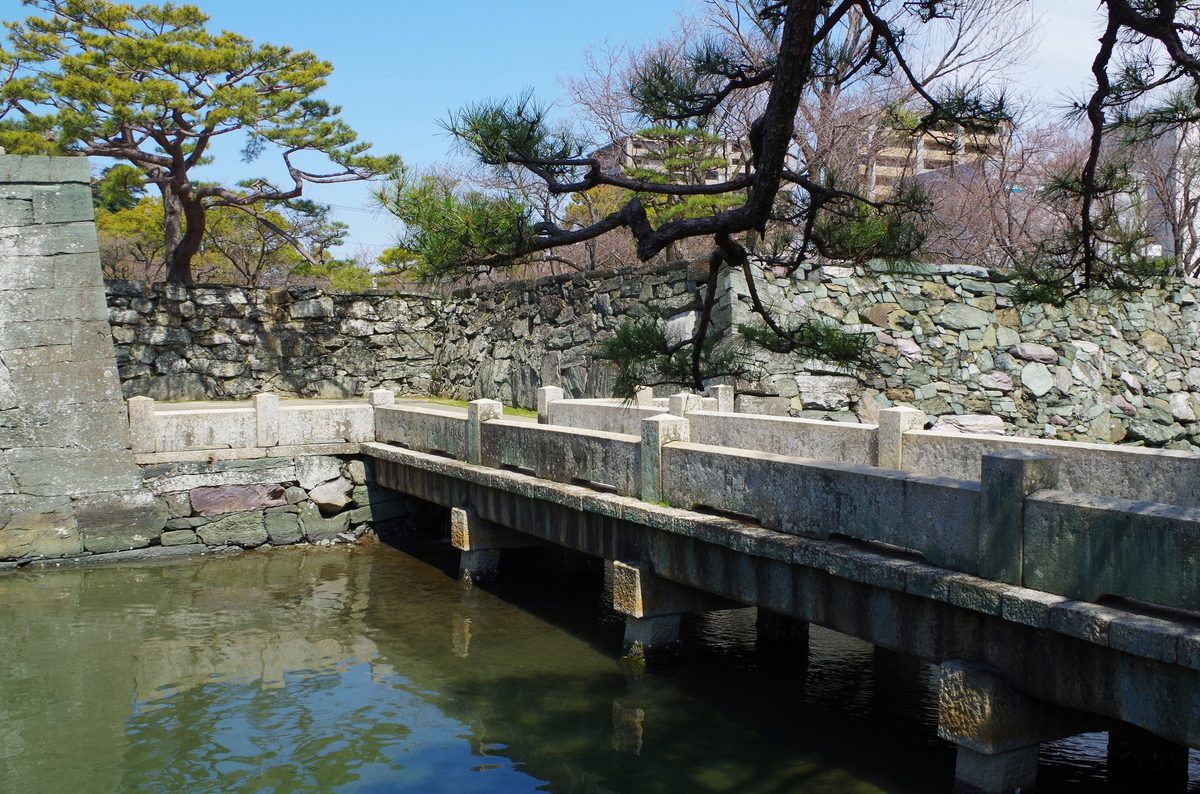
Naruto — Whirlpools, a German House, and the First Pilgrimage Temple
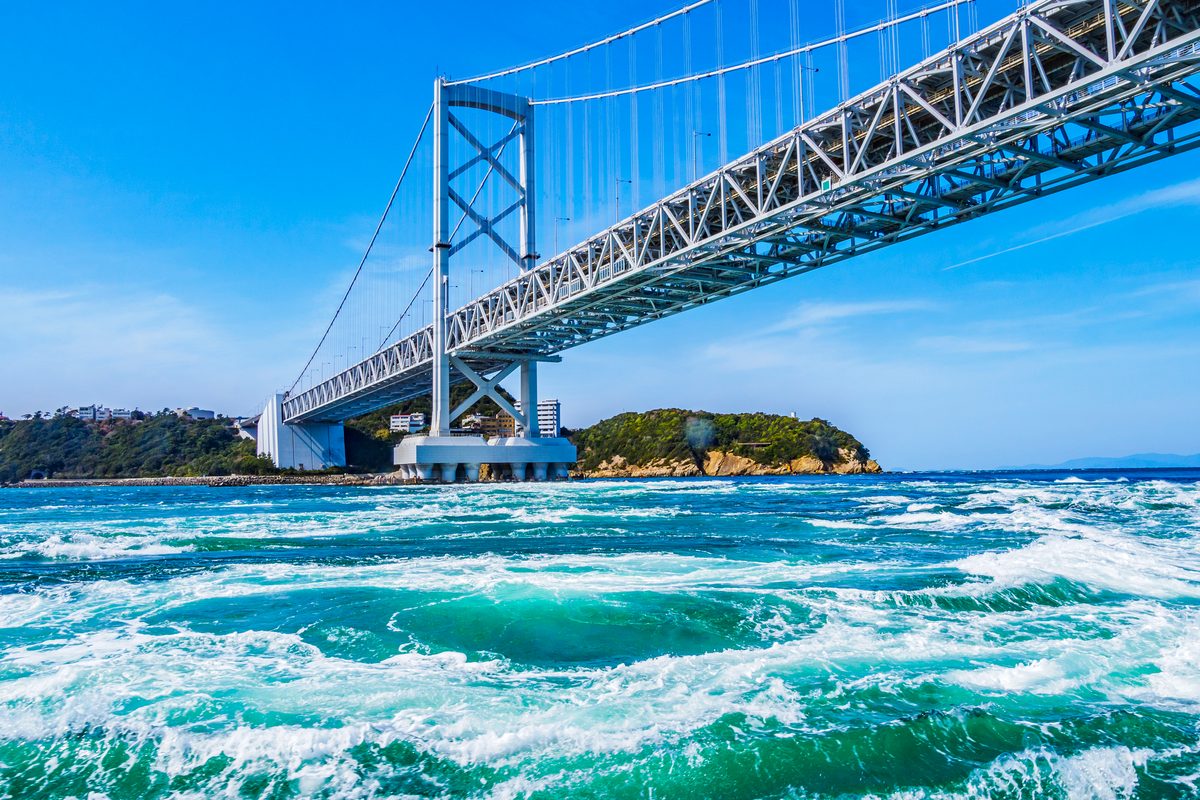
The Naruto Strait between Tokushima and Awaji Island produces tidal whirlpools up to 20 metres in diameter during spring tides — the result of Pacific and Seto Sea water exchanging through a narrow channel four times daily. The Uzu-no-Michi walkway under the Onaruto Bridge gives a glass-floored view directly above the vortices; sightseeing boats pass through them at water level.
The timing of maximum whirlpool size is published daily; arriving within an hour of peak tide on a spring day produces significantly different conditions than a neap-tide afternoon. The tourist infrastructure around the observation point is extensive — this is one of Tokushima's most visited attractions — but the whirlpools themselves do not disappoint on good days.
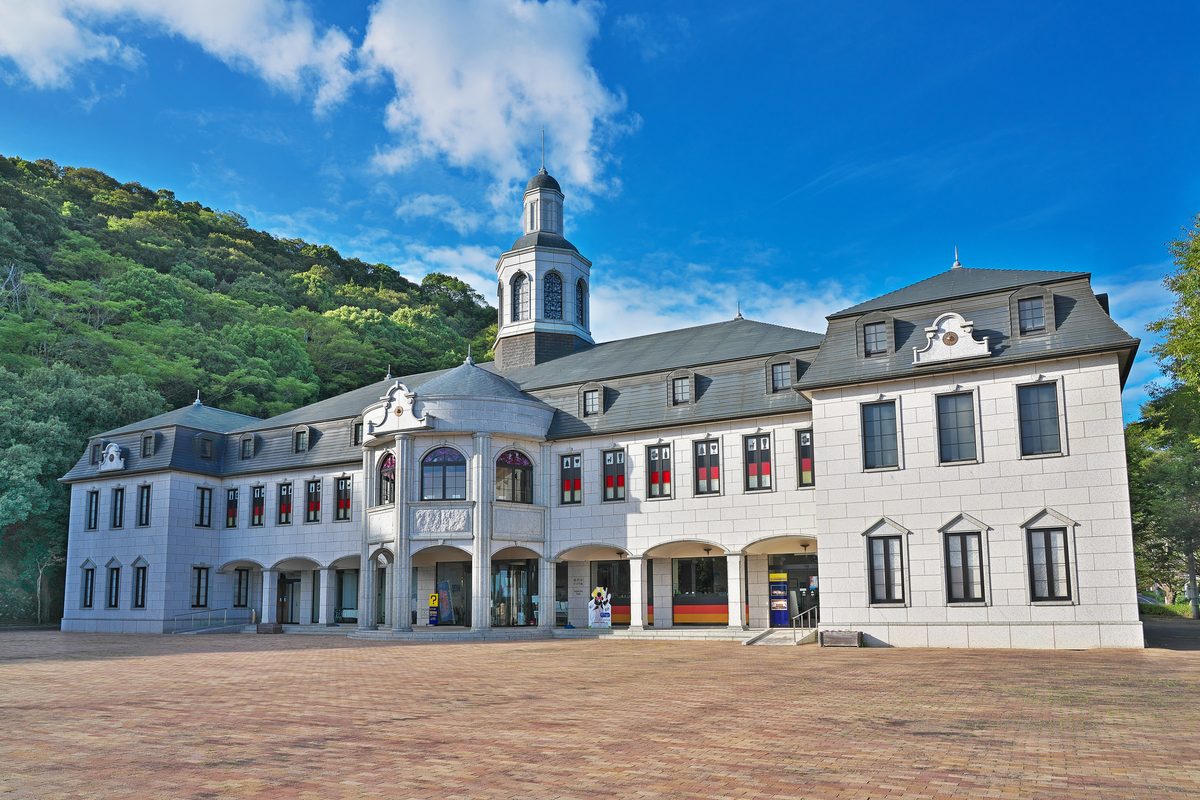
Ryozenji, temple one of the Shikoku Pilgrimage, stands in Bando a short distance from the bridge area. Pilgrims in white set out from here in both directions — clockwise and counter-clockwise — and the starting-point energy of the temple, with its registry of departures, is different from temples encountered mid-route. The Naruto German House nearby documents the story of German prisoners interned in Naruto during World War I who gave the first performances of Beethoven's Ninth Symphony in Japan — a specific and well-told local history.
Explore Naruto spots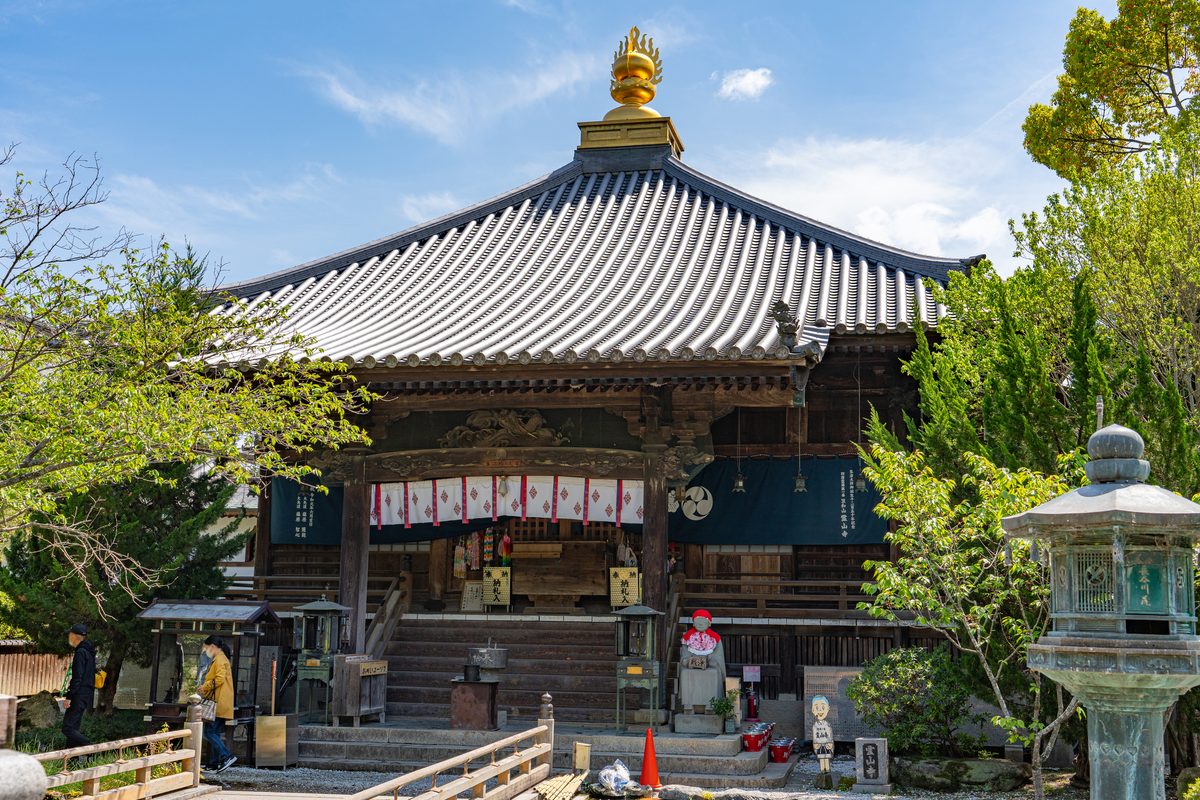
Iya Valley — The Ravine That Hid an Entire Culture
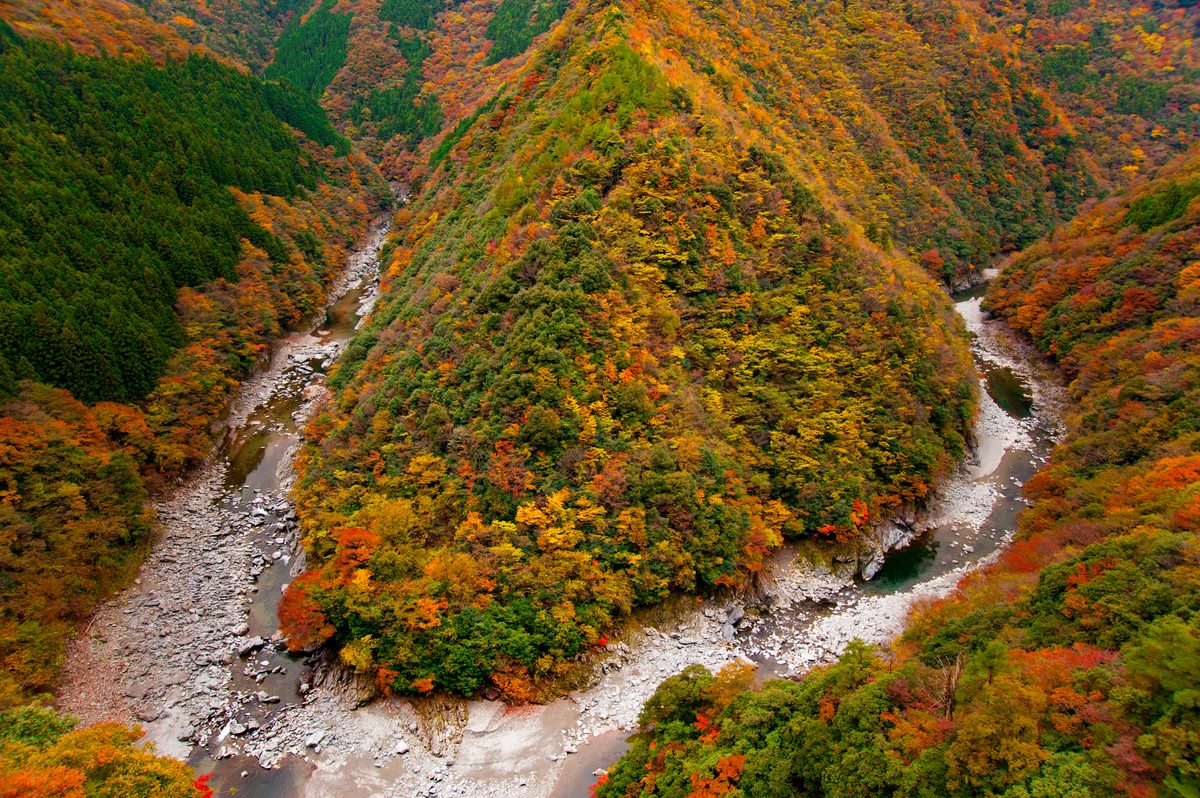
The Iya Valley occupies a set of mountain ravines in the interior of Tokushima that were, until the 20th century, among the most isolated inhabited areas in Japan. The Heike clan is said to have retreated here after defeat at Dannoura in 1185; the terrain — deep V-shaped valleys, river hundreds of metres below ridgeline roads — made pursuit impractical and extraction of any agricultural surplus difficult enough to define the local economy for centuries.
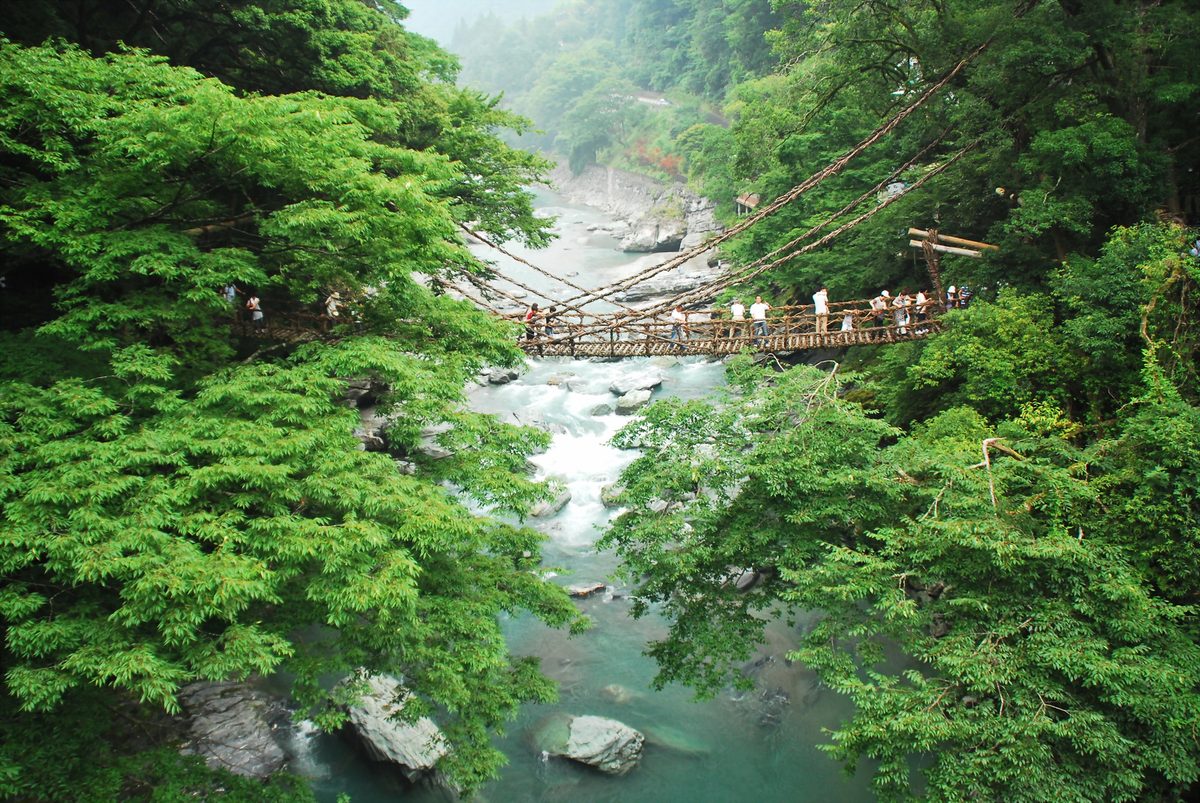
The Kazurabashi vine bridges — constructed from mountain wisteria, replaced every three years to prevent dangerous decay — are the most famous access points into the valley floor. The largest at Nishi-Iya sways as you cross it; the vine construction is genuine rather than reconstructed, and the drop to the river below is considerable enough that most visitors grip the sides.
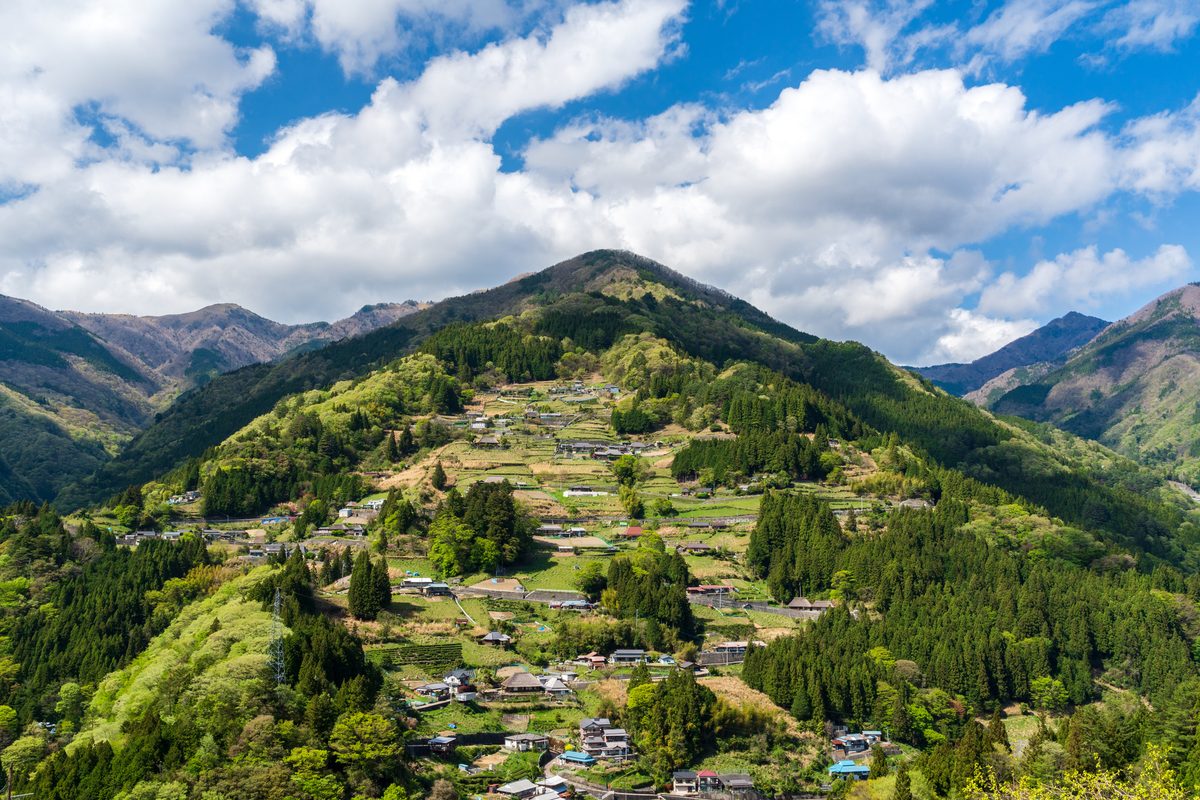
Ochiai Village, in East Iya, preserves a hillside settlement of stone-walled farmhouses terraced up a slope at angles that make ordinary agricultural work implausible by contemporary standards. The village has been slowly depopulating for decades; restoration projects have brought some buildings back to habitable condition, and the view across the terraced rooftops to the opposite valley wall is one of the more quietly dramatic in Shikoku.
Iya Valley
Tokushima
Kazurabashi Vine Bridge
Tokushima
Ochiai Village (East Iya Terraced Houses)
Tokushima
Oboke Gorge — Marble Cliffs and Rapid Water on the Kochi Border
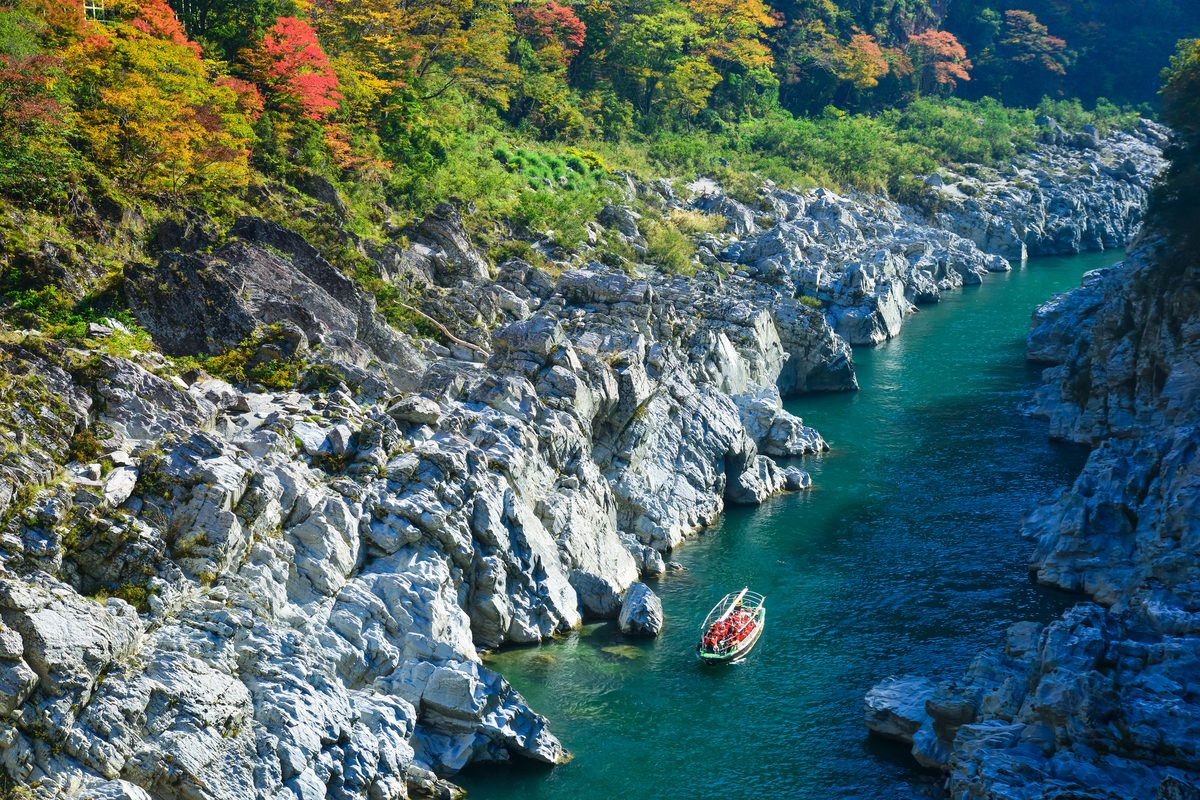
Oboke Gorge straddles the border between Tokushima and Kochi Prefectures on the Yoshino River — a four-kilometre section of marble and crystallised schist cliffs carved by one of Shikoku's main rivers. The rock face changes colour with light: pale grey in overcast conditions, pink-white in afternoon sun.
Sightseeing boats run the calmer sections of the gorge; rafting operators work the rapids further upstream during the higher-water months of spring and early summer. The two experiences — the unhurried boat trip past the cliff faces, and the rapid descent on a raft — are aimed at different visitors and produce different relationships with the same river.
Oboke Station, a small stop on the JR Dosan Line, is the most practical access point by rail. The gorge is quieter on weekdays and during the shoulder seasons; autumn leaf colour on the white cliffs in late October is among the more unusual colour combinations in Shikoku.
Explore Oboke spotsUdatsu Townscape — Merchant Walls That Stopped Fire and Showed Wealth
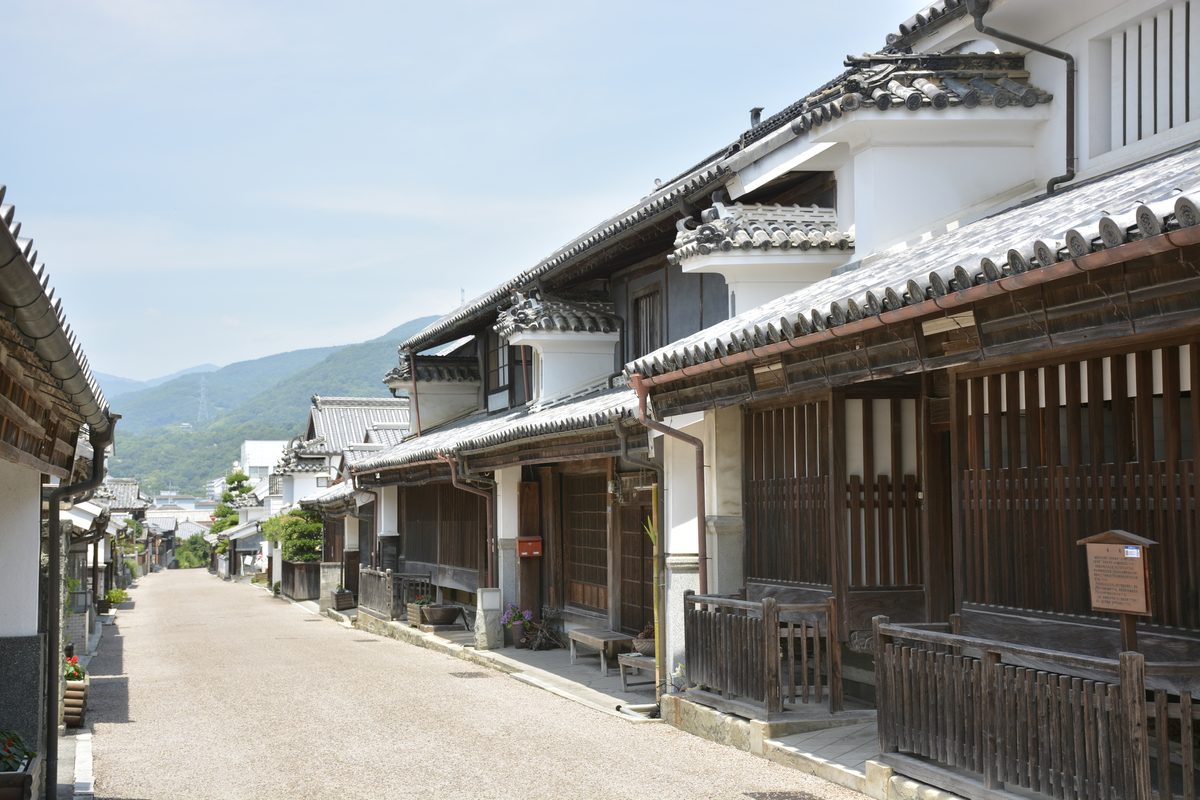
Wakimachi, in Mima City, preserves a street of Edo and Meiji-period merchant houses distinguished by udatsu — raised firewall extensions on either side of the roofline that served both as fire barriers between buildings and as conspicuous displays of merchant wealth. Richer families could afford to build them higher and more ornately decorated; the phrase 'unable to raise the udatsu' passed into Japanese idiom as an expression of social failure.
The street is 430 metres long, intact enough to walk without encountering modern commercial signage, and quiet enough that weekday visits can feel almost private. Small museums in the larger houses explain the indigo trade that funded the construction — Tokushima was historically Japan's primary source of ai, natural indigo dye.
Udatsu is a half-day from Tokushima City; the indigo dyeing workshops in the broader Mima area offer hands-on dyeing sessions for those who want to connect the merchant wealth with the raw material.
Explore Udatsu spotsOtsuka Museum of Art — Every Major Western Painting, Reproduced in Ceramic
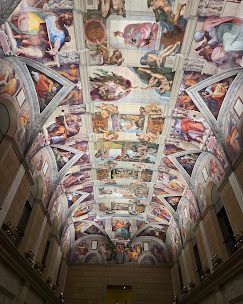
The Otsuka Museum of Art in Naruto is one of the largest museum buildings in Japan by floor area, and it contains something that has no real equivalent: full-scale ceramic reproductions of over 1,000 Western masterworks, from Sistine Chapel ceiling panels to Vermeer interiors to the Guernica, all produced by a specialised firing process that is guaranteed to last over 2,000 years.
The purpose is stated honestly — to make major Western paintings accessible to Japanese audiences who cannot travel to see the originals, and to preserve visual records of works that deteriorate over time. The reproductions are not originals; the experience of standing in a full-scale Sistine Chapel replica without crowds is genuinely different from a postcard.
Opinions on the museum divide sharply. Some find it intellectually interesting as a document of what is considered worth preserving; some find it a disquieting simulacrum. It takes four to five hours to cover seriously, which is itself an argument about what a museum should do.
Explore Otsuka Museum spotsTairyuji — The Temple at the End of the Cable Car
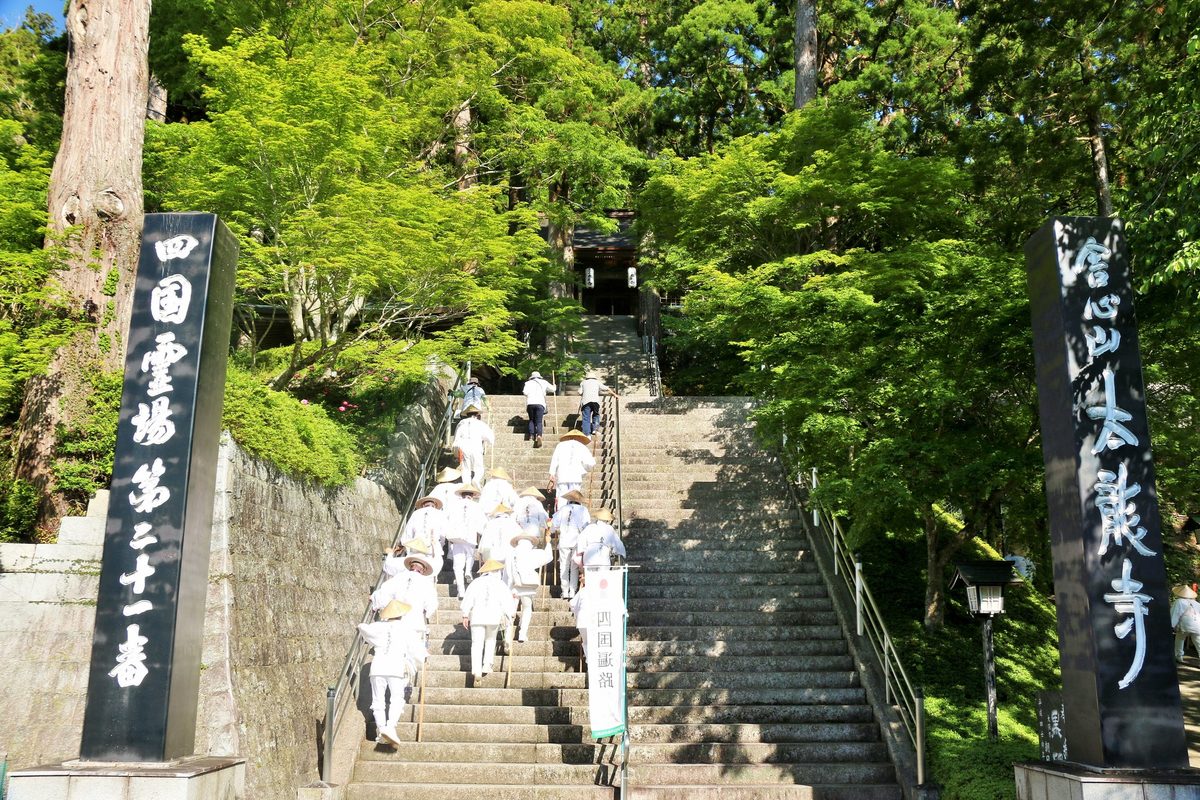
Tairyuji is temple 21 of the Shikoku Pilgrimage, perched at 618 metres in the Ryuzan mountains above Anan City. A ropeway connects the base to the temple complex — pilgrims in white robes share the gondola with day visitors, a combination that captures something about the Shikoku pilgrimage's relationship with tourism.
The temple itself is timber-framed and old; the main hall holds the Yakushi Nyorai, the healing Buddha, in an interior lit by candles and thick with incense. The surrounding cedar forest and the views east toward the Pacific give the site a grandeur that more accessible temples sometimes lack.
Tairyuji pairs with an overnight in Anan or a continuation south toward the capes; it is not a quick detour from Tokushima City, but it is one of the more atmospherically complete pilgrimage temples in the southern half of the circuit.
Explore Tairyuji spotsOasahiko Shrine — The Most Important Shrine Nobody Visits
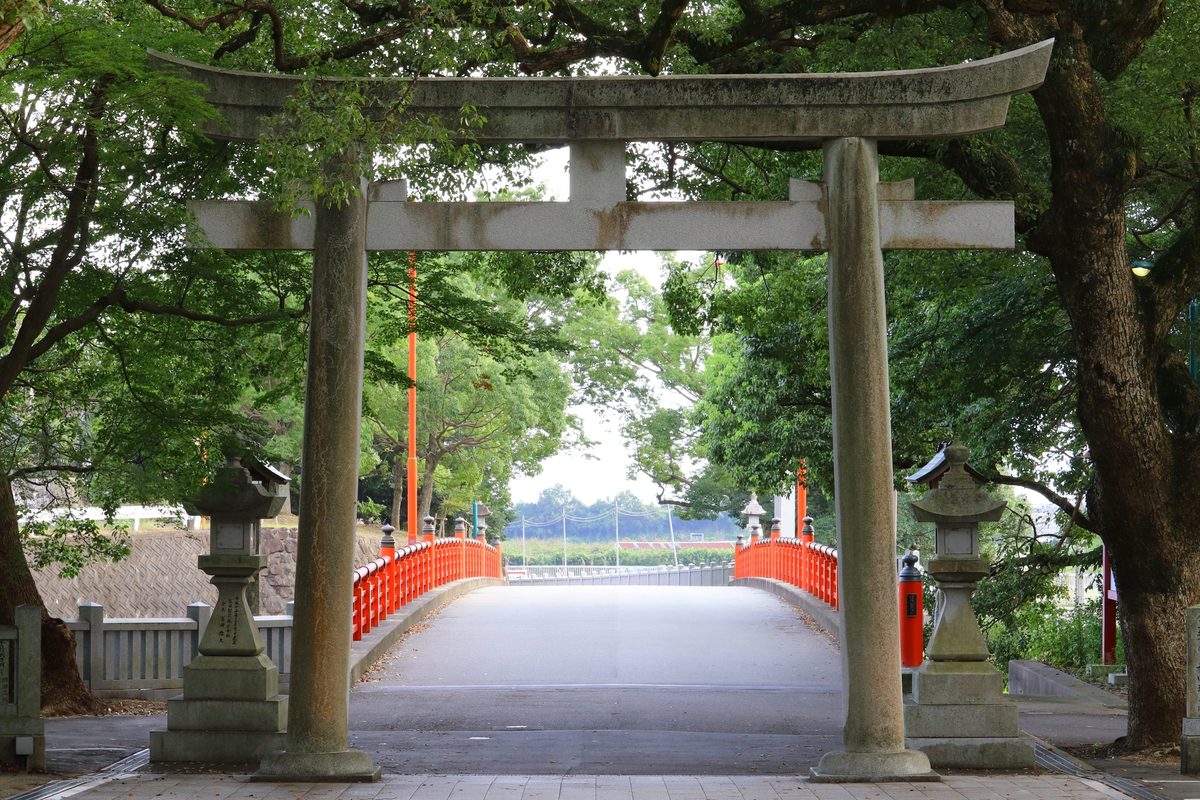
Oasahiko Shrine in Naruto is one of the oldest and most significant shrines in Shikoku — dedicated to Ame-no-Mikumari-no-Kami, the deity of water distribution, it was once the foremost shrine of the island and held Ichinomiya status for Awa Province. It sees a fraction of the visitors that Naruto's whirlpools attract despite being a short bus ride from the same town.
The approach through old-growth cryptomeria is unhurried and quiet; the main hall is understated in the way that genuinely old shrines often are — the authority comes from the setting and the depth of the cedar canopy rather than from architectural elaboration.
Oasahiko pairs naturally with Ryozenji and the whirlpools as a Naruto day that moves from spiritual to geological to cultural without feeling contrived.
Explore Oasahiko spotsHow to Plan Your Tokushima Trip
Tokushima City is the base for Naruto (40 min), Udatsu (1 hr), and Otsuka Museum. Iya Valley requires a separate commitment — two nights in the valley, accessed by limited express to Oboke and bus, allows Nishi-Iya, Kazurabashi, Ochiai, and the gorge without rushing. A car makes the valley significantly more flexible; the bus schedules are infrequent enough to restrict options.
Awa Odori in August transforms accommodation availability prefecture-wide — book months ahead or base yourself in Takamatsu, Matsuyama, or Naruto and commute in. The festival is worth planning around; visiting Tokushima in any other month means having the city at something like normal capacity.
The Shikoku Pilgrimage begins here: Ryozenji is the natural starting point for those walking or cycling the full 88-temple circuit. The northern Awa temples (1–23) cover the length of Tokushima before crossing into Kochi; the pace of a walking pilgrimage is 40–50 days for the full circuit.
Where are these spots?
How to Get There
Tokushima Station is connected to Okayama via the JR Kotoku Line with limited express services. Tokushima Airport has direct flights from Tokyo (Haneda) in around 1 hour 20 minutes. High-speed ferries connect Wakayama and Tokushima in around 2 hours; Osaka ferry services also operate. Naruto is 40 minutes by bus or train. The JR Dosan Line serves Oboke for Iya Valley access. Buses into Nishi-Iya run from Oboke Station but infrequently — rental cars are strongly recommended for Iya Valley. Awa Odori festival dates are 12–15 August every year.
Find your Japan
Find Your Tokushima
Browse curated spots across Tokushima Prefecture — from Naruto whirlpools to Iya Valley and Awa Odori — on Tobira.
Find match spotsMore Prefecture Guides
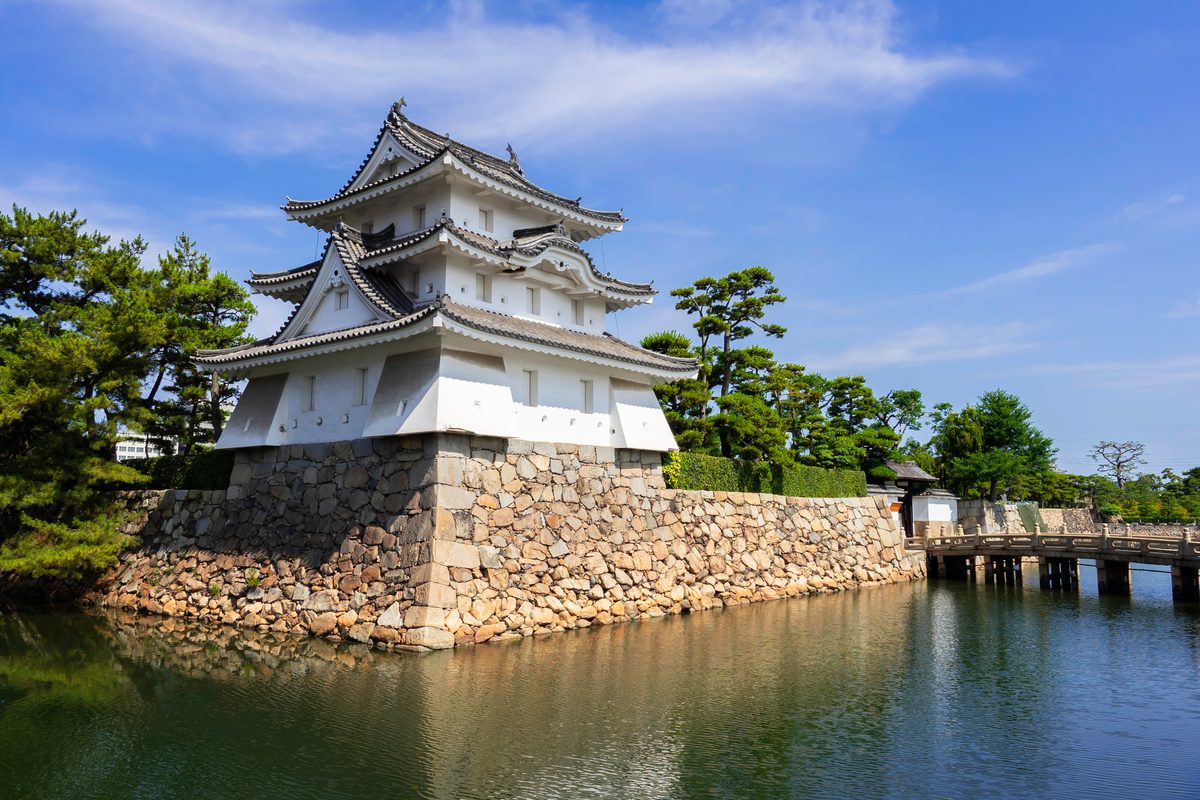
Kagawa: Udon, Art Islands, and the Most Climbed Stairs in Shikoku
11 min read
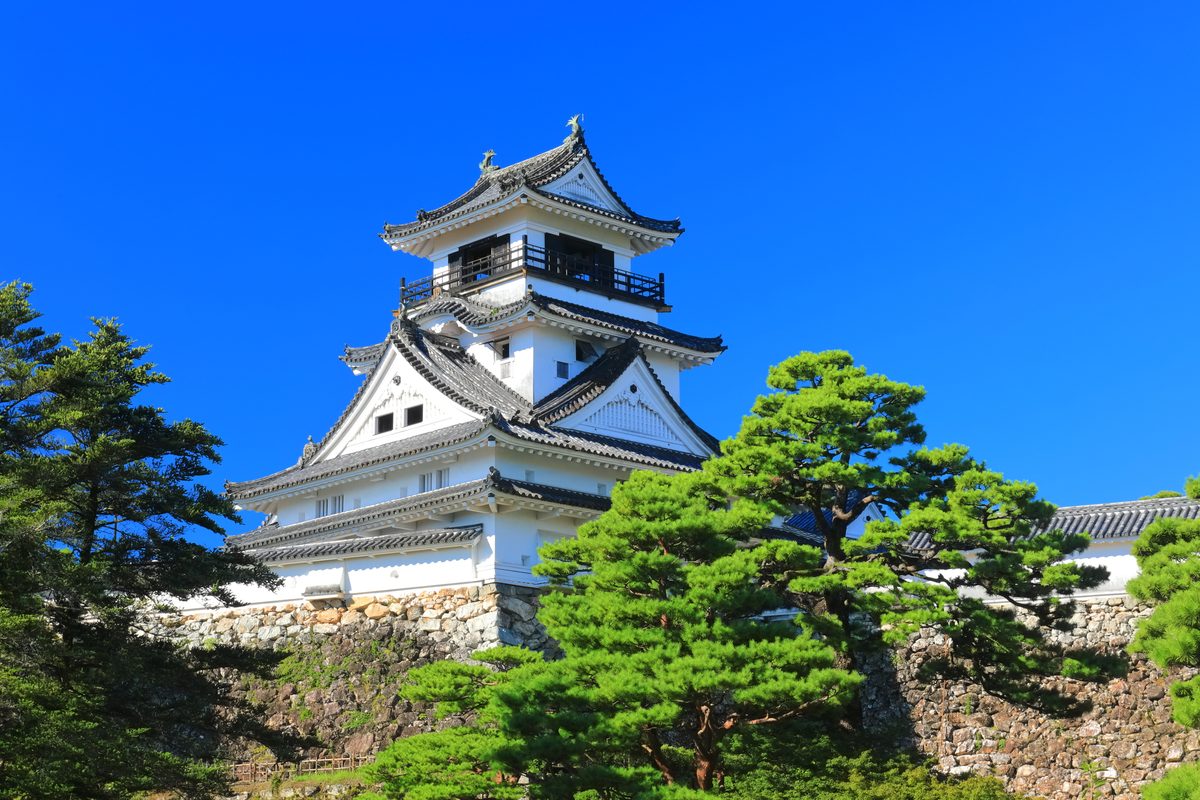
Kochi: The Wild Coast That Japan Forgot to Tame
12 min read
Ehime: Islands, Castles, and the Road That Goes Between
13 min read
Fukushima: Three Regions, One Prefecture, No Simple Story
12 min read
Akita: Snow Country, Rice Country, and Monsters on New Year's Eve
12 min read
Yamagata: Cherries, Sacred Mountains, and Snow That Eats the Trees
12 min read
Miyagi: The Coast, the Castle, and Sendai Between Them
11 min read
Iwate: Where the Mountains Lean Against the Pacific
12 min read
Aomori: Where Winter Invented Its Own Festival
12 min read
Kagoshima: Where the Mainland Finally Runs Out of Land
12 min read
Miyazaki: Where the Sun God Hid and the Horses Run Wild
11 min read
Saga: Older Than You Think, Quieter Than Most
11 min read
Nagasaki: Where Every Century Left Something Behind
13 min read
Oita: Where the Earth Still Boils
12 min read
Fukuoka: Where Japan Eats, Breathes, and Gets On With It
14 min read
Hokkaido Travel Guide: Ten Places Beyond Sapporo
16 min read