
Miyazaki: Where the Sun God Hid and the Horses Run Wild
Miyazaki has a specific quality of light — flat, warm, and consistent — that distinguishes it from the rest of Kyushu. The prefecture faces east into the Pacific rather than west towards the China Sea, and this orientation gives it a different rhythm: the mornings are clear, the coast is open, and the agricultural land between the coast and the mountains produces a kind of unhurried domesticity that the more visited parts of Japan have largely lost. In the mountains, at Takachiho, there is something older and stranger: a mythology that continues to be enacted every night of the year in a shrine ceremony that has not substantially changed in centuries.
Miyazaki is where Japan's creation myths are set — Takachiho is the gorge where the gods performed the first kagura, and the names of local mountains and shrines run directly back to the Kojiki. It is also, less mystically, one of the sunniest prefectures in Japan, with a Pacific coastline that runs for over 400 kilometres from subtropical beaches to exposed volcanic headlands.
Takachiho — Where Japan's Gods Came From
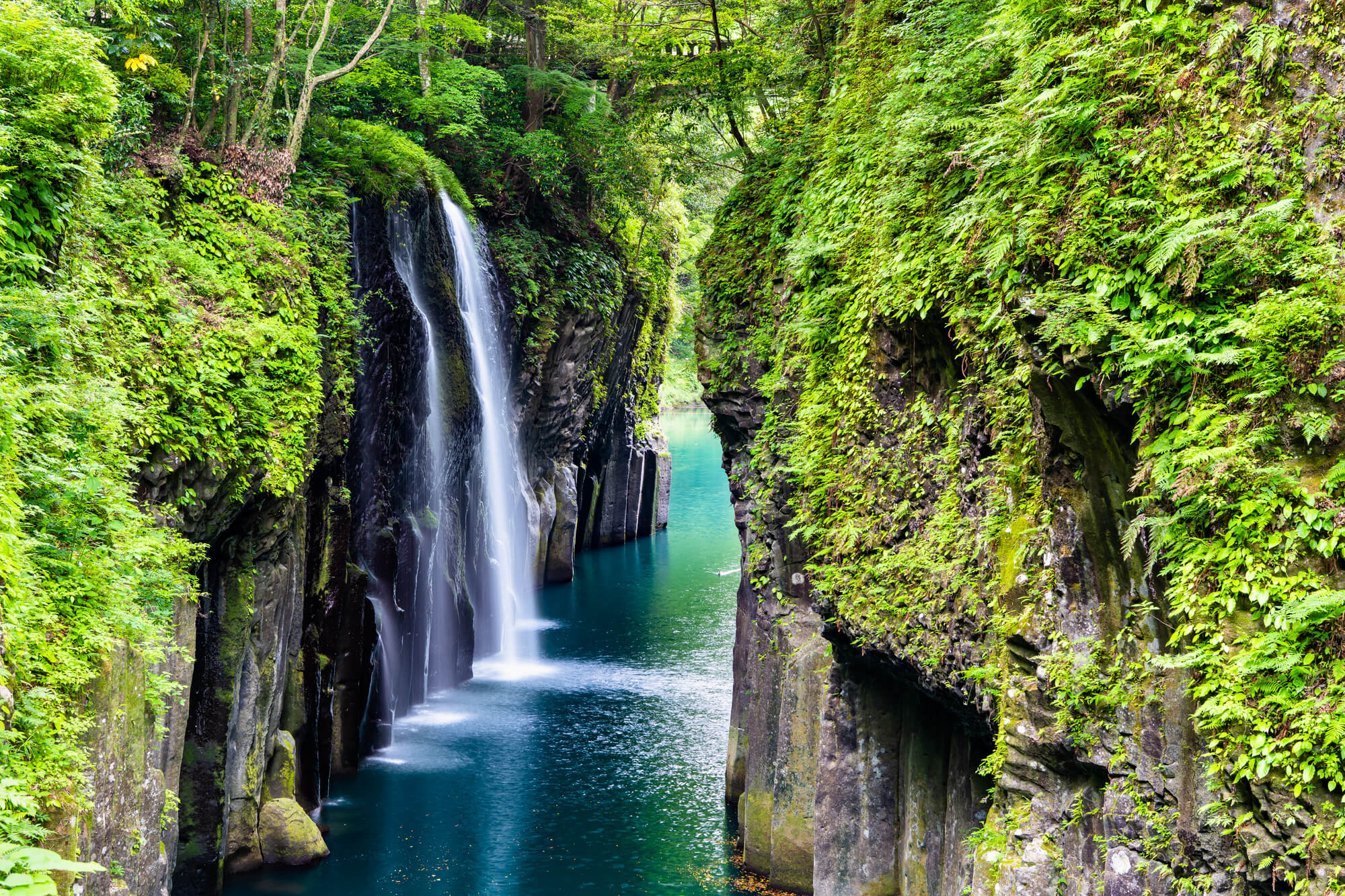
Takachiho is where the Japanese creation myths took place, and the town has the unusual quality of somewhere that knows exactly what it is. The Takachiho Gorge, cut through columnar basalt by the Gokase River, is the most photographed site in the prefecture — a sequence of vertical cliff faces, waterfalls, and turquoise water that can be viewed from rental rowing boats at the base. The boats are slow, the canyon is narrow, and the scale of the basalt columns above makes the effect genuinely impressive rather than merely scenic.
Ama-no-Iwato Shrine stands above the Iwato River gorge at the site where, according to the Kojiki, the sun goddess Amaterasu hid inside a rock cave, plunging the world into darkness. The inner sanctuary across the river cannot be entered, but the outer shrine and the overgrown gorge path below it have an atmosphere that the more visited sections of Takachiho lack. The cave is visible from across the gorge; the space in front of it — Amanoyasukawara — is where the other gods gathered to plan how to coax Amaterasu's return.
Each night, year-round, Takachiho Shrine performs a ninety-minute version of the yokagura, the ancient sacred dance cycle that tells the story of Amaterasu's emergence. The full cycle takes 33 dances and runs through the night at specific festivals; the nightly performance condenses this into four representative dances. Watching it in the shrine's wooden hall, with the smoke from the central fire and the costumed dancers moving through stories that are simultaneously religious and theatrical, is one of the more unusual things available in Kyushu.
Takachiho Gorge
Miyazaki
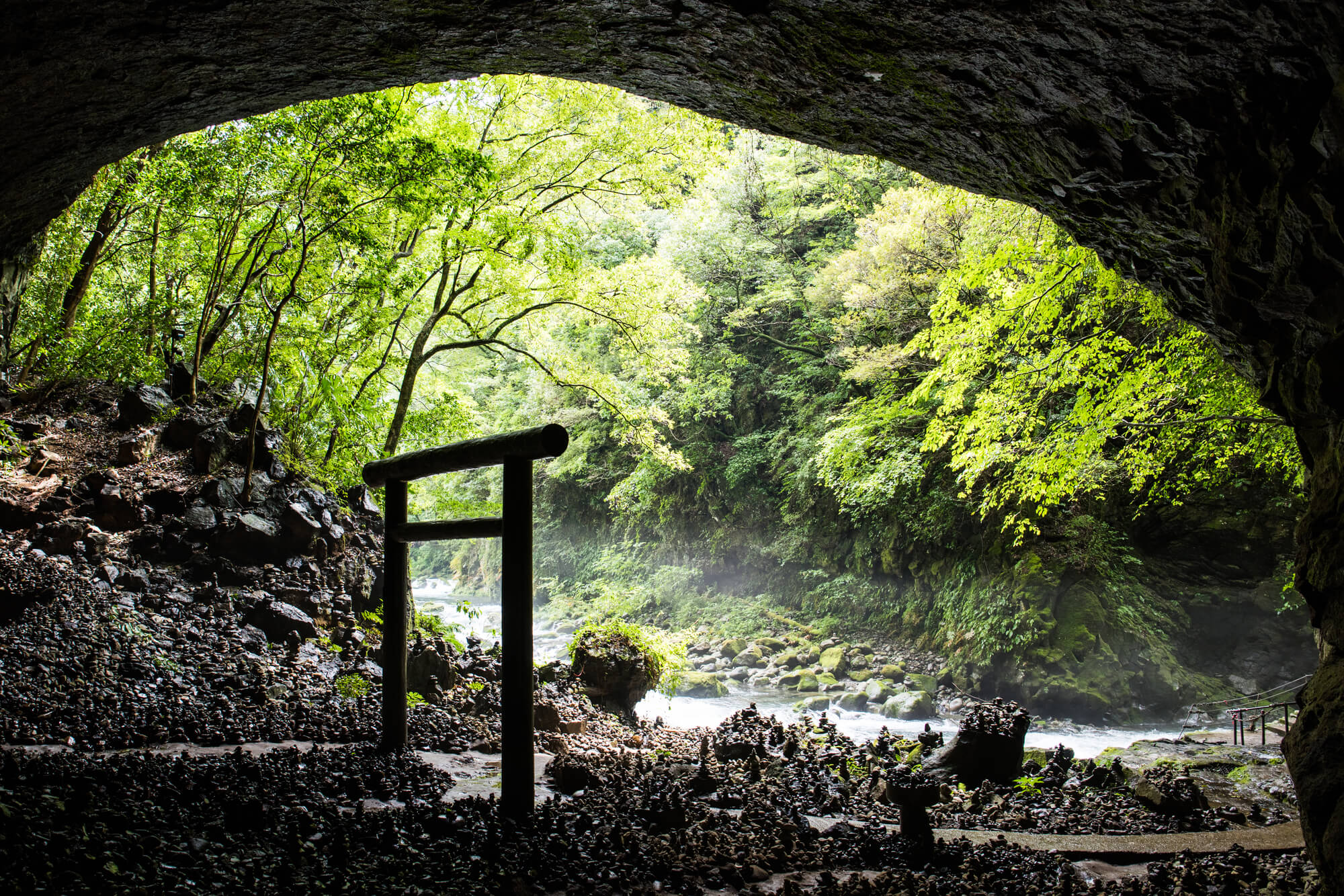
Ama-no-Iwato Shrine & Amanoyasukawara
Miyazaki
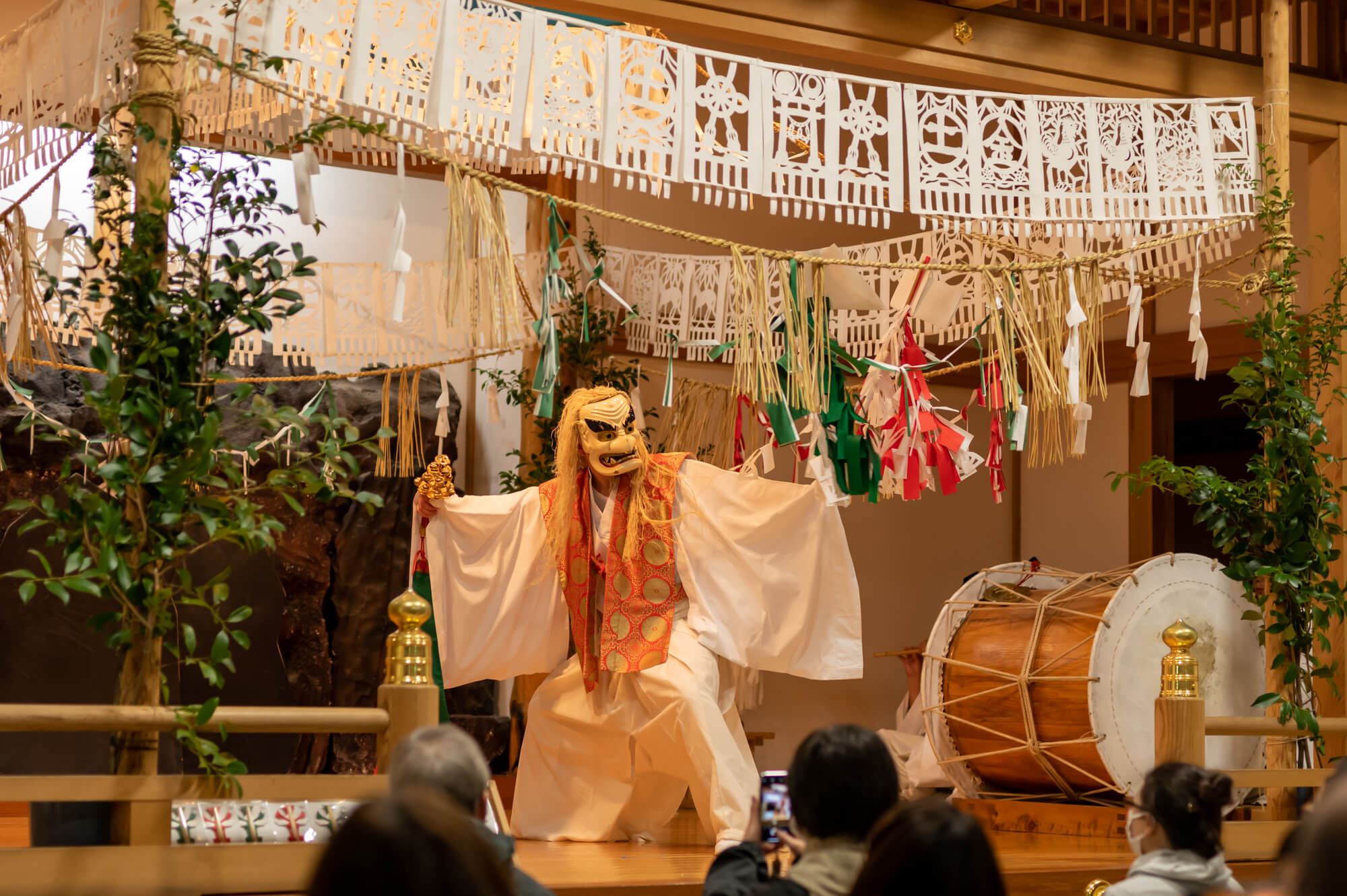
Takachiho Shrine Night Kagura
Miyazaki
Miyazaki City & Aoshima — Where the Pacific Begins
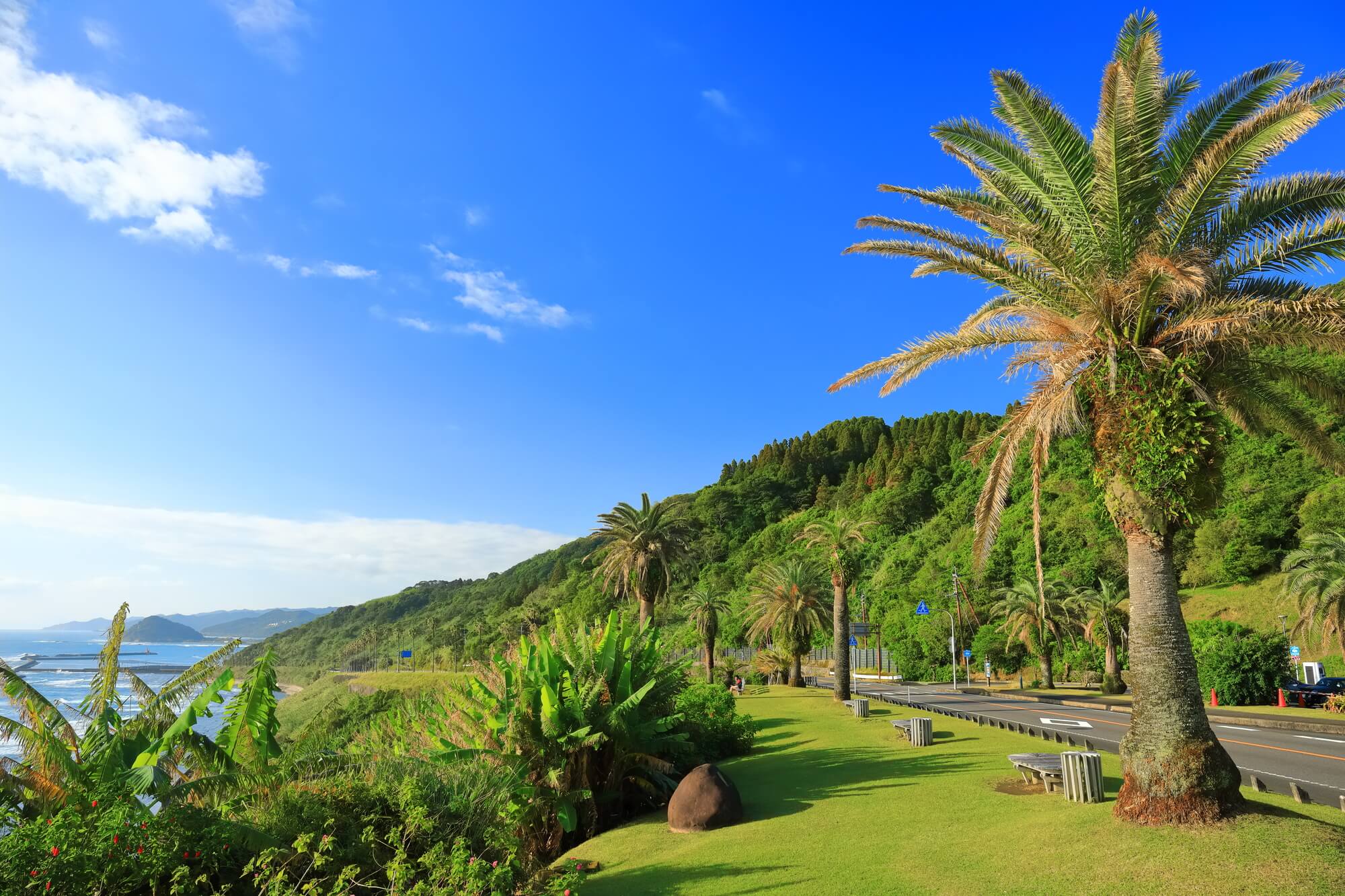
Miyazaki City is a flat, palm-lined coastal city that functions more like a large beach town than a regional capital. The seafront is open, the pace is unhurried, and the cuisine — chicken nanban, cold udon, and a regional iteration of ramen that is emphatically its own thing — is taken seriously enough to make eating here a sustained activity.
Aoshima Island, connected to the mainland by a short causeway seven kilometres south of the city centre, is small enough to walk around in twenty minutes and strange enough to justify the detour. The island's perimeter is fringed by the Devil's Washboard — a formation of flat, stepped rock created by alternating layers of sandstone and mudstone that erosion has cut into a regular geometric grid. The effect at low tide is of something deliberately constructed. The Aoshima Shrine at the island's centre is built within a subtropical garden of cycad palms.
The Umisachi Yamasachi sightseeing train runs the coastal route between Miyazaki and Nango, following the Pacific closely enough that the sea fills the carriage windows for long stretches. It is a scenic train in the straightforward sense — the route is used by local passengers too, and the coastal scenery requires no particular presentation to be effective.
Explore Miyazaki City spots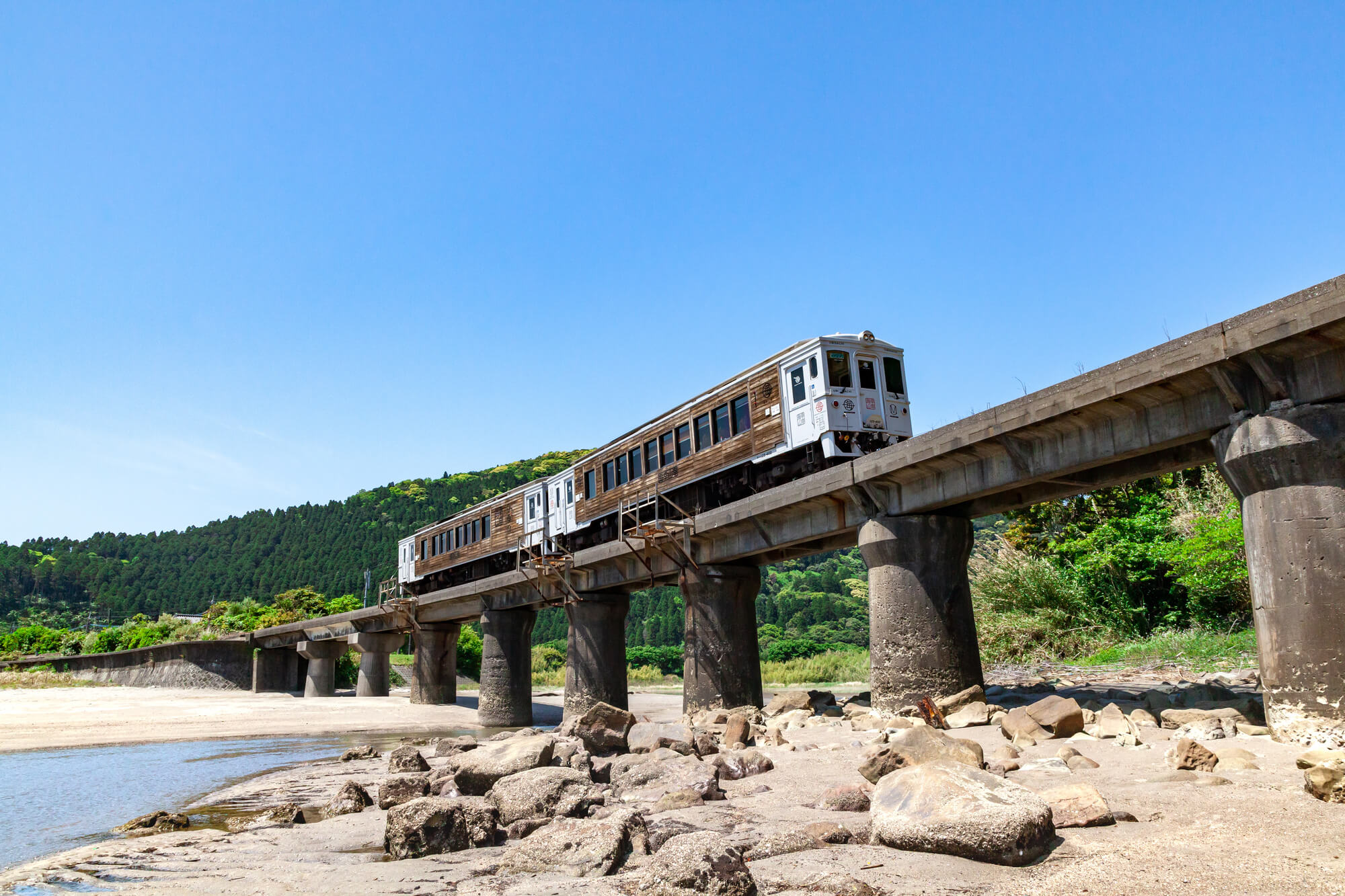
Nichinan — Castle Town, Sea Cave, and the Moai Nobody Expected
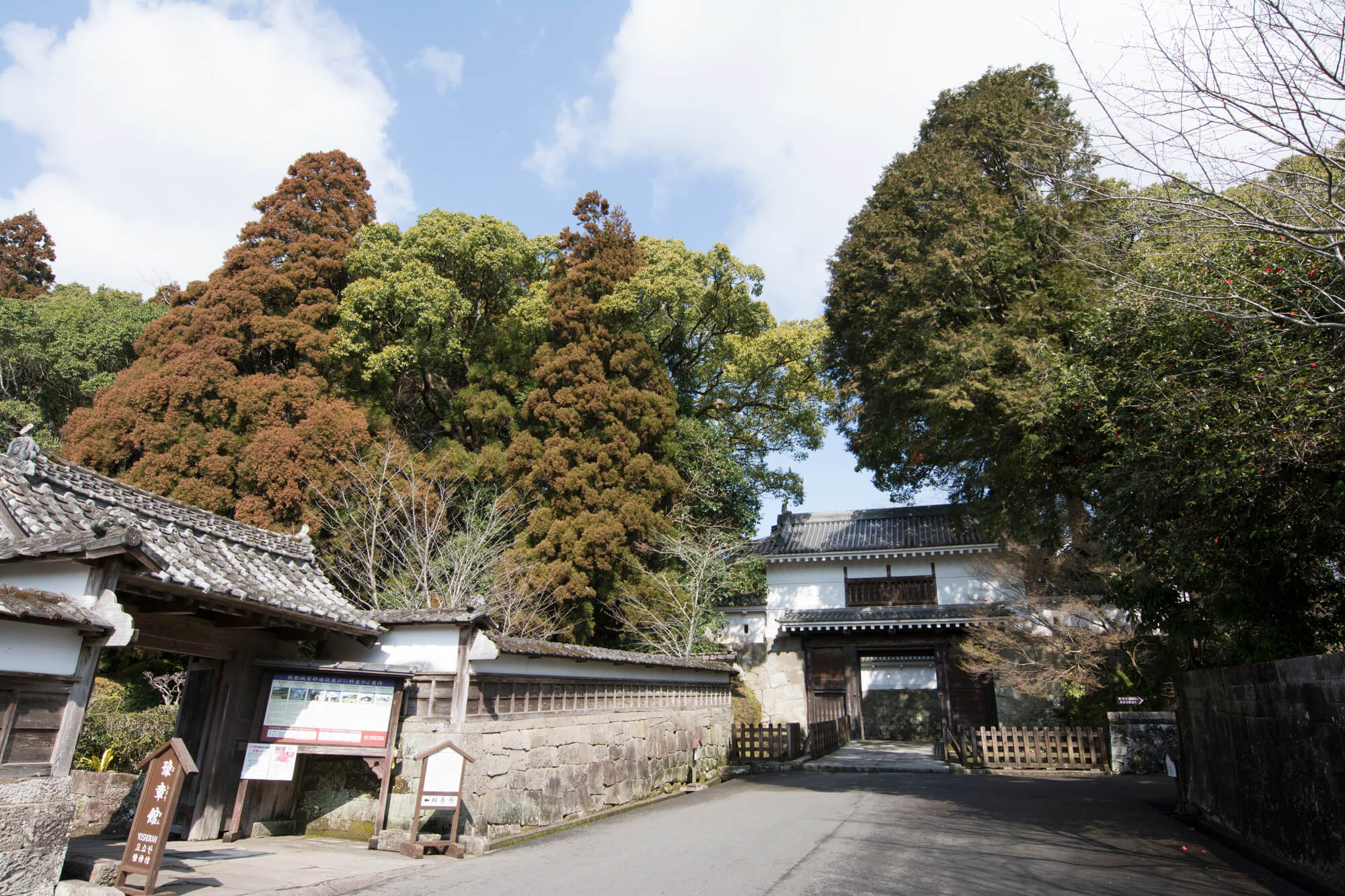
Obi, a castle town preserved largely intact within the city of Nichinan, is what most of coastal Kyushu's historic towns looked like before the 20th century simplified them. The earthen walls, stone-lined drainage channels, and merchant houses of the Edo period survive along a grid of streets that the Ito clan administered for 14 generations. It is not a reconstruction — the buildings are original — and the town's relative obscurity has kept it from the management decisions that affect more famous castle towns.
Udo Jingu Shrine, further along the coast, is built inside a sea cave in the coastal cliffs, accessed by a path that descends steeply through the rock face to the shrine buildings embedded in the cave wall. The ritual here involves throwing small clay balls into a bowl-shaped depression in rock below the cave mouth — a ceremony connected to wishes for safe childbirth and marriage. The walk down to the cave, with the Pacific visible and audible below, gives the place an intensity that more conventionally located shrines rarely manage.
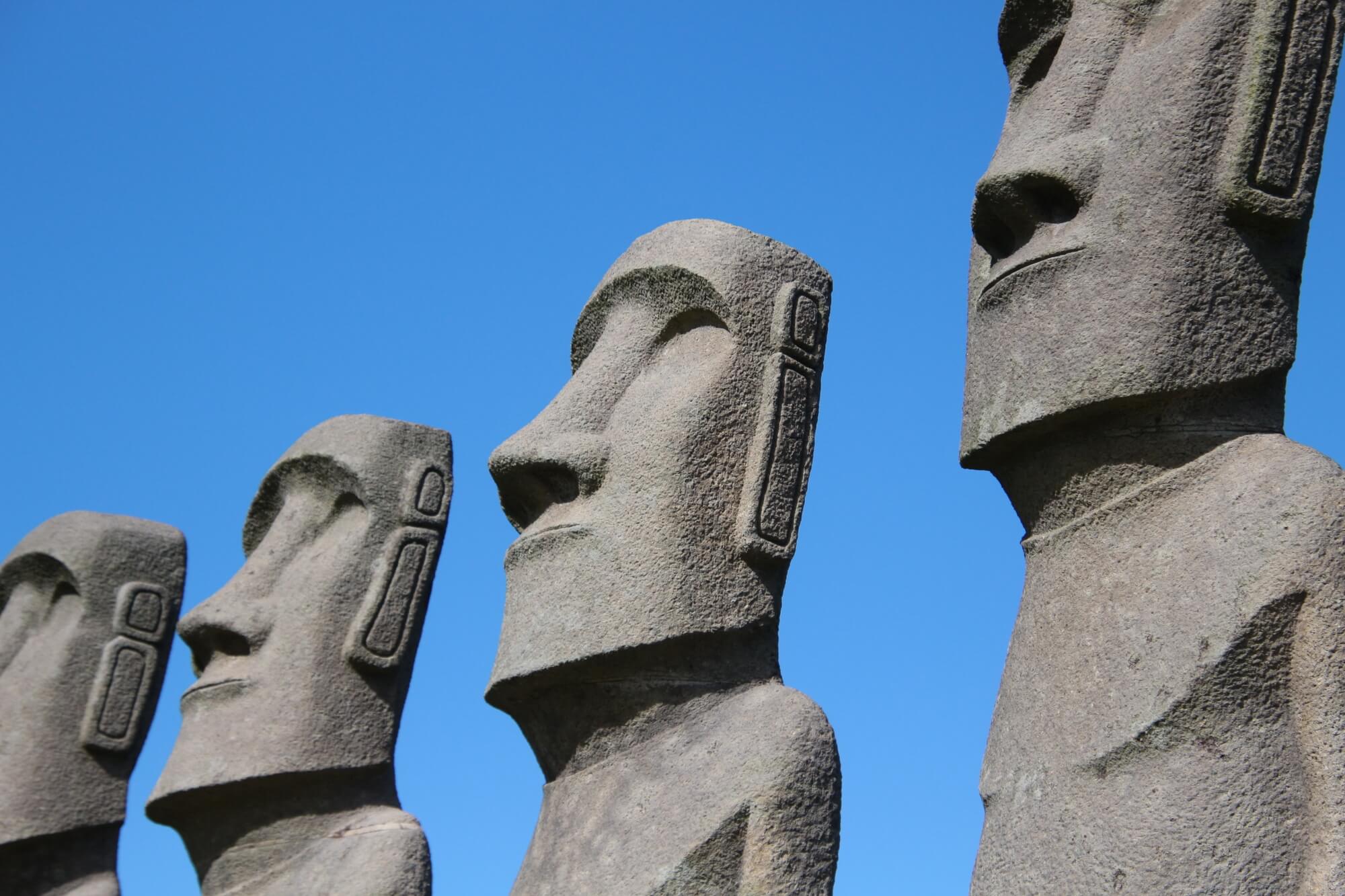
Sun Messe Nichinan contains seven full-size replica Moai statues — the only official reproductions authorised by Easter Island's Rapa Nui Council, installed in 1996 in exchange for conservation assistance Miyazaki provided to the island. They stand in a row facing the Pacific. The incongruity is substantial and the views are excellent.
Explore Nichinan spots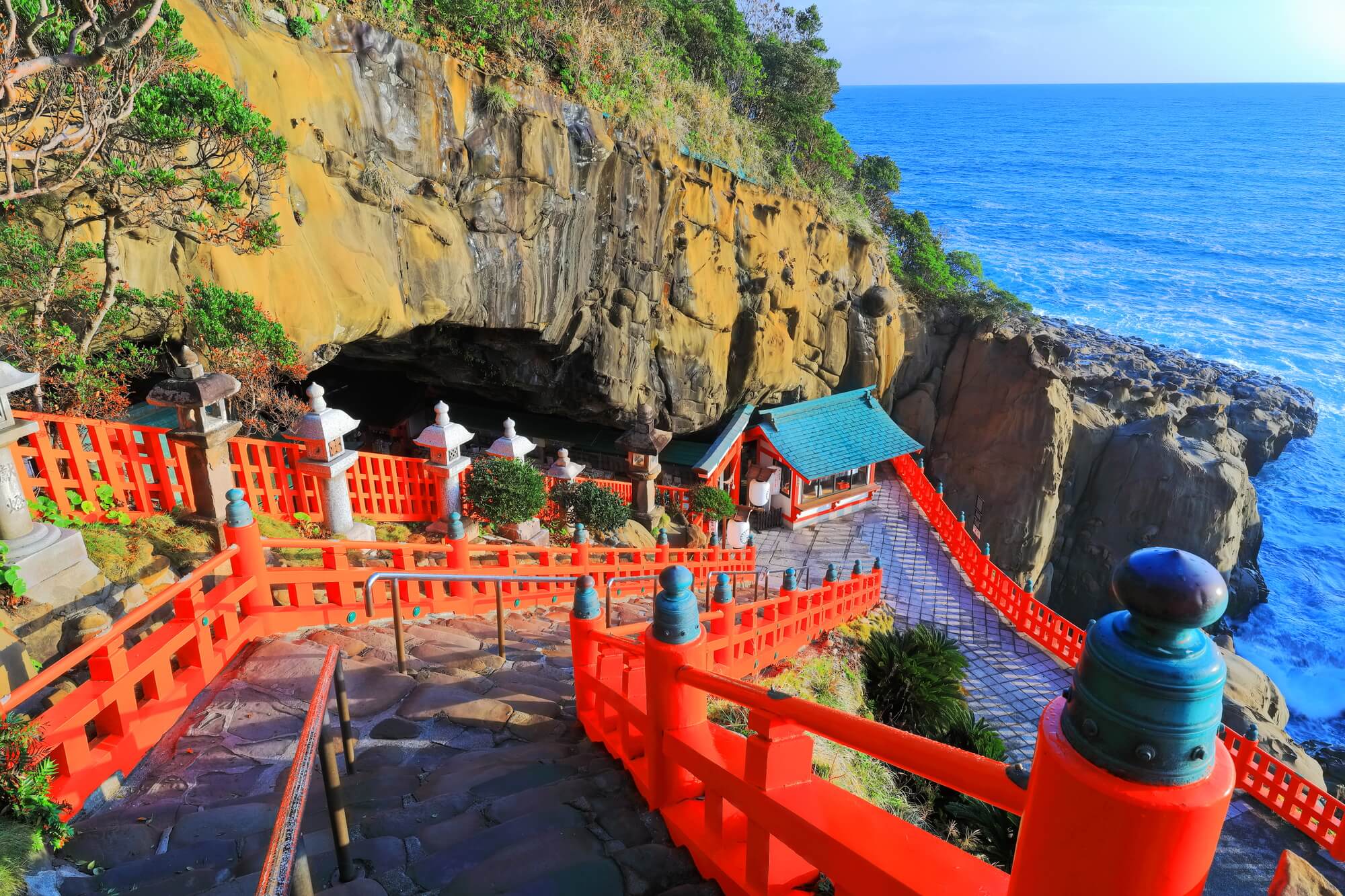
Ebino & Aya — The Green Interior Nobody Maps
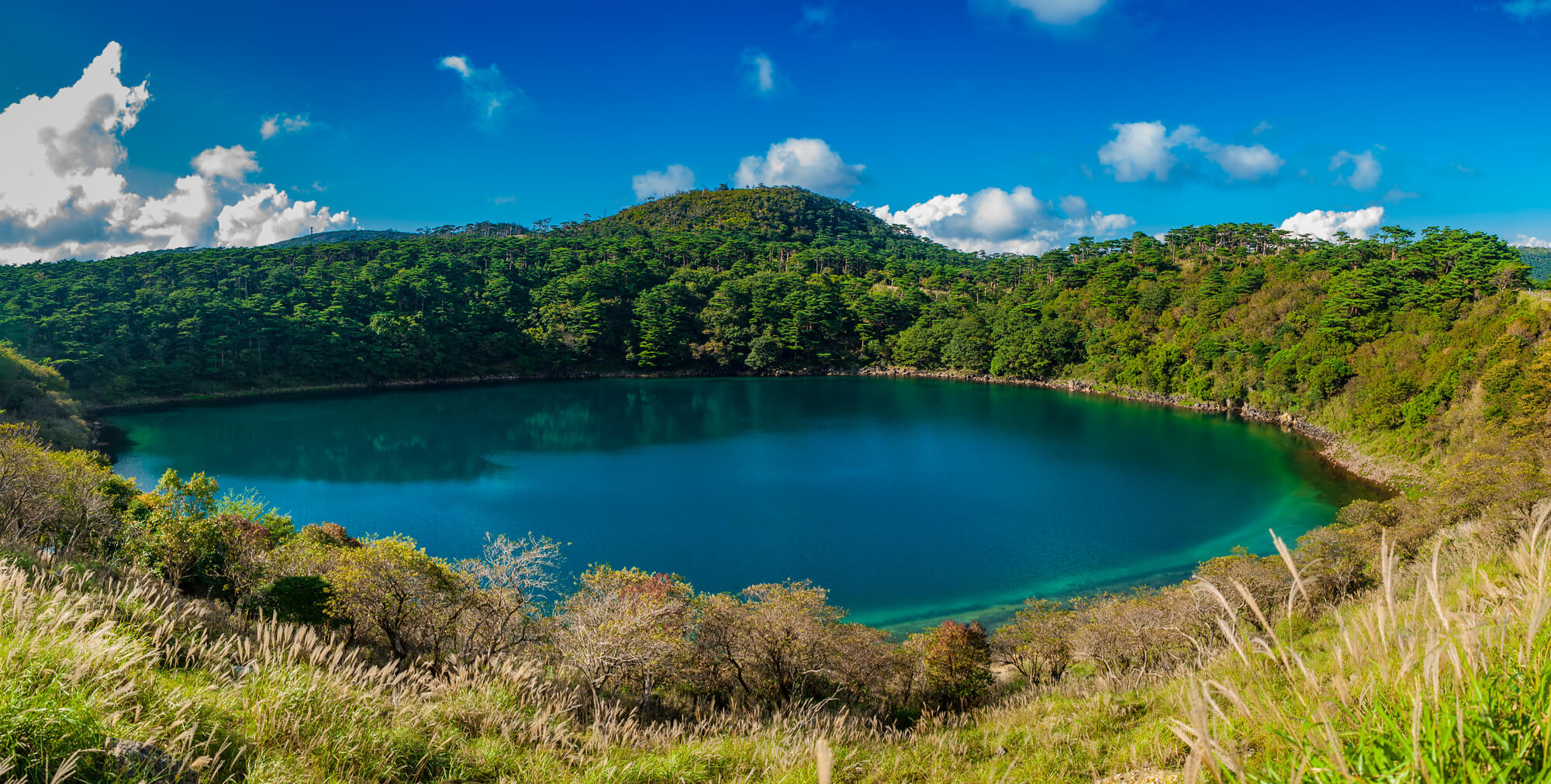
Ebino Plateau sits at around 1,200 metres on the border of Miyazaki and Kagoshima, an upland grassland surrounded by volcanic peaks — Karakuni-dake, Shinmoe-dake, and Io-yama — that form part of the Kirishima volcanic chain. The plateau is flat enough to walk across in under an hour and dramatic enough that most people stop well before completing the circuit. In late April and early May, the plateau turns pink with Kyushu azaleas in concentrations that rival Aso.
Aya, a small town in the forested interior of Miyazaki, sits within one of the largest remaining areas of broad-leaved evergreen forest in Japan. The forest is old — some trees exceed several hundred years — and the local government has been protecting it since the 1970s in an approach to conservation that preceded national policy. The Teruhane suspension bridge, 250 metres long and 142 metres above the valley floor, gives access to the forest canopy and offers views over an unbroken expanse of green that is unusual in a country where most accessible forests have been converted to cedar plantation.
The town of Aya also has a working organic farming community and a small number of craft workshops. The combination of intact nature and considered local industry gives Aya a quality that more conventionally promoted destinations rarely achieve.
Explore Ebino spots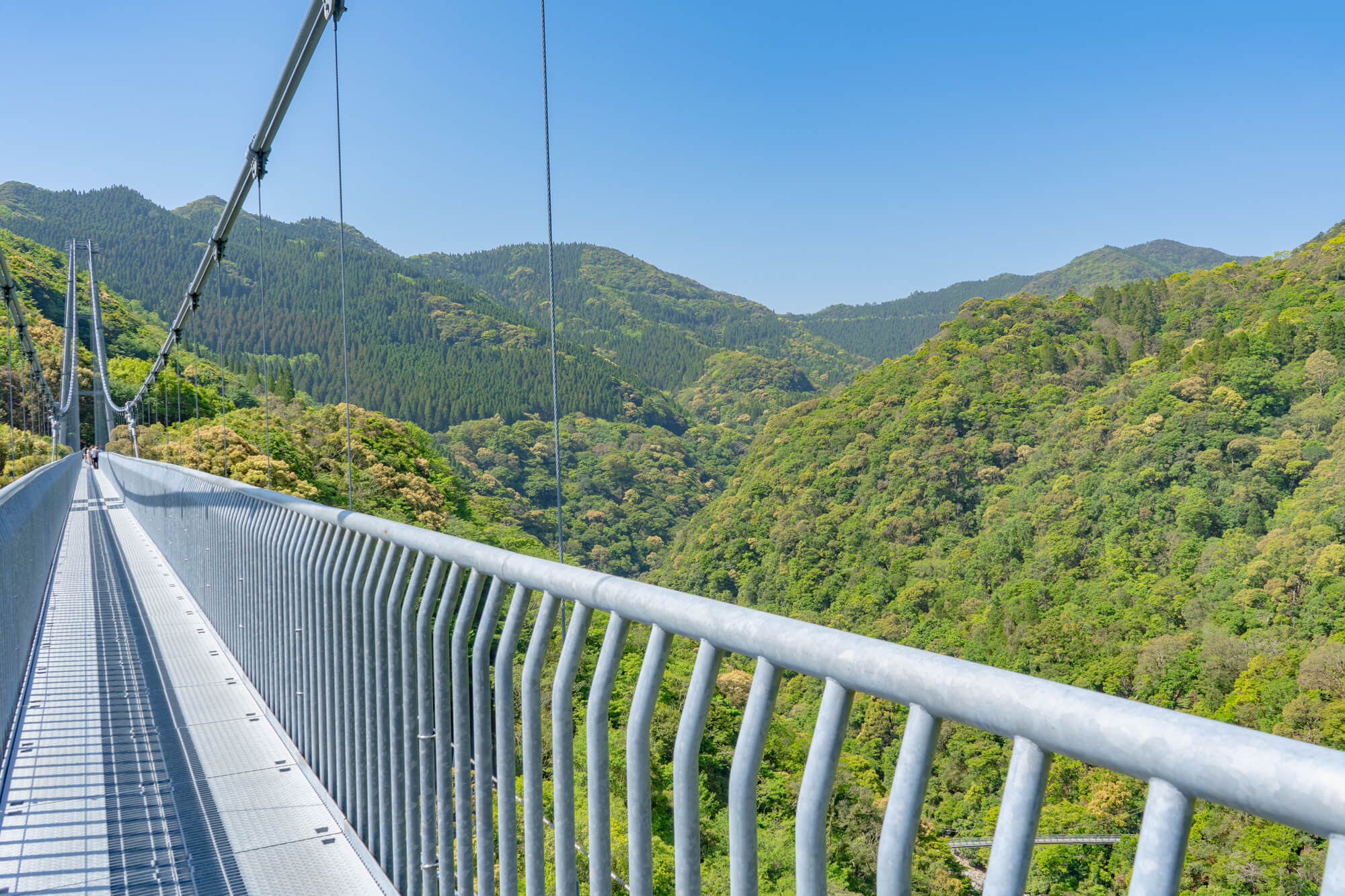
Cape Toi & Hyuga — Wild Coast at the Edge of Japan
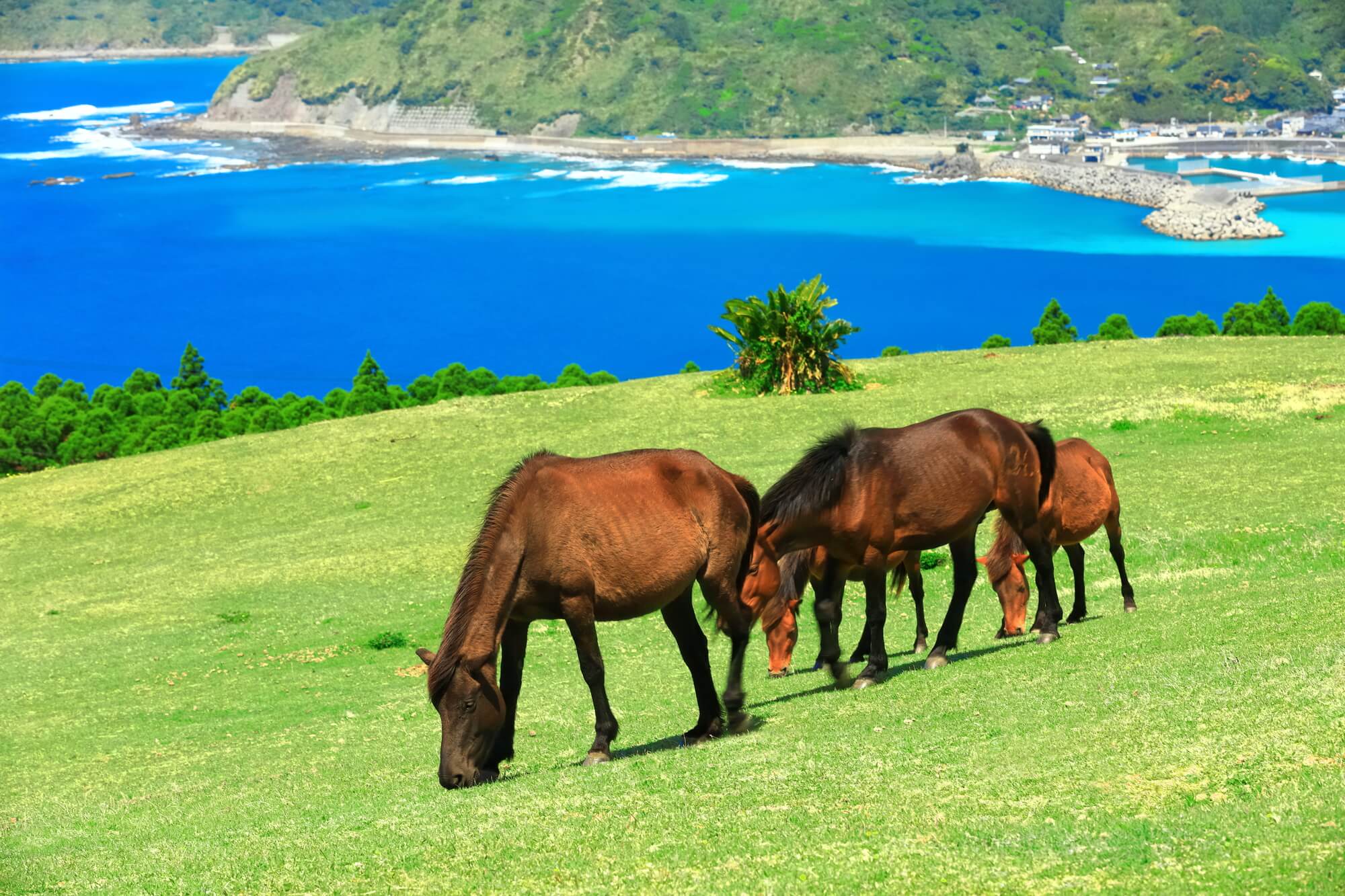
Cape Toi, the southeastern tip of the Miyazaki coast, is home to Japan's only genuinely wild horse population. The Misaki horses — a small, stocky breed of ancient lineage — have roamed the cape's open grasslands without human management since 1953. There are around 100 horses, and they are indifferent to visitors in the way that animals are when they have not been conditioned to seek or avoid human contact.
The cape itself is dramatic: volcanic cliffs, exposed headland, and Pacific views that extend without interruption to the horizon. The lighthouse at the tip is the southernmost in Kyushu, and the walk around the headland follows the cliff edge close enough that the sea is always audible and frequently visible far below. The horses appear wherever the grass is good, which is unpredictable and part of the point.
Hyuga, on the northern Miyazaki coast, has the Umagase cliffs — a nine-kilometre stretch of exposed basalt dropping 70 metres directly into the Pacific. The official viewpoint is straightforward; the walking path along the cliff edge gives a substantially different experience. The light in the late afternoon, hitting the cliff faces at a low angle, is the reason local photographers return repeatedly.
Explore coastal Miyazaki spots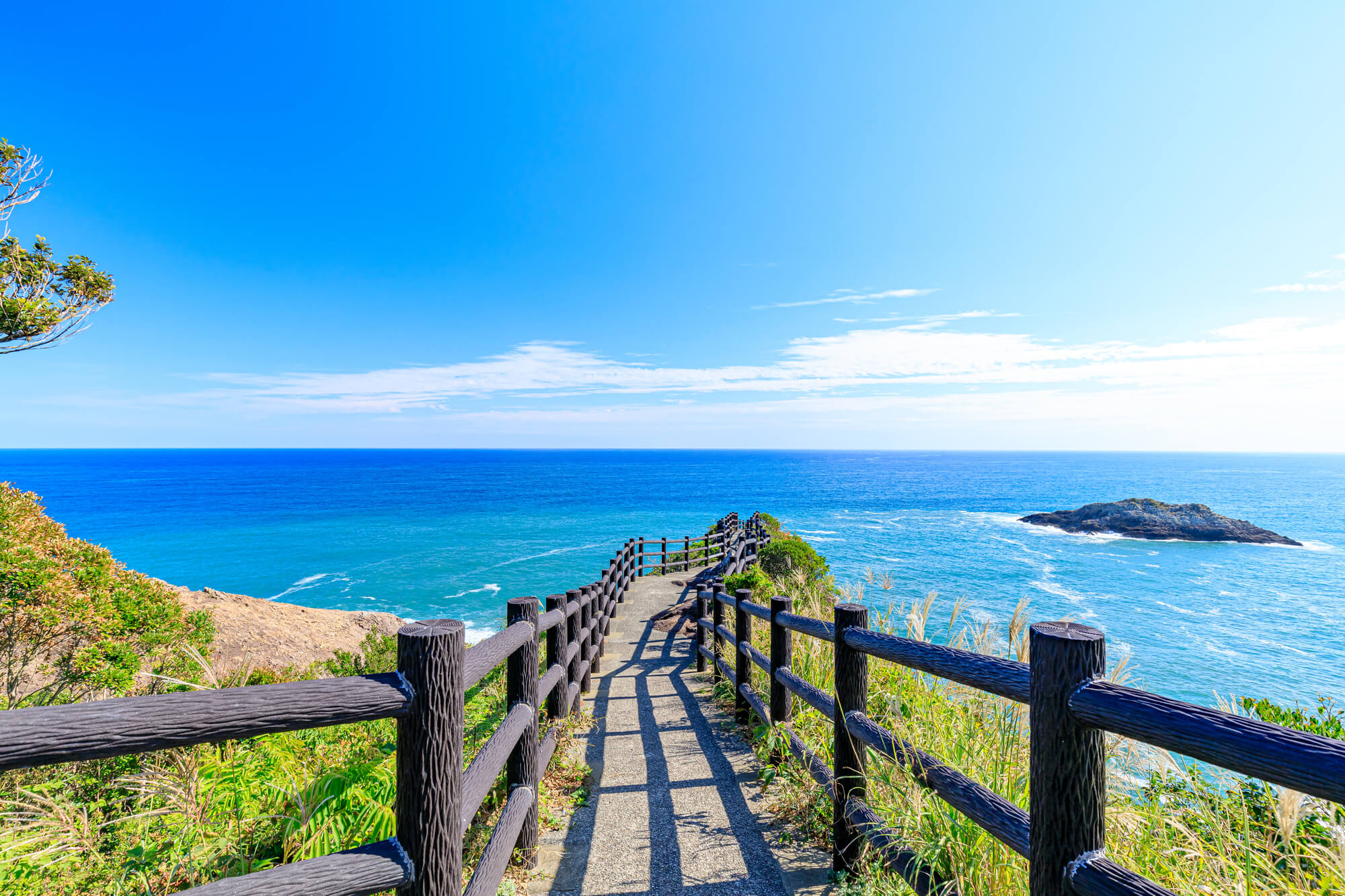
How to Plan Your Miyazaki Trip
Miyazaki City makes the most practical base — the airport is central, the coast is immediately accessible, and the trains south to Nichinan run frequently enough that the coastal attractions can be covered in a day. Aoshima and the start of the Nichinan coast are manageable without a car; Obi, Udo Jingu, and Sun Messe benefit from one.
Takachiho requires a separate commitment. The bus from Nobeoka takes around 90 minutes; from Kumamoto City, around three hours. Staying at least one night is strongly recommended — the kagura performance runs in the evening, and arriving and leaving in a day makes the distance feel disproportionate to the time spent. The gorge in the early morning, before the rowing boats start operating, is a different experience from the afternoon.
Ebino and Aya are most naturally reached by car from Miyazaki City or as part of a route connecting Miyazaki to Kagoshima. Cape Toi is a two-hour drive south and is best treated as a half-day side trip. Miyazaki rewards a loose itinerary more than a tight one — the distances are real but the roads are clear, and the sense of being somewhere that has not been fully organised for visitors is, in this part of Japan, increasingly rare.
Where are these spots?
How to Get There
Miyazaki Airport sits directly on the coast, connected to the city centre by train in around 10 minutes. Direct flights from Tokyo (Haneda) take around 1.5 hours; JAL and ANA both operate the route frequently. From Fukuoka, the Nichirin limited express runs the coastal route to Miyazaki in around 2.5 hours. Takachiho requires a separate bus journey from Nobeoka (90 min) or from Kumamoto City (3 hrs). A car is strongly recommended for the Nichinan coast, Cape Toi, and the Ebino Plateau — public transport covers the main points but misses the details.
Find your Japan
Find Your Miyazaki
Browse curated spots across Miyazaki Prefecture — from mythological gorges to the wild Pacific coast — on Tobira.
Find match spotsMore Prefecture Guides
Kagawa: Udon, Art Islands, and the Most Climbed Stairs in Shikoku
11 min read
Tokushima: Whirlpools, the Valley That Time Missed, and Japan's Loudest Dance
11 min read
Kochi: The Wild Coast That Japan Forgot to Tame
12 min read
Ehime: Islands, Castles, and the Road That Goes Between
13 min read
Fukushima: Three Regions, One Prefecture, No Simple Story
12 min read
Akita: Snow Country, Rice Country, and Monsters on New Year's Eve
12 min read
Yamagata: Cherries, Sacred Mountains, and Snow That Eats the Trees
12 min read
Miyagi: The Coast, the Castle, and Sendai Between Them
11 min read
Iwate: Where the Mountains Lean Against the Pacific
12 min read
Aomori: Where Winter Invented Its Own Festival
12 min read
Kagoshima: Where the Mainland Finally Runs Out of Land
12 min read
Saga: Older Than You Think, Quieter Than Most
11 min read
Nagasaki: Where Every Century Left Something Behind
13 min read
Oita: Where the Earth Still Boils
12 min read
Fukuoka: Where Japan Eats, Breathes, and Gets On With It
14 min read
Hokkaido Travel Guide: Ten Places Beyond Sapporo
16 min read