
Aomori: Where Winter Invented Its Own Festival
Aomori does not apologise for its climate. The winters are genuinely harsh, the summers short, and the people who live here have organised their cultural calendar around that fact — festivals that burn bright, food that preserves well, and a regional identity distinct enough from the rest of Tohoku that 'Tsugaru' still means something specific. There is a dryness to the humour and a directness to the speech that visitors from Tokyo sometimes mistake for coldness; it is not. It is simply what happens when you live at the northern edge of the main island and treat that as normal.
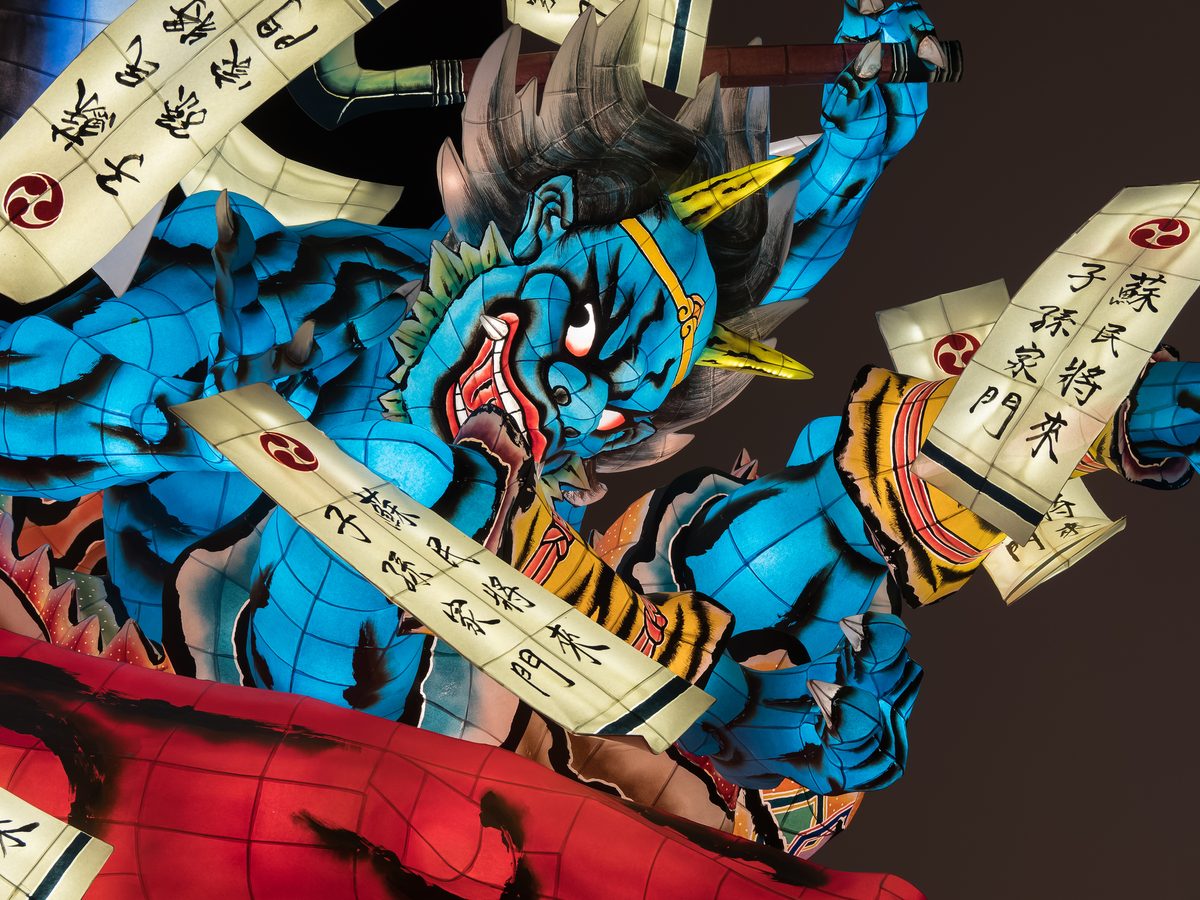
Aomori is the northernmost prefecture on Honshu, and it carries that fact without apology. Winters are long, snow is deep, and the summer festivals — particularly Nebuta in August — are loud and bright enough to justify the months of darkness that precede them. Beyond the city, the Tsugaru plain produces most of Japan's apples; the Hakkoda range receives some of the heaviest snowfall in the country; and the Shimokita Peninsula points into the Tsugaru Strait like a question mark at the edge of the map.
Aomori City — Nebuta, Jomon Ruins, and the Morning Fish Auction
Aomori City sits on Mutsu Bay facing Hokkaido across the Tsugaru Strait, and its identity is tied to two things that do not obviously belong together: a prehistoric settlement that rewrote Japanese archaeology, and a paper-lantern festival that fills the streets with illuminated floats each August.
The Sannai-Maruyama site, occupied from roughly 3900 BCE to 2300 BCE, was one of the largest Jomon settlements ever found in Japan. The reconstructed pit dwellings and longhouse give a clearer sense of scale than most museum exhibits; walking the raised walkways through the excavation area is closer to visiting a landscape than reading a timeline.
The Nebuta Museum Wa・Rasse displays full-sized floats from past festivals year-round, with workshop space where new figures are assembled. The Furukawa Fish Market opens before dawn for the tuna auction and morning seafood bowls — the kind of meal that justifies an early start. Nebuta itself, if you visit in early August, is not a museum piece but a city-wide event that draws millions.
Nebuta Museum Wa・Rasse
Aomori
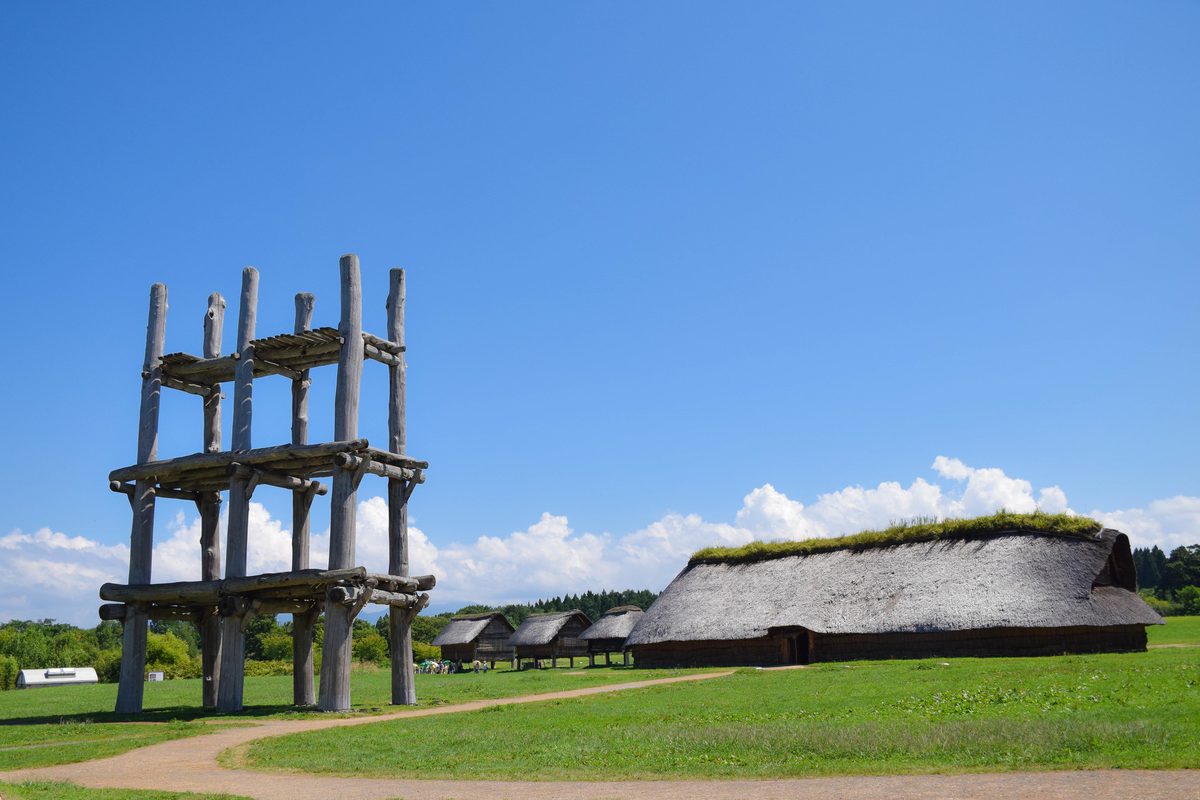
Sannai-Maruyama Site
Aomori
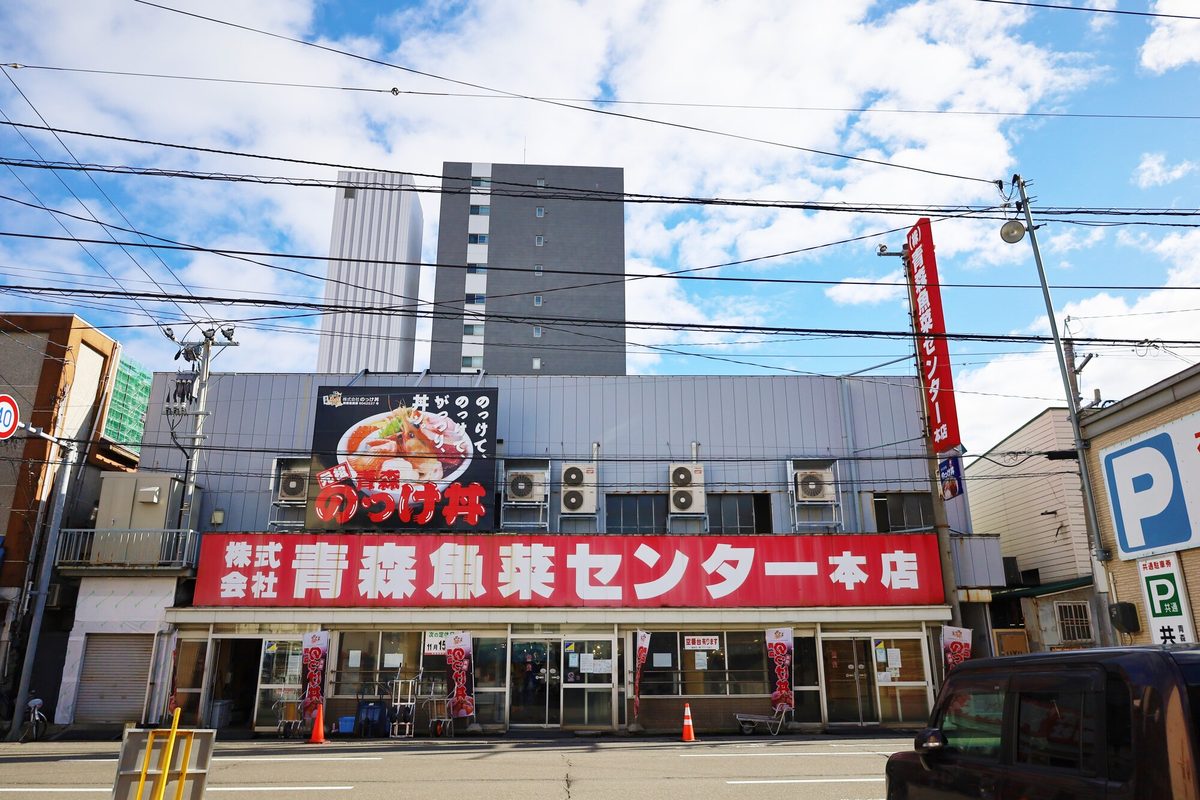
Aomori Gyosai Center (Furukawa Fish Market)
Aomori
Hirosaki — Japan's Apple Capital With a Castle Worth the Detour
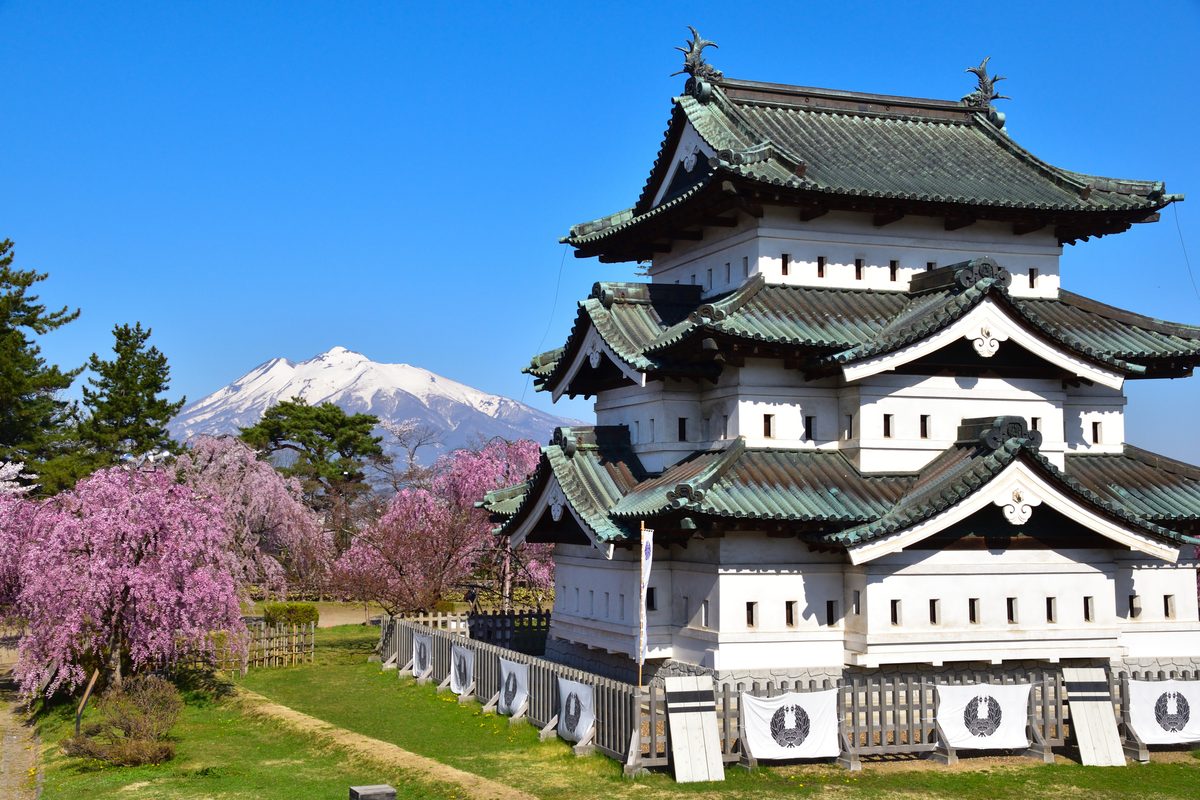
Hirosaki is the administrative and cultural centre of the Tsugaru region, and it produces more apples than any other municipality in Japan. The orchards spread across the plain around the city in geometric rows; in October, the air smells faintly of fermentation from cider houses and the harvest traffic on rural roads.
Hirosaki Castle is one of the few original castle keeps remaining in Tohoku — not a concrete reconstruction but a wooden structure completed in 1810, set within one of Japan's most celebrated cherry blossom parks. The moats and stone walls are original Edo-period work; the view of Iwaki-san behind the keep is among the better castle backdrops in the country.
The city's pace is slower than Aomori's, the streets narrower, and the food culture — miso curry milk ramen, Tsugaru-style pickles, and apple-based everything — is taken seriously enough to support dedicated shops and small museums. Hirosaki rewards an overnight stay more than a rushed afternoon.
Explore Hirosaki spots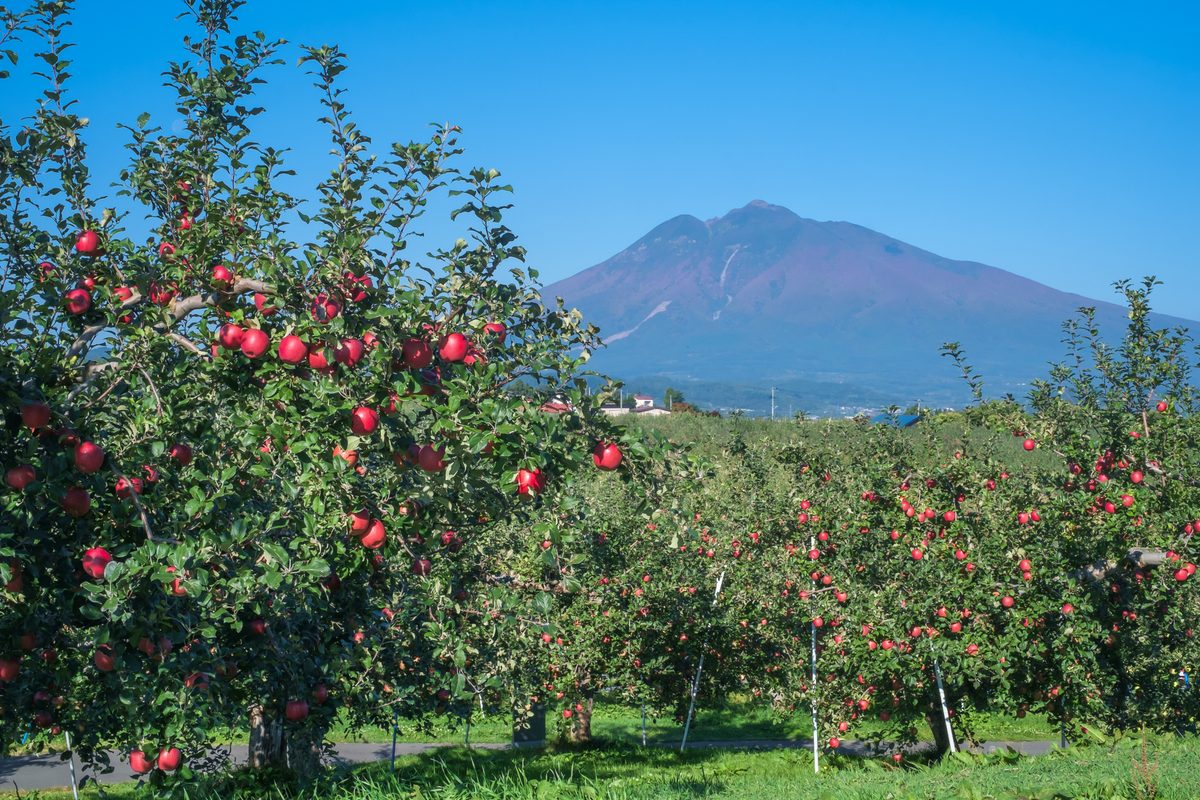
Lake Towada & Oirase — Caldera Water and a Gorge That Never Stops
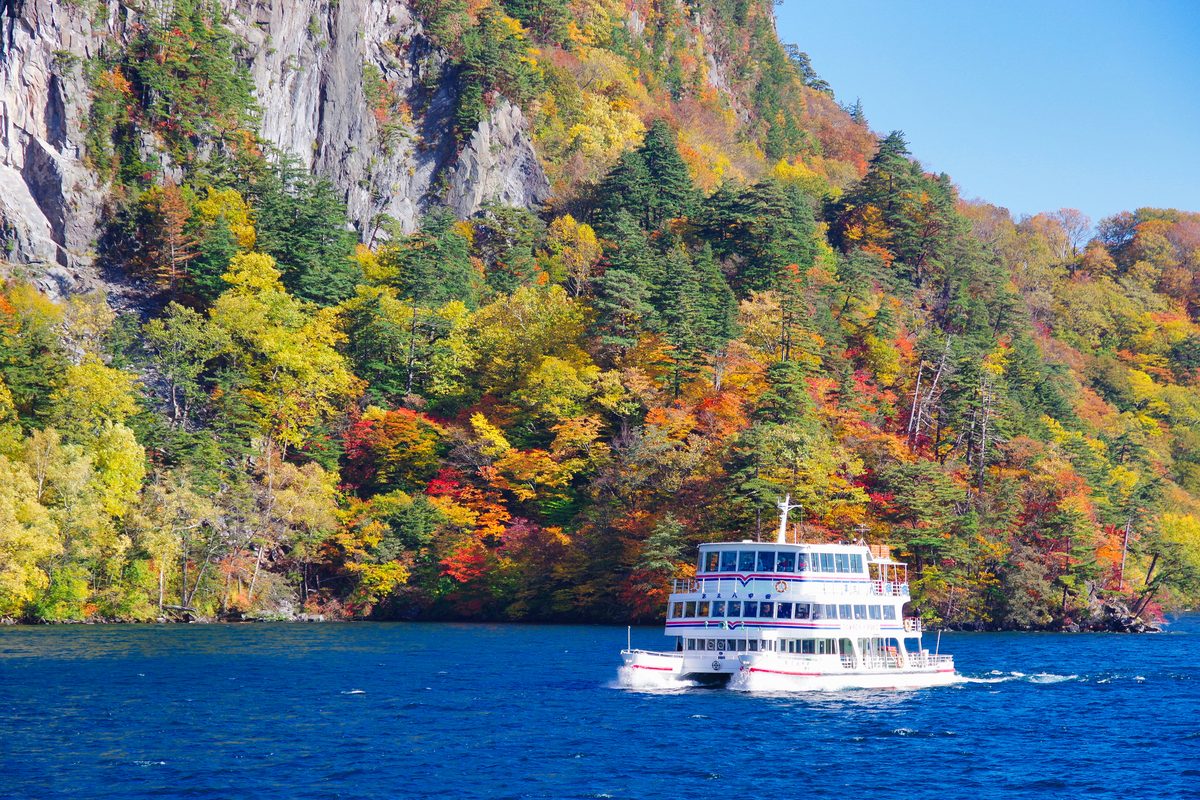
Lake Towada is a caldera lake straddling the border with Akita Prefecture, over 300 metres deep and surrounded by forest that turns intensely red and gold in late October. The lake itself is accessible by boat from Yasumiya; the shoreline walking paths are quieter than the main viewpoints and reward those with half a day to spare.
The Oirase Gorge drains the lake northeastward through 14 kilometres of waterfalls, moss-covered boulders, and mixed forest. The walking trail follows the river closely enough to hear it continuously; the section between Ishigedo and Nenokuchi is the most photographed, and the most crowded on autumn weekends. Starting early or visiting on a weekday changes the experience substantially.
Towada Art Center, on the city side of the lake, anchors a small cluster of museums and cafés in a planned arts district. The building — designed by Nishizawa Ryue — is worth seeing even if the exhibitions rotate frequently enough that advance checking is sensible.
Explore Towada spots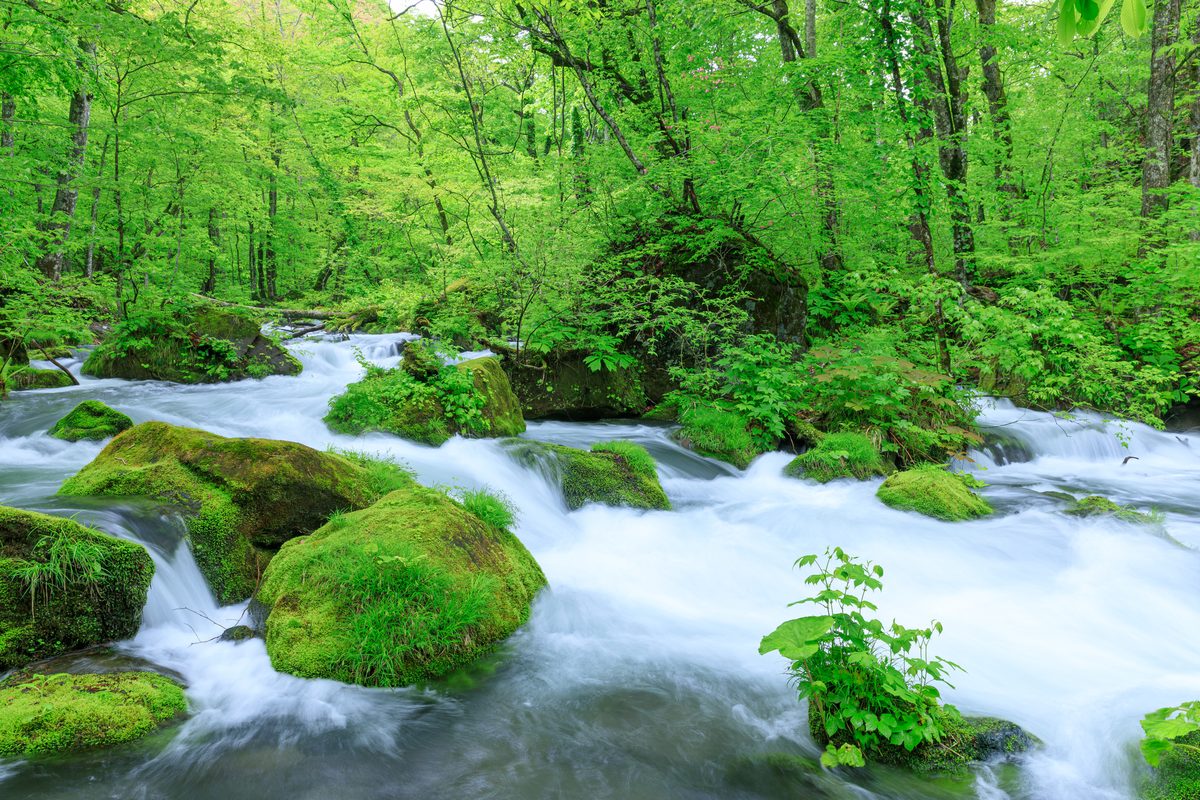
Juniko — Twelve Lakes and a Coast That Feels Like Another Prefecture
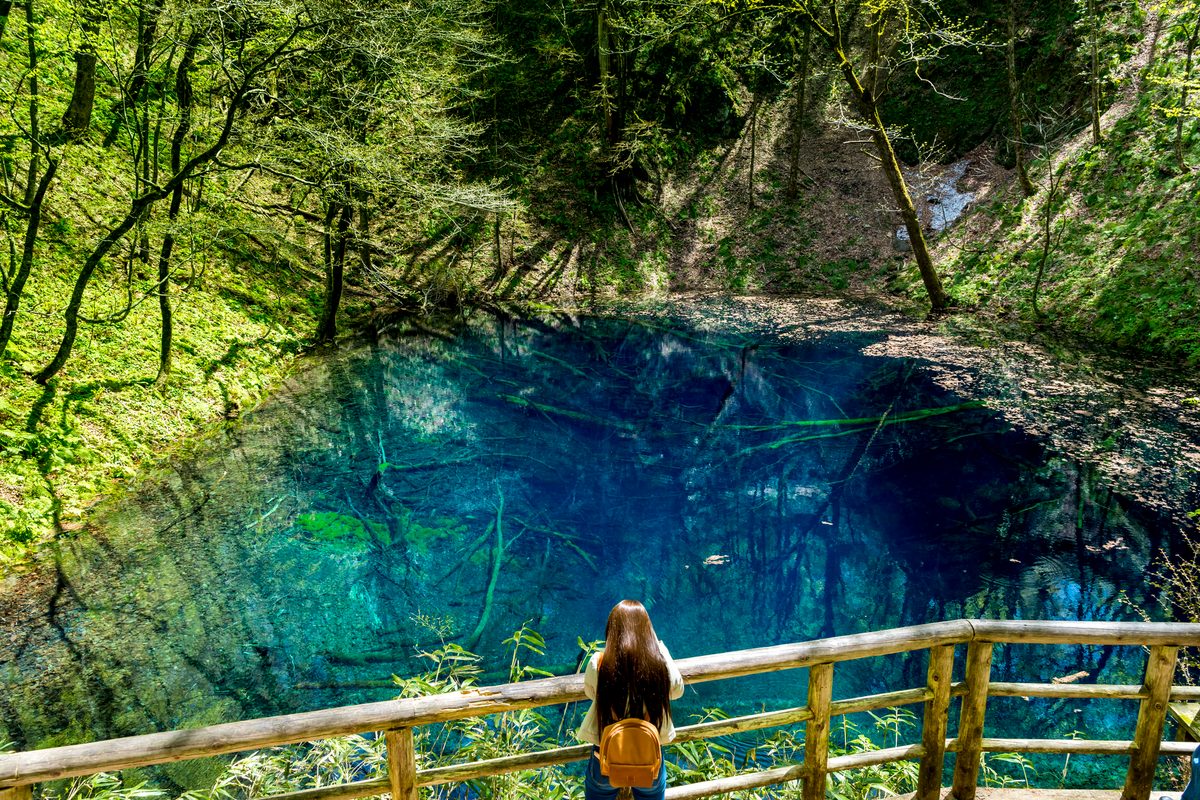
Juniko — literally 'twelve lakes' — is a cluster of small ponds and marshes in a beech forest on the Sea of Japan coast, part of the Shirakami-Sanchi UNESCO World Heritage buffer zone. The lakes vary in colour from cobalt to tea-brown depending on depth and mineral content; Aoike, the most famous, is an improbable blue that photographs almost too well.
The walking trails are well maintained but not heavily developed; the forest feels older and wetter than the plantations that cover much of rural Tohoku. The coast nearby — including the Fukaura section of the JR Gono Line — is among the more scenic train routes in Japan, though reaching Juniko without a car requires patience and timetable coordination.
Juniko works best as a day trip from Hirosaki or as a stop on a west-coast itinerary heading towards Akita. It sees fewer foreign visitors than Towada or Oirase, which is part of its appeal.
Explore Juniko spotsHakkoda — Ropeways, Acid Springs, and Some of Honshu's Heaviest Snow
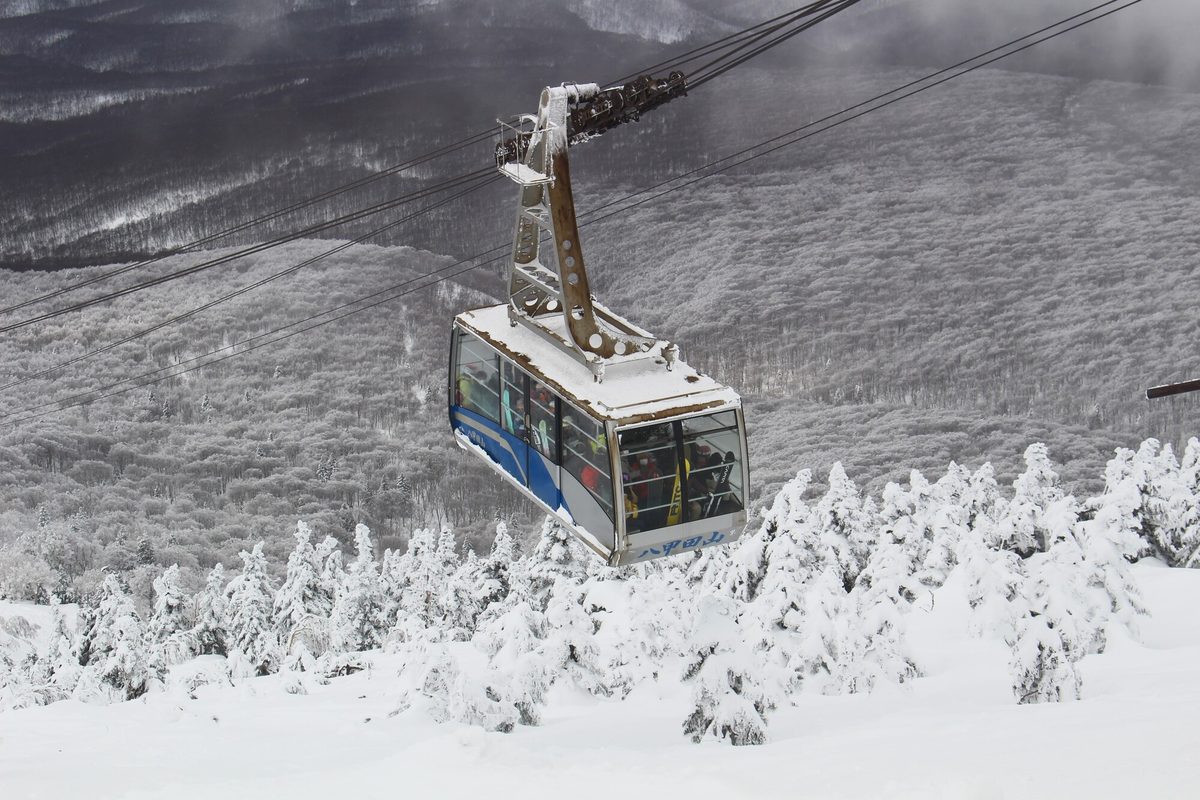
The Hakkoda range receives more snow than almost anywhere else on Honshu — annual totals regularly exceed ten metres at Sukayu Onsen, where a mixed-gender bathhouse has operated since the Edo period in a building that smells strongly of sulphur and tradition.
The ropeway from the valley floor reaches an elevation where the alpine zone begins abruptly; in summer, walking trails radiate towards peaks and crater lakes. In February and March, the 'snow monsters' — juhyo formed on the trees — transform the upper slopes into sculptural white shapes that draw photographers from across Japan.
Sukayu is not comfortable in the conventional sense — the water is hot, the smell is persistent, and the building is old — but it is authentic in a way that newer resort onsen rarely achieve. Combined with the ropeway, a full day in Hakkoda is enough to understand why the range has its own place in Tohoku's imagination.
Explore Hakkoda spotsShimokita — Buddha Shores and Japan's Most Feared Sacred Mountain
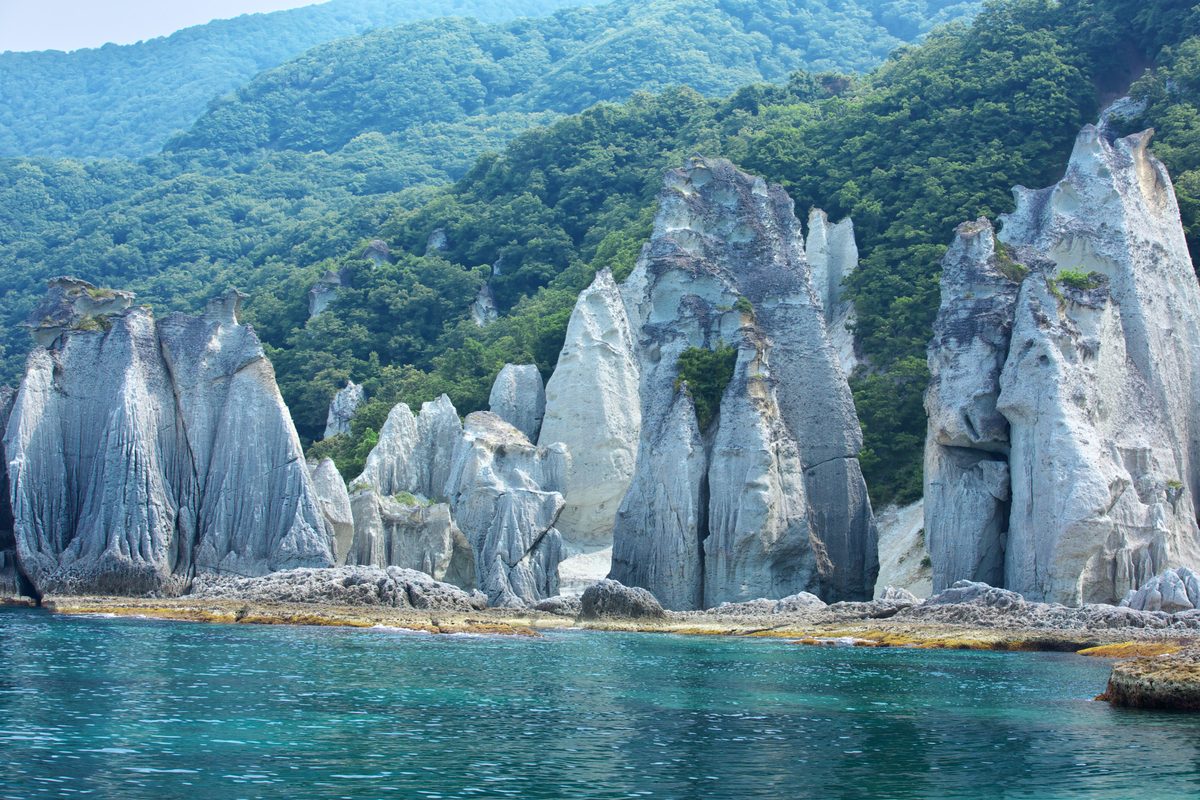
The Shimokita Peninsula is the axe-head of Honshu — remote, thinly populated, and geologically active enough to feel unstable. Hotokegaura, on the west coast, is a series of andesite cliffs carved by the sea into shapes that Buddhist tradition interpreted as figures of the Buddha. The cliffs are accessible only by boat from Sai; the trip takes under an hour and runs in weather-dependent conditions.
Osorezan — 'Mount Fear' — is one of Japan's three most sacred mountains in the syncretic tradition, associated with death, spirits, and the border between worlds. The caldera lake at the centre is sulphurous and eerily still; the Bodai-ji temple complex around it hosts a major festival in late July when mediums channel the voices of the dead for families seeking contact.
Visiting both in a single trip requires a car or careful bus timing. The peninsula is not designed for casual tourism — accommodation is limited, distances are long, and the atmosphere is serious in a way that seaside towns usually are not.
Explore Shimokita spots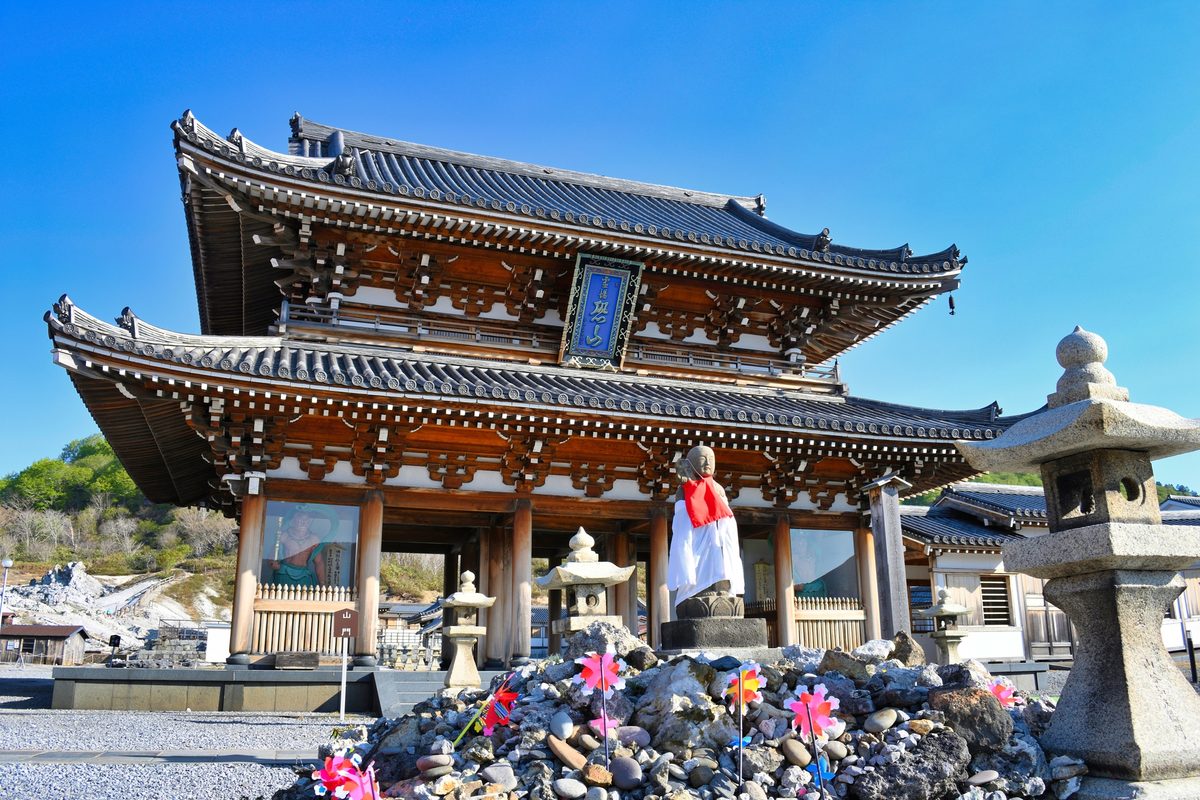
Asamushi & the Museum — Onsen by the Bay and Art in the Concrete
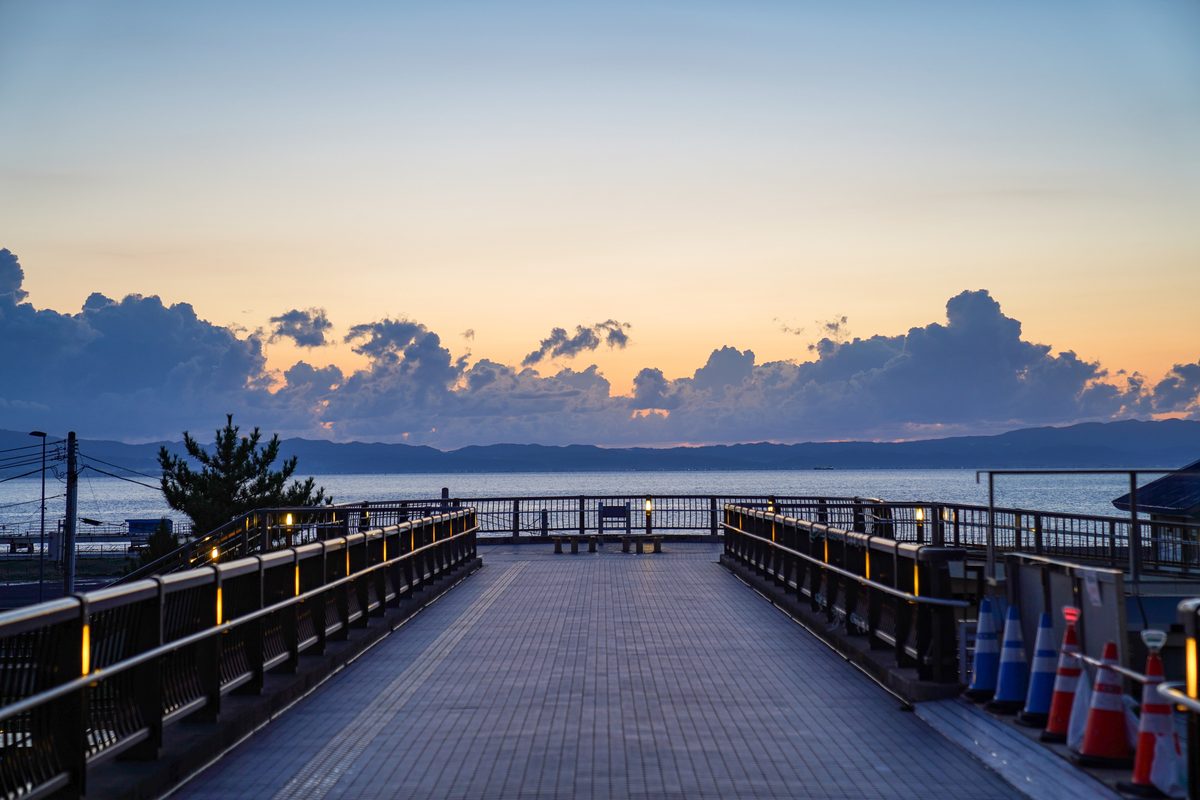
Asamushi Onsen sits on Mutsu Bay a short train ride east of central Aomori, a compact hot-spring town where the baths open directly towards the sea. The water is alkaline and relatively mild — suitable for long soaks — and the promenade along the shore is used by locals for evening walks more than by tourists for photography.
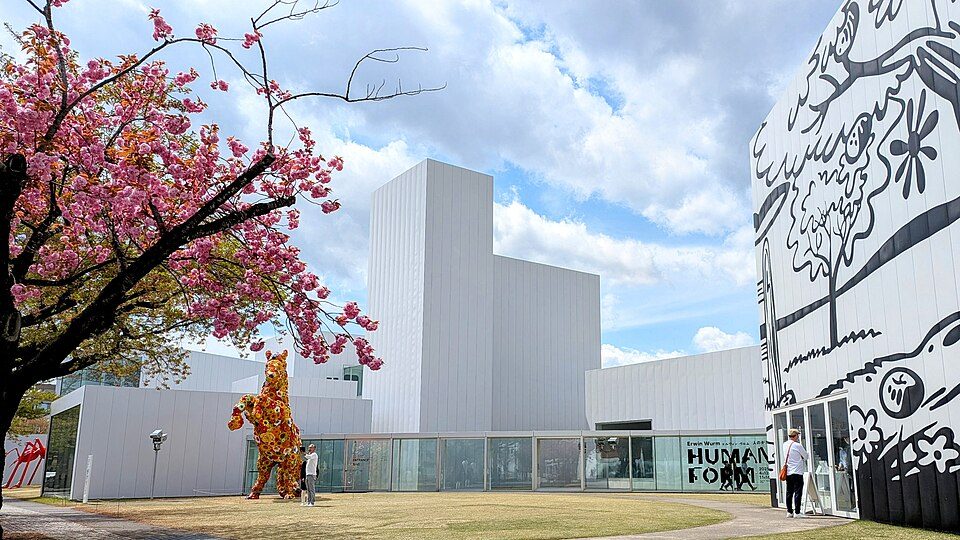
The Aomori Museum of Art, back in the city centre, is housed in a building by Jun Aoki that buries much of its volume underground and presents a long white wall above ground like a fragment of iceberg. The collection emphasises local artists — including Munakata Shiko — and temporary exhibitions that have included major international names. The architecture alone justifies the admission for those interested in contemporary museum design.
Pairing Asamushi as an overnight stop with museum time in Aomori City gives a balanced day: hot water and sea air in the evening, concrete and canvas the following morning.
Explore Aomori spots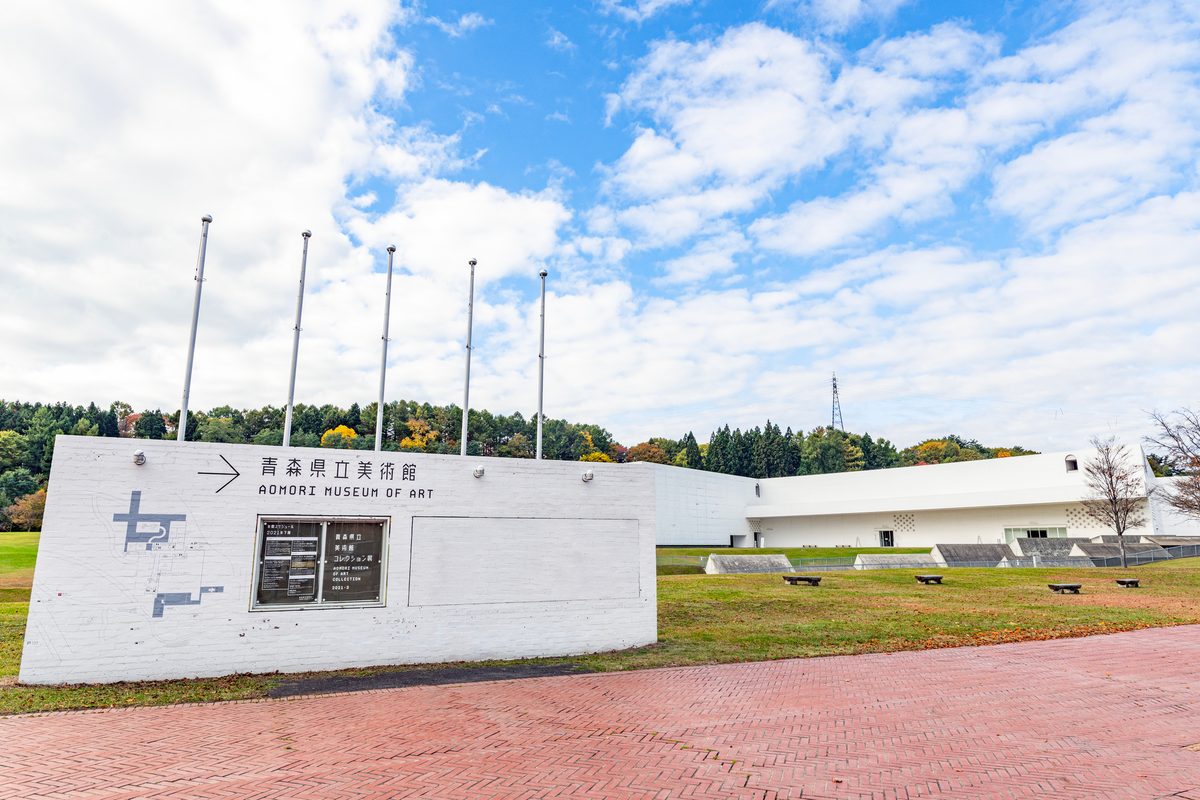
How to Plan Your Aomori Trip
Aomori City and Hirosaki are connected by frequent trains and can be covered in three to four days together with Towada and Oirase if you rent a car. Without a car, Towada and Oirase are reachable by bus from Aomori or Hachinohe; Juniko and Shimokita become substantially more difficult.
Hakkoda is a long day trip from Aomori by bus; Sukayu Onsen works best with an overnight stay. The Shimokita Peninsula realistically requires two days minimum — one for Hotokegaura by boat, one for Osorezan — and is best avoided in deep winter when mountain roads close.
Nebuta week in early August transforms Aomori entirely; accommodation must be booked months ahead. Autumn colour along Oirase peaks in late October and draws heavy weekend traffic. Spring arrives late — cherry blossoms in Hirosaki typically peak in late April, among the latest in Honshu.
Where are these spots?
How to Get There
Aomori Airport is east of the city centre, connected by bus in around 35 minutes. Direct flights from Tokyo (Haneda) take around 1 hour 20 minutes. The Tohoku Shinkansen terminates at Shin-Aomori; the fastest services from Tokyo take just under 3 hours. Ferries connect Aomori with Hakodate in Hokkaido in around 2 hours. Local JR lines serve Hirosaki, Hachinohe, and the Ominato Line to Asamushi. Buses run to Towada, Oirase, and Hakkoda; Shimokita and Juniko are considerably easier with a car.
Find your Japan
Find Your Aomori
Browse curated spots across Aomori Prefecture — from Nebuta to apple country and the Shimokita coast — on Tobira.
Find match spotsMore Prefecture Guides
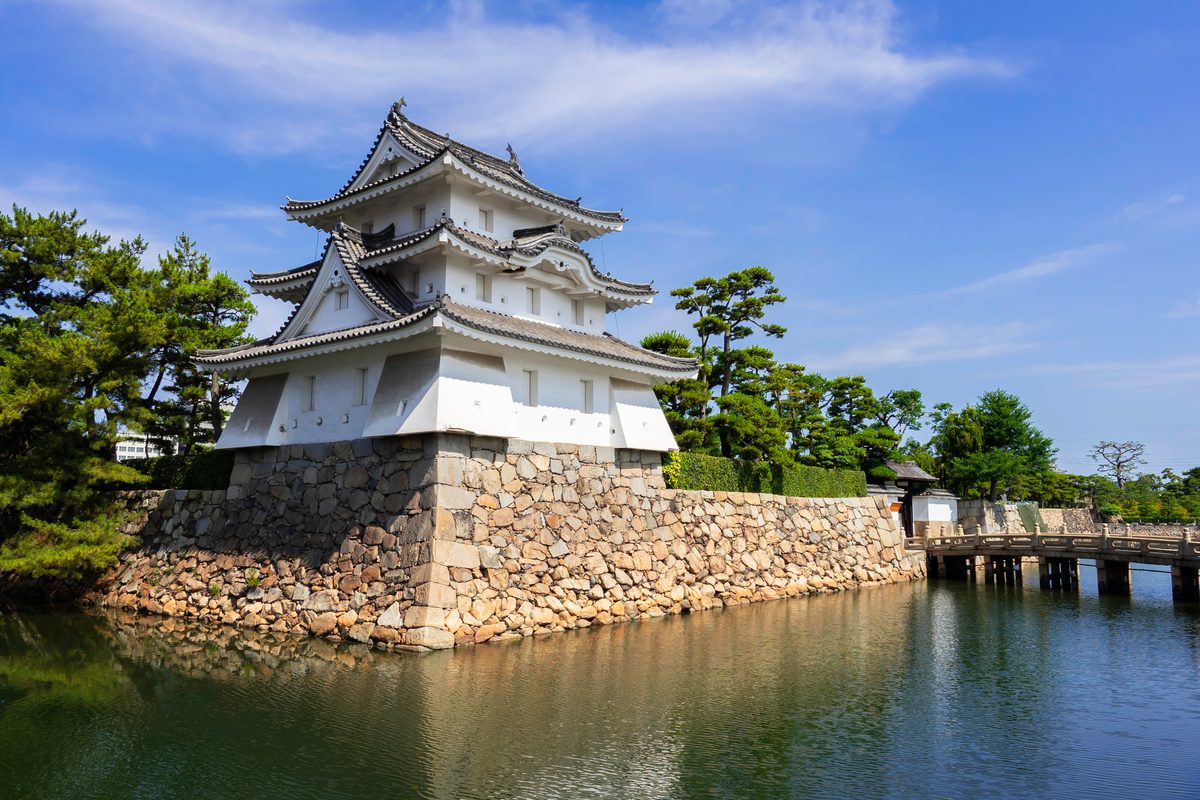
Kagawa: Udon, Art Islands, and the Most Climbed Stairs in Shikoku
11 min read
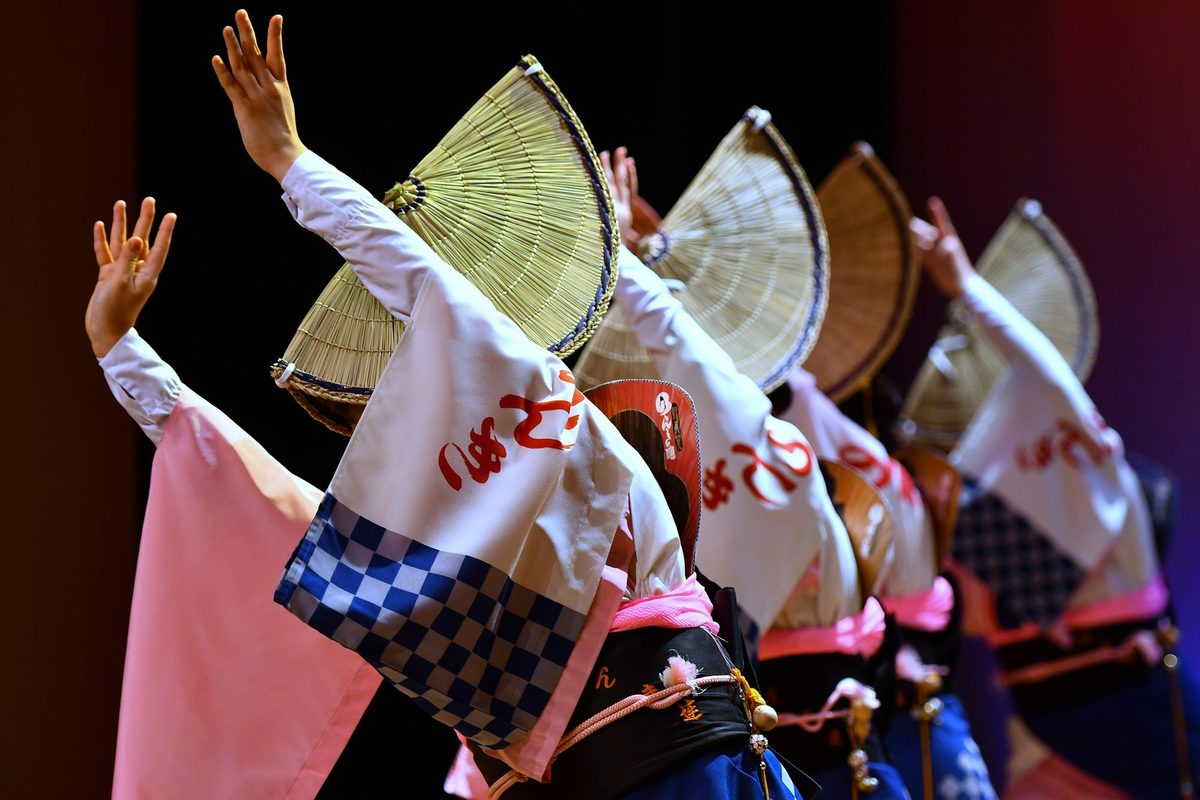
Tokushima: Whirlpools, the Valley That Time Missed, and Japan's Loudest Dance
11 min read
Kochi: The Wild Coast That Japan Forgot to Tame
12 min read
Ehime: Islands, Castles, and the Road That Goes Between
13 min read
Fukushima: Three Regions, One Prefecture, No Simple Story
12 min read
Akita: Snow Country, Rice Country, and Monsters on New Year's Eve
12 min read
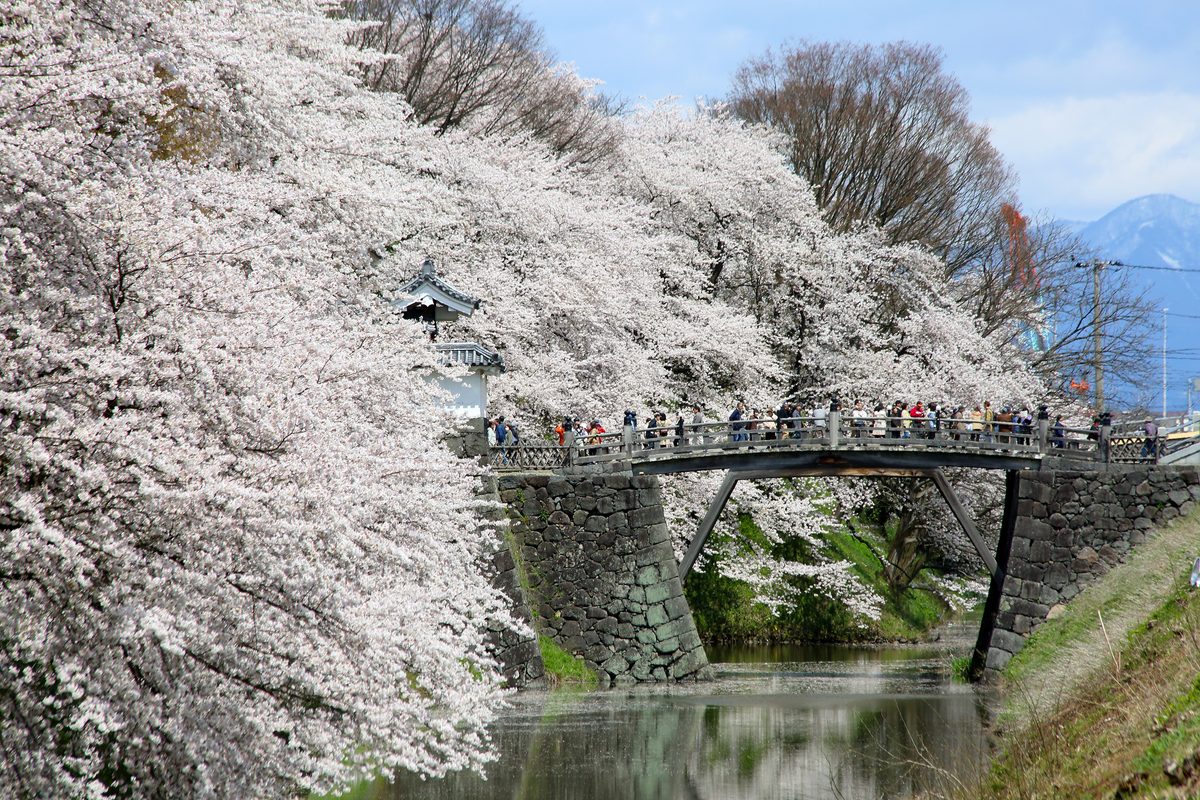
Yamagata: Cherries, Sacred Mountains, and Snow That Eats the Trees
12 min read
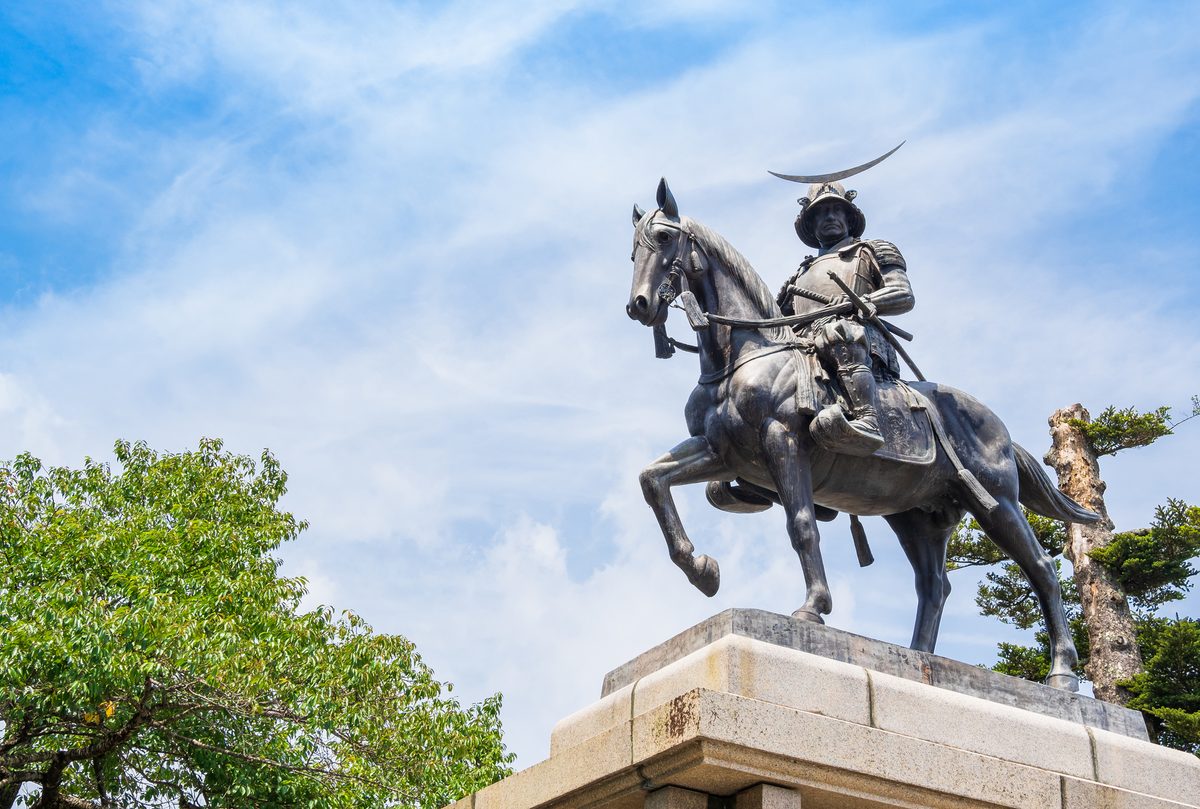
Miyagi: The Coast, the Castle, and Sendai Between Them
11 min read
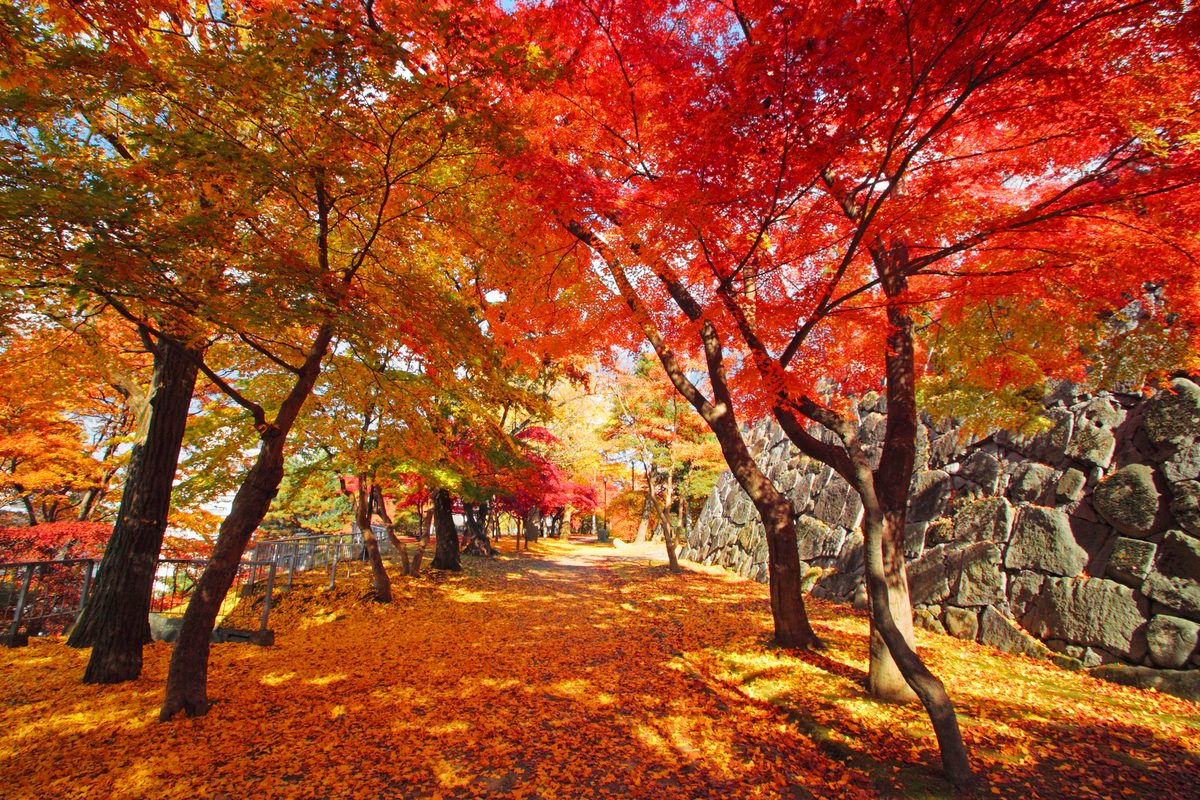
Iwate: Where the Mountains Lean Against the Pacific
12 min read
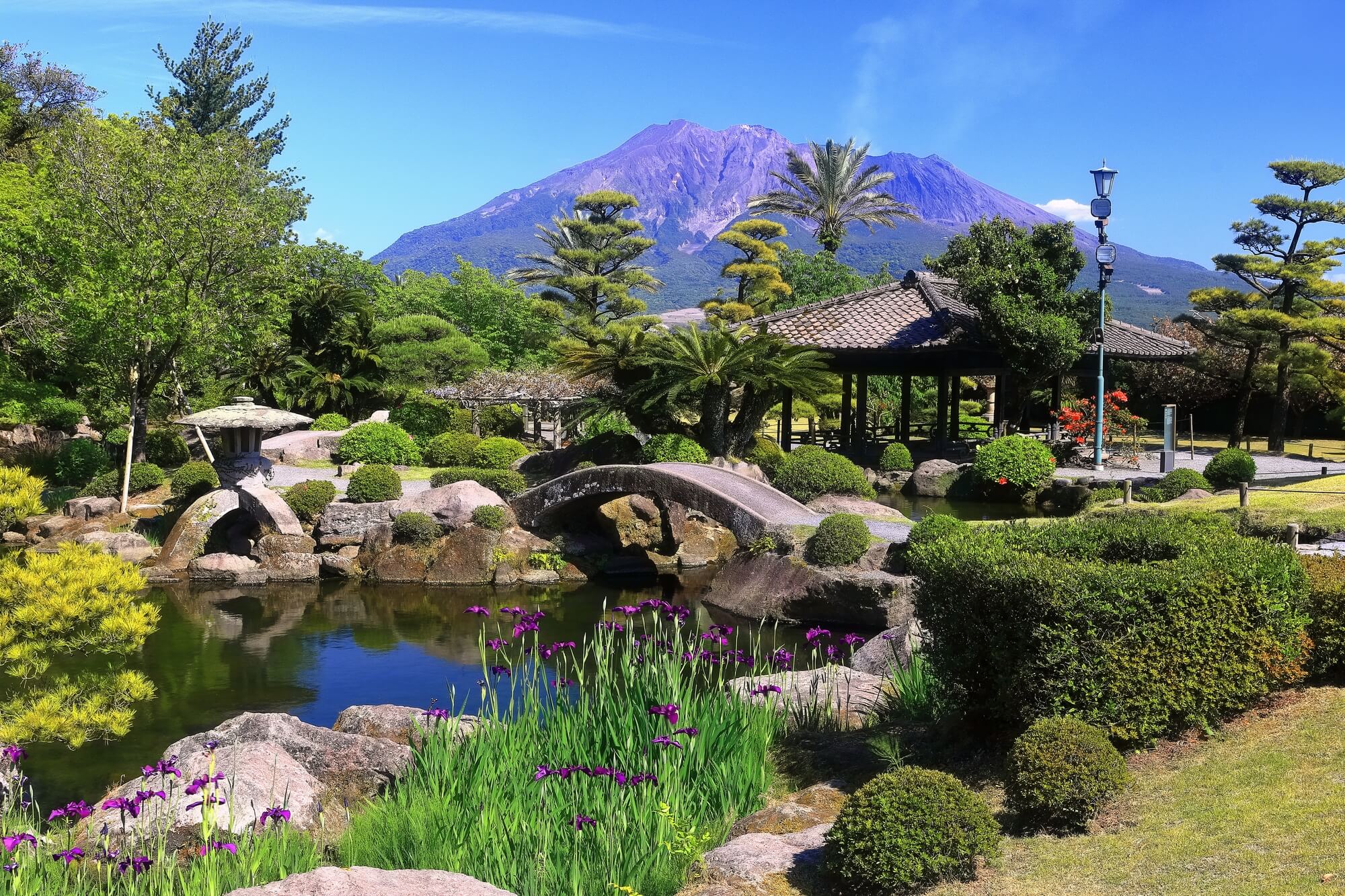
Kagoshima: Where the Mainland Finally Runs Out of Land
12 min read
Miyazaki: Where the Sun God Hid and the Horses Run Wild
11 min read
Saga: Older Than You Think, Quieter Than Most
11 min read
Nagasaki: Where Every Century Left Something Behind
13 min read
Oita: Where the Earth Still Boils
12 min read
Fukuoka: Where Japan Eats, Breathes, and Gets On With It
14 min read
Hokkaido Travel Guide: Ten Places Beyond Sapporo
16 min read