
Fukuoka: Where Japan Eats, Breathes, and Gets On With It
Fukuoka does not try to be Tokyo. It has its own logic — compact, confident, and oriented around eating well rather than looking impressive. The city moves fast enough to feel alive but never to the point of exhaustion, and the prefecture around it is quietly extraordinary: ancient shrines, hidden mountain castles, coasts that face both the Pacific and the Sea of Japan. It is the kind of place that makes you reconsider where in Japan you actually want to spend your time.
Fukuoka is the city that keeps getting voted Japan's most liveable, and after a few days here, the reasons become obvious. The food is serious, the pace is manageable, and the prefecture around it rewards those who venture beyond the city centre — from pilgrimage temples and sacred coastlines to surf towns and medieval castle ruins that most visitors never reach.
Fukuoka (Hakata) — Japan's Most Liveable City
Fukuoka keeps getting ranked as Japan's most liveable city, and after a few days here, the reasons become obvious. The airport is ten minutes from the centre by subway, the food is extraordinary without being precious, and the city has been built at a scale that feels human rather than relentless.
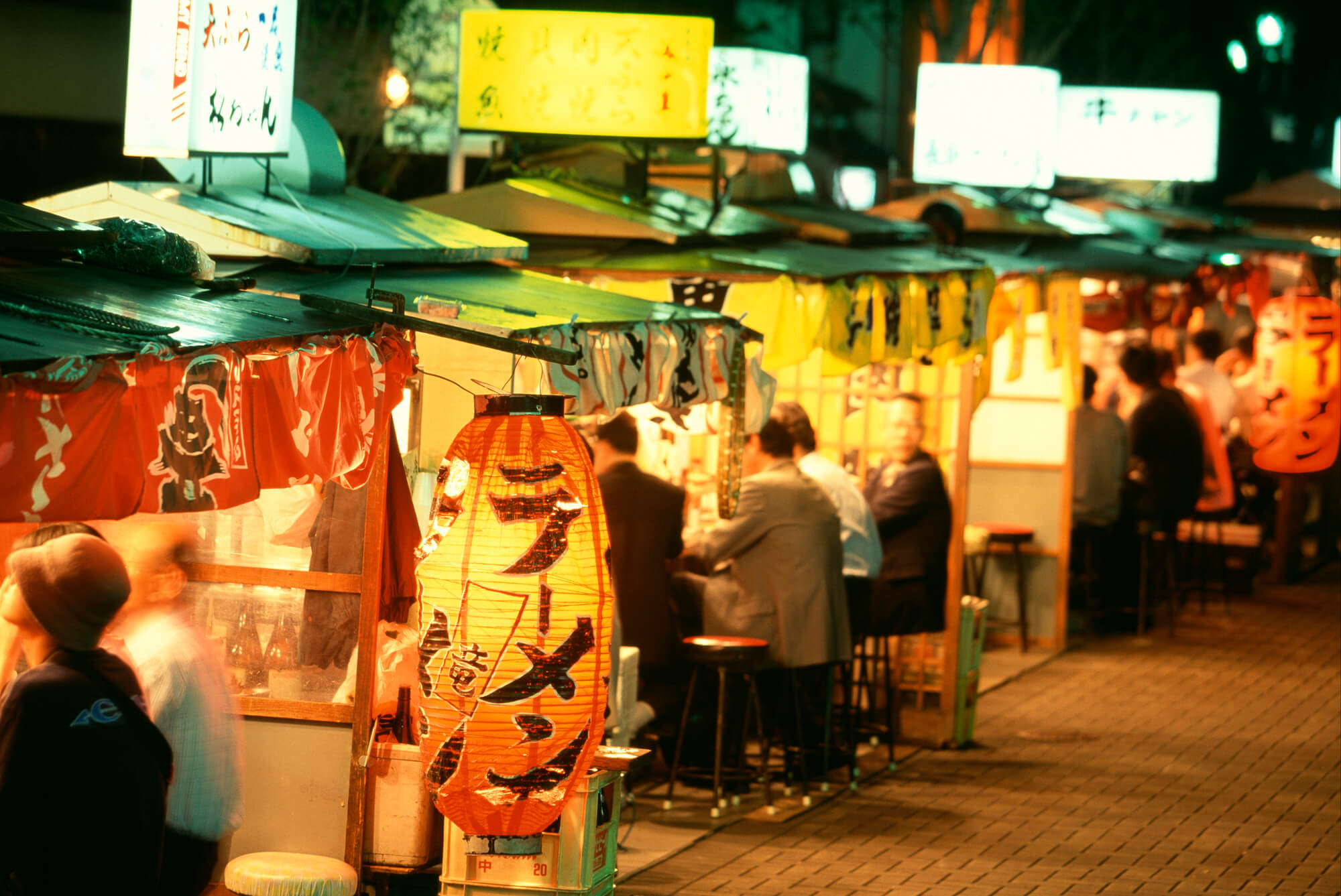
The yatai — open-air food stalls set up along the Naka River and in Nakasu each evening — are the most visible expression of Fukuoka's relationship with eating outdoors. They are not tourist traps. Locals eat here too, perched on plastic stools over tonkotsu ramen or grilled skewers, the city reflected in the water behind them.
Yanagibashi Rengo Market, a covered arcade of fish and vegetable vendors near Haruyoshi, gives a different view of the same food culture: the city at work, provisioning itself before the day begins. The morning light through the market's roof is worth the early start.
Explore Fukuoka spots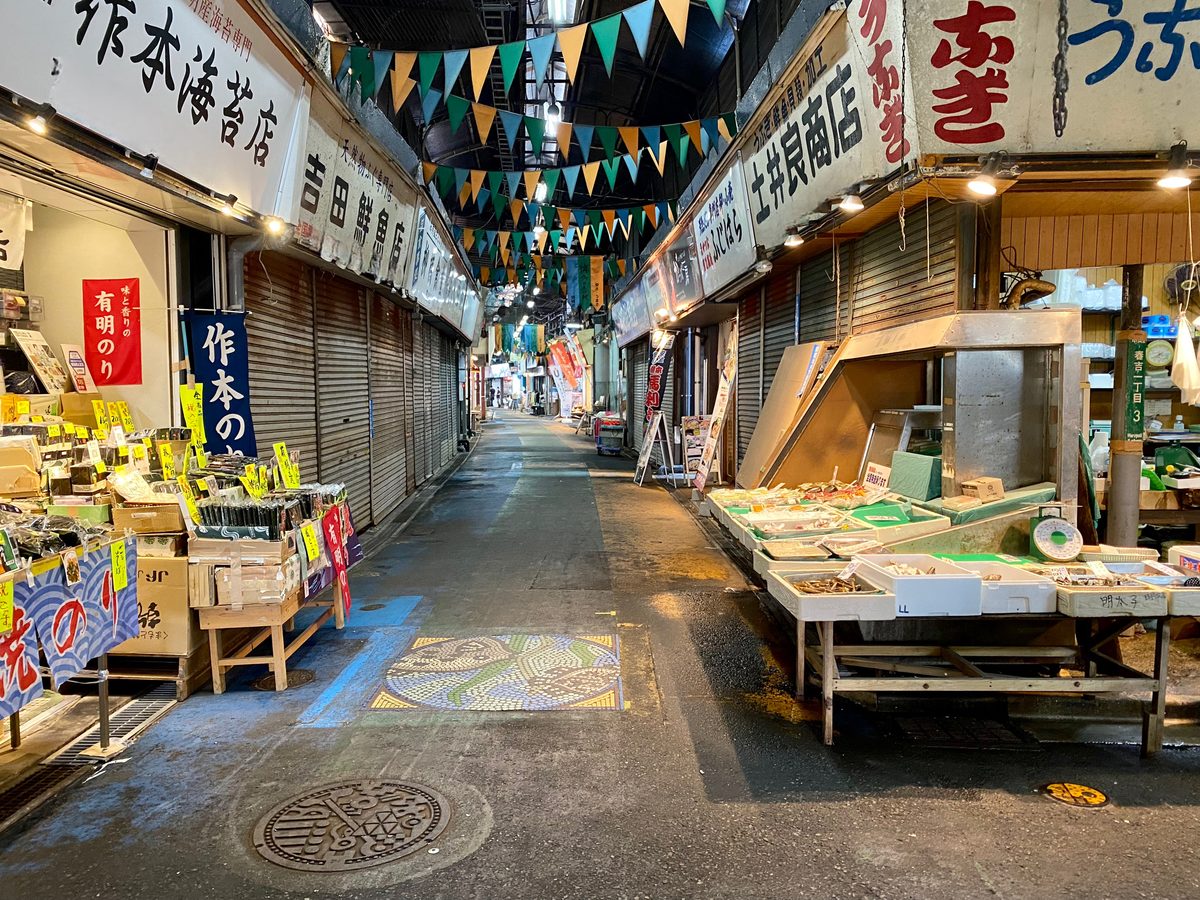
Dazaifu — Where Scholars and Pilgrims Have Always Gathered
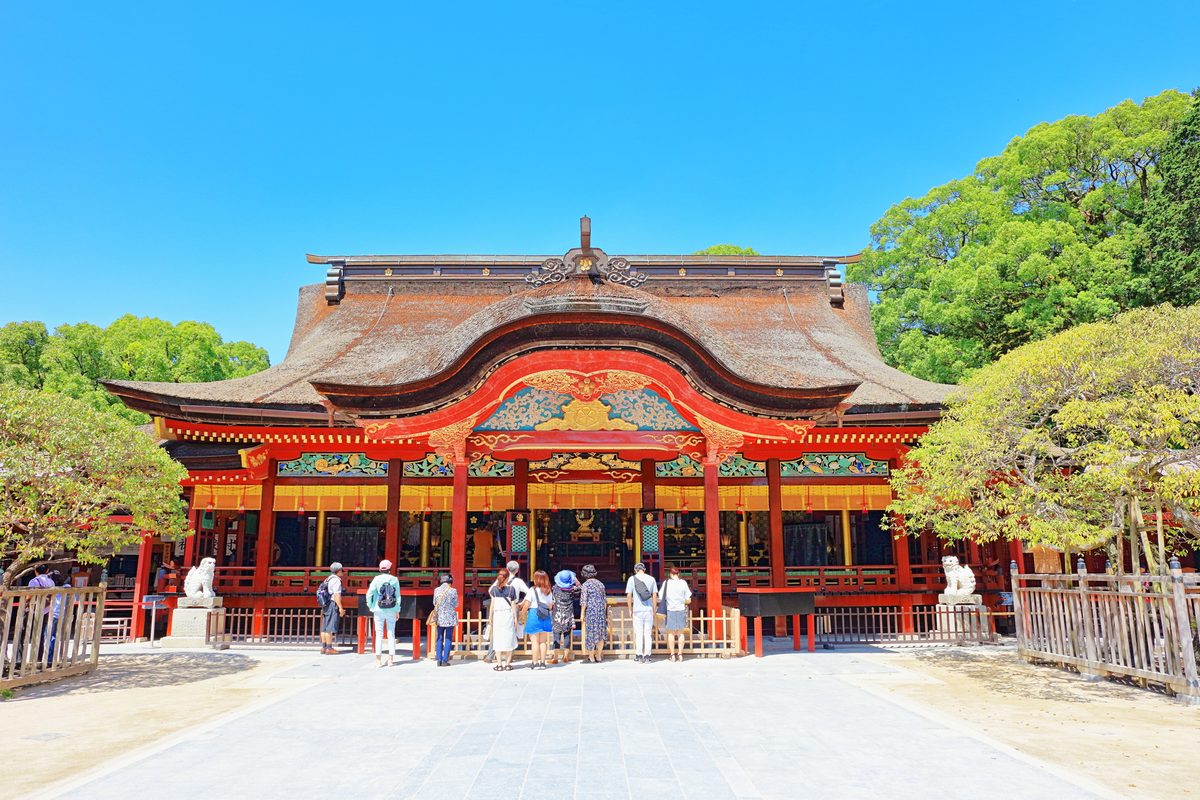
Dazaifu Tenmangu has been drawing visitors for over a thousand years, built in 919 CE over the grave of Sugawara no Michizane — a scholar and statesman who was exiled here and died. His deification as the patron of learning has made the shrine one of the most visited in Kyushu, particularly around exam season, when students arrive to tie their wishes to the trees.
The approach along the stone-paved Sando is one of the better approaches to any shrine in Japan: merchants have been trading here for centuries, and the jumble of old structures and modern additions feels lived-in rather than curated. The Starbucks on the corner, designed by Kengo Kuma using two thousand lengths of interlocking cedar, is also worth seeing.
Beyond the shrine, the surrounding hills hold the ruins of the ancient Dazaifu government complex, once the administrative centre of western Japan. Walking out to the old plum orchards in late February or early March, when the famous ume blossoms are out, gives the place a different and quieter quality.
Explore Dazaifu spotsItoshima — Where Fukuoka Slows Down by the Sea
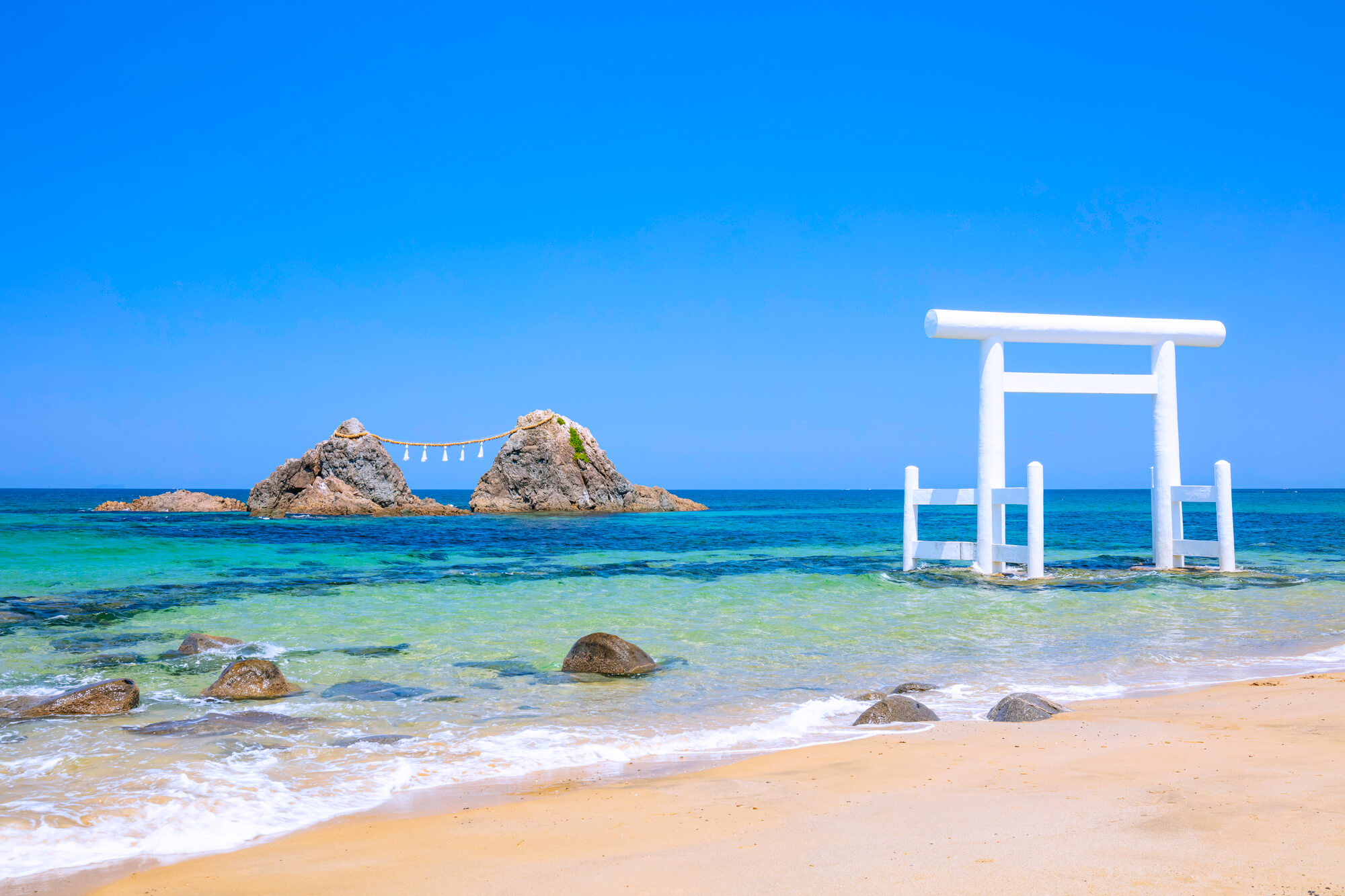
Itoshima sits about forty minutes west of Hakata by local train, and its role in Fukuoka life is essentially that of a pressure valve. The peninsula stretches out between the Sea of Japan and Hakata Bay, and it has the loose, unhurried quality of a place that has not yet been fully noticed by the wider world.
The western coast runs through a series of small fishing settlements and coves, punctuated by cafés set into old warehouses and farm stalls selling oysters and fresh vegetables directly to drivers. The Keya no Oto sea cave, carved into the cliffs at the northern tip of the peninsula, is a forty-minute coastal walk that most visitors do not bother with — which is a reasonable description of Itoshima as a whole.
The area rewards those who come with a car or bicycle, willing to follow unmarked roads towards the water. The weekend markets along Route 56 are where Fukuoka residents come to buy locally grown rice and hand-thrown ceramics; the stalls pack up by early afternoon.
Explore Itoshima spotsKitakyushu & Mojiko — Japan's Industrial Waterfront, Rewritten
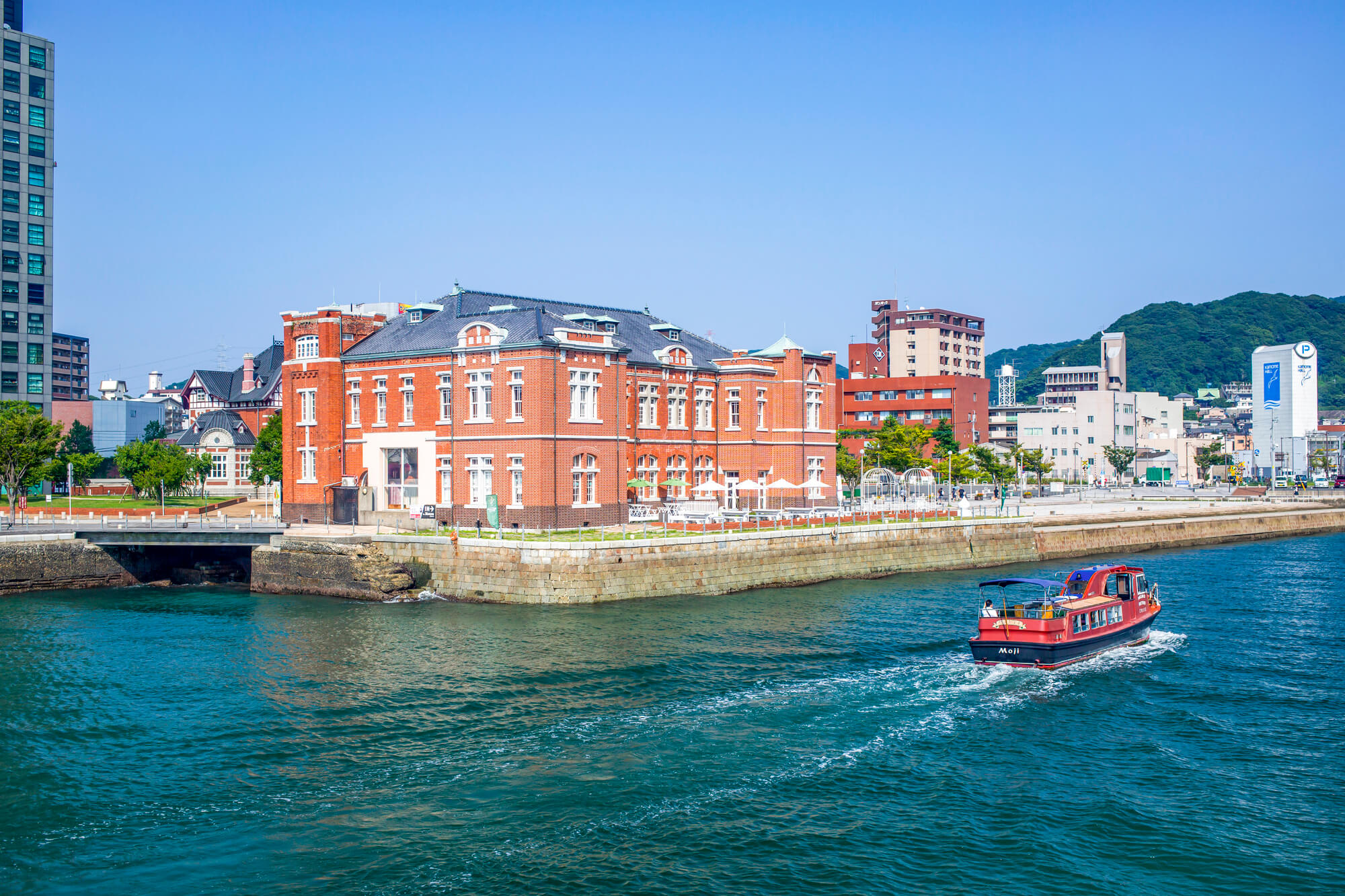
Kitakyushu is not a city that anyone visits by accident. It sits at the northern tip of Kyushu, facing the Kanmon Strait and the island of Honshu across a narrow channel, and its identity was built on steel mills, shipyards, and coal — industries that have since contracted sharply.
The Mojiko Retro District, occupying the old port area, is the most visited part of the city and the most legible: rows of Meiji and Taisho-era brick and stone buildings that once housed customs offices and shipping companies now contain restaurants, small museums, and design shops. The Kanmon Bridge visible from the waterfront and the undersea pedestrian tunnel to Shimonoseki are both worth the short detour.
Beyond the retro district, Kitakyushu has invested in cultural infrastructure — the Kitakyushu Museum of Art and the JCOM Harmony Hall are both serious institutions in a city that has decided to take culture seriously. It is a place still working out what it wants to be, which makes it more interesting than somewhere that already knows.
Explore Kitakyushu spotsMunakata — The Sacred Shore
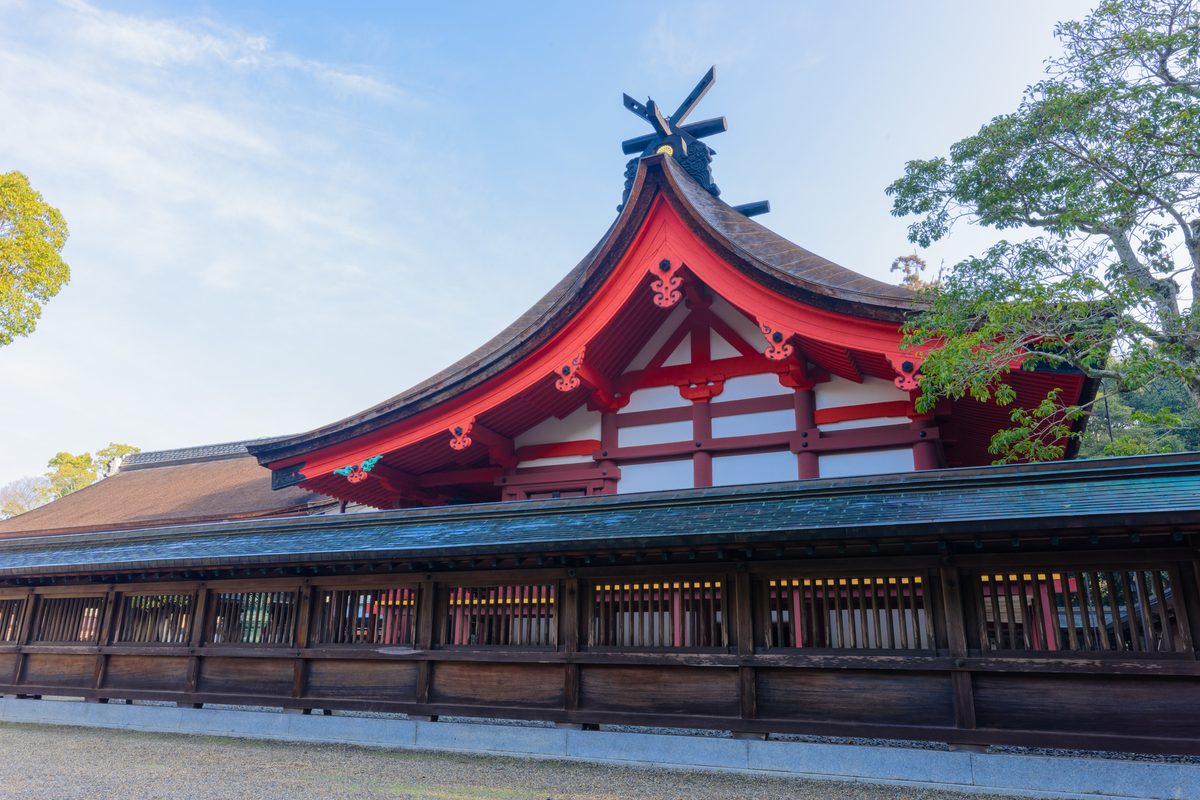
Munakata sits on the coast north of Fukuoka city, facing the Korea Strait and the three islands — Oshima, Nakatsu-shima, and Okitsu-shima — that together constitute one of Japan's most unusual UNESCO World Heritage sites. The islands have been treated as sacred objects for over 1,700 years; the innermost island, Okitsu-shima, is closed to almost all visitors and has been since ancient times.
Munakata Taisha on the mainland is the land-based expression of this worship: a complex of three shrines spread across the coastal hills, each dedicated to a different divine sister. The main compound, Hetsu-miya, stands in a grove of old-growth trees near the sea and has the quality of somewhere that has been kept deliberately still.
The museum adjoining the shrine complex holds a selection of the thousands of votive offerings recovered from Oki-no-shima over the centuries — bronze mirrors, glass beads, gold jewellery — an extraordinary record of what was considered worth sending to the gods.
Explore Munakata spotsNanzoin & Sasaguri — Japan's Quiet Pilgrimage Country
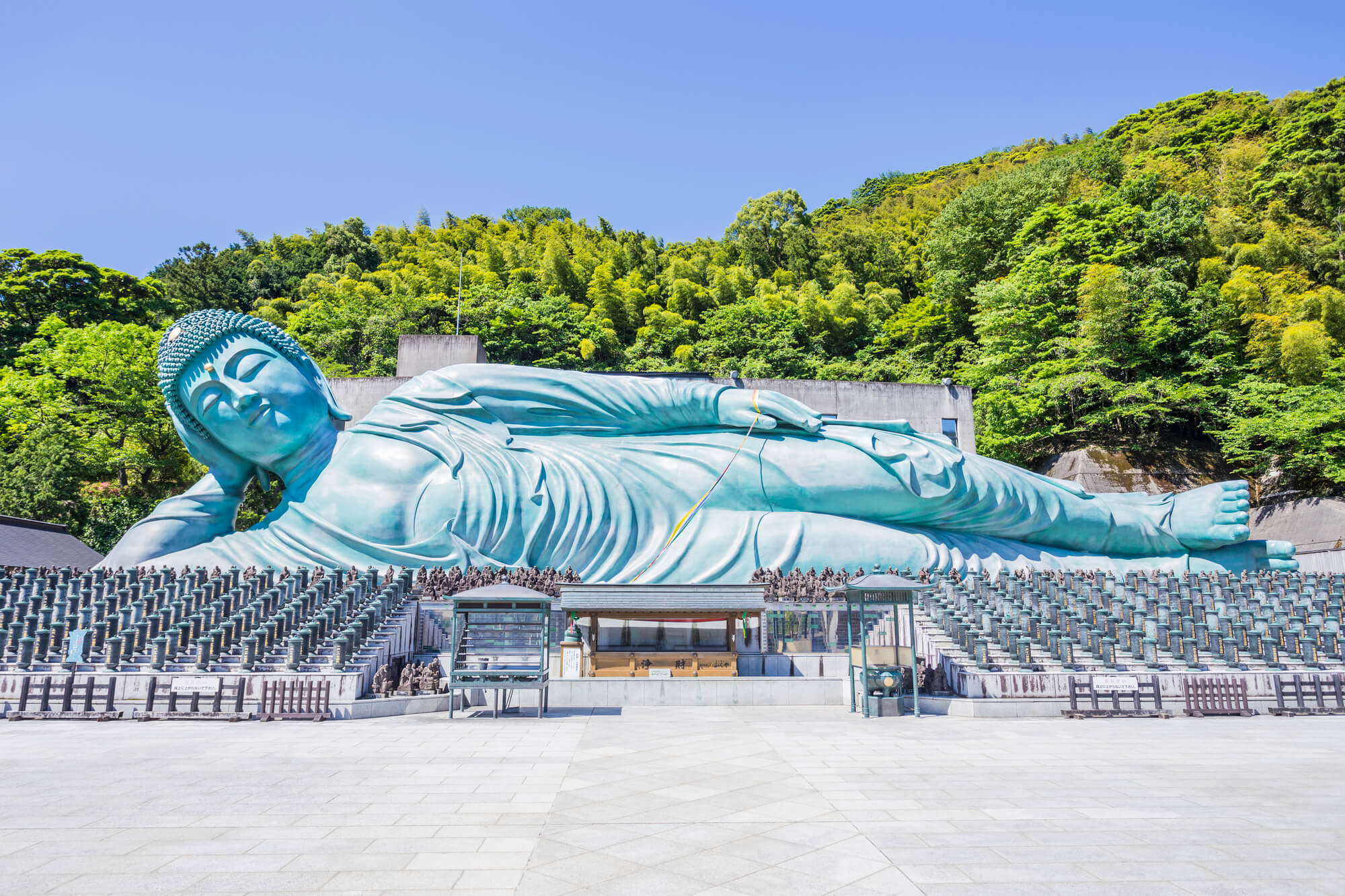
Sasaguri, a small town in the hills east of Fukuoka city, is the site of a compressed copy of the Shikoku Eighty-Eight Temple pilgrimage: all eighty-eight temples recreated within a few kilometres, so that those unable to walk the full Shikoku circuit can complete it closer to home. The pilgrimage draws an older, quieter crowd and takes most people two to three days to walk in full.
At the far end of the pilgrimage route, Nanzoin Temple holds what is claimed to be the largest bronze reclining Buddha in the world — 41 metres long, 11 metres high, and entirely out of scale with the surrounding cedar forest. The effect is strange and impressive in equal measure, particularly in the morning when the light through the trees reaches the statue at an angle.
The town itself has little of conventional interest, which is what gives the pilgrimage its character. You are walking through ordinary Fukuoka countryside — rice fields, small shrines, family-run shops — in the company of people who have come for reasons that have nothing to do with tourism.
Explore Sasaguri spotsAkizuki — Where Asakura Keeps Its Secrets
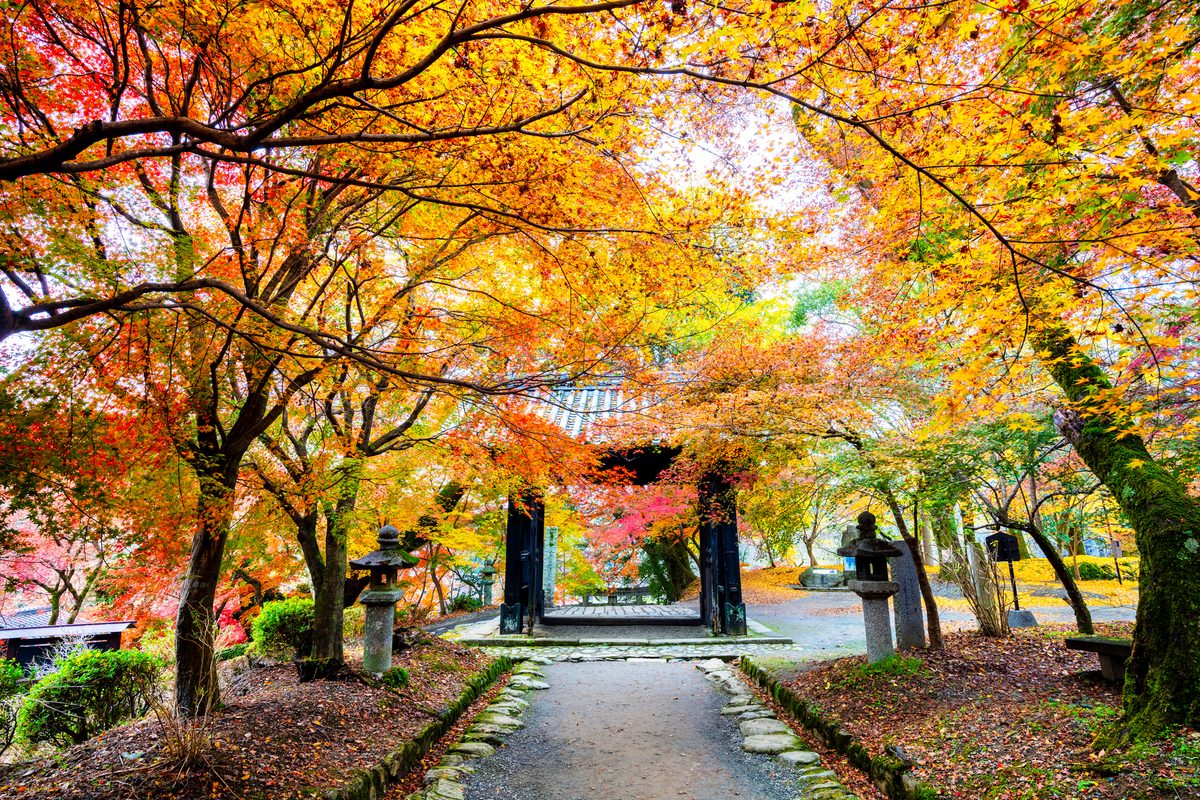
Akizuki sits in the mountains of Asakura, about an hour from Fukuoka city by rail and bus, and it has the quality of a place that was important once and then was quietly left to itself. The village was a castle town controlled by the Akizuki clan for generations, and when the clan was finally defeated in the Edo period, the town stopped changing and largely stayed that way.
The Sugi no Baba approach — a long, stone-paved lane flanked by giant cedar trees — leads to the old castle gate, which remains standing. The castle itself is gone, leaving only the ruins and a local history museum in its place, but the stone walls and moat give a good sense of the original scale.
Akizuki is best visited in spring, when the cherry trees along the Sugi no Baba are in bloom, or in autumn, when the same lane turns red and gold. There are no crowds by the standards of more famous castle towns, and the two or three cafés along the main street make a reasonable argument for staying longer than a day trip allows.
Explore Asakura spotsUminonakamichi — The Park Between Two Seas
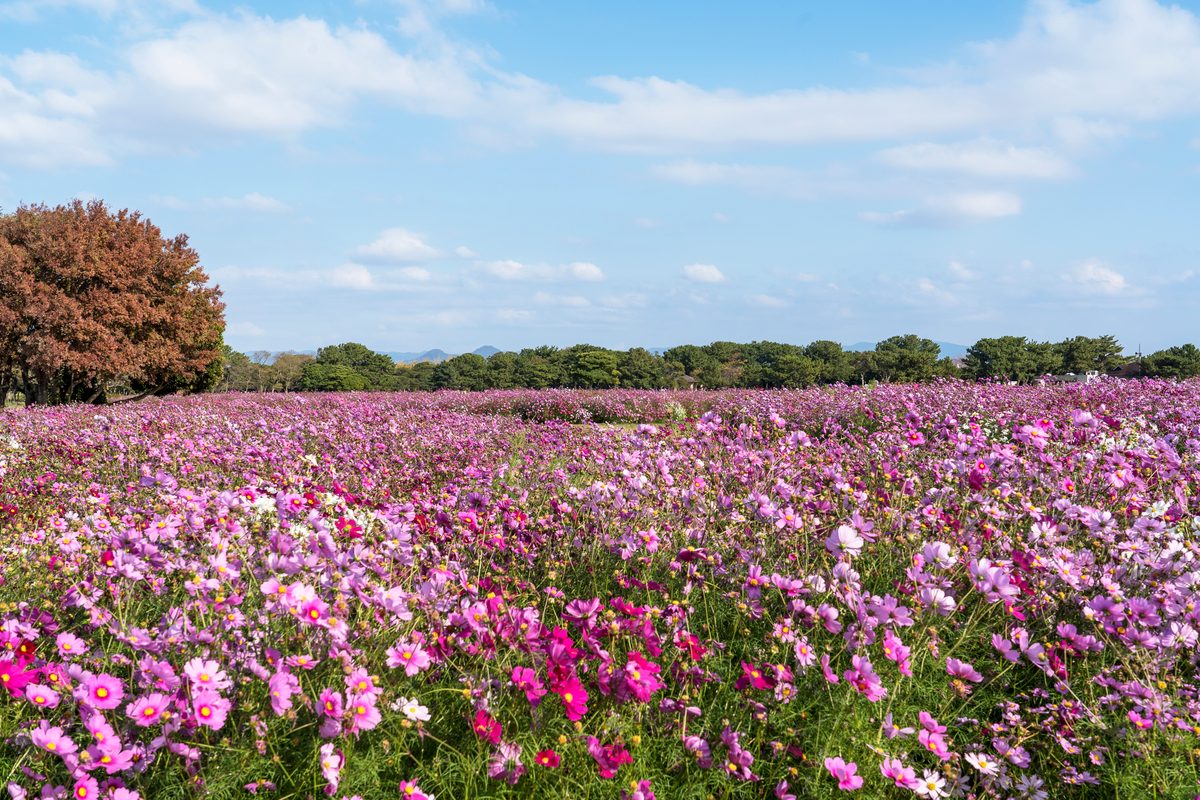
Uminonakamichi is a narrow strip of land running east from Fukuoka city, with Hakata Bay on one side and the Genkai Sea on the other. The Uminonakamichi Seaside Park occupies most of the peninsula, a large public park built on what was previously military and government land, now returned to lawns, flower gardens, and a small animal park.
The appeal is specific: if you are in Fukuoka for several days and want a half-day that feels nothing like the city, the twenty-minute ferry from Hakata pier or the JR train to Umino-Nakamichi Station both deliver you into a different register entirely. In spring, the nemophila — a low-growing blue flower — covers entire hillsides in a colour that has made the park a reliable fixture on Japanese social media.
The park is large enough that weekday visitors can spend hours without the crowds becoming a factor. The bicycle hire near the main gate is a reasonable way to cover the distance between the garden zones, and the views across the bay back towards Fukuoka city on a clear day are unusually good.
Explore Fukuoka spotsHow to Plan Your Fukuoka Trip
Fukuoka city makes sense as a base for most itineraries: the airport is central, accommodation is relatively affordable, and the food scene rewards multiple nights. Two nights covers the city well; add a third or fourth to reach Itoshima, Dazaifu, and the Seaside Park without rushing.
For day trips, Dazaifu, Yanagawa, and Sasaguri are all accessible by rail in under an hour. Munakata and Kitakyushu require a half-day each. Akizuki, being further into the mountains, works best as a focused single-day excursion with an early start.
The best time to visit depends on what you are after. March and early April bring plum blossoms at Dazaifu and cherry blossoms at Akizuki; May through June offers mild weather before the summer heat and humidity arrive. October and November bring the clearest skies and the most comfortable temperatures for walking. Winter is cold but manageable, and the yatai stalls, open year-round, are considerably more atmospheric in the cold.
Where are these spots?
How to Get There
Fukuoka Airport is one of the most convenient in Japan — the subway connects it to Hakata Station in five minutes and Tenjin in eleven. Direct flights from Tokyo take around 1.5 hours, and budget carriers operate the route frequently. By Shinkansen from Shin-Osaka, the journey to Hakata takes around 2 hours 15 minutes on the Hikari. Within the prefecture, JR lines and Nishitetsu cover the main routes: Dazaifu is thirty minutes from Nishitetsu-Fukuoka Station, Kitakyushu is eighty minutes from Hakata on the JR Kagoshima Line. For Itoshima, the JR Chikuhi Line runs direct from Hakata to Chikuzen-Maebaru in around forty minutes. Akizuki and Sasaguri are best reached by local rail with onward bus connections.
Find your Japan
Find Your Fukuoka
Browse curated spots across Fukuoka Prefecture — from city food stalls to sacred coastlines — on Tobira.
Find match spotsMore Prefecture Guides
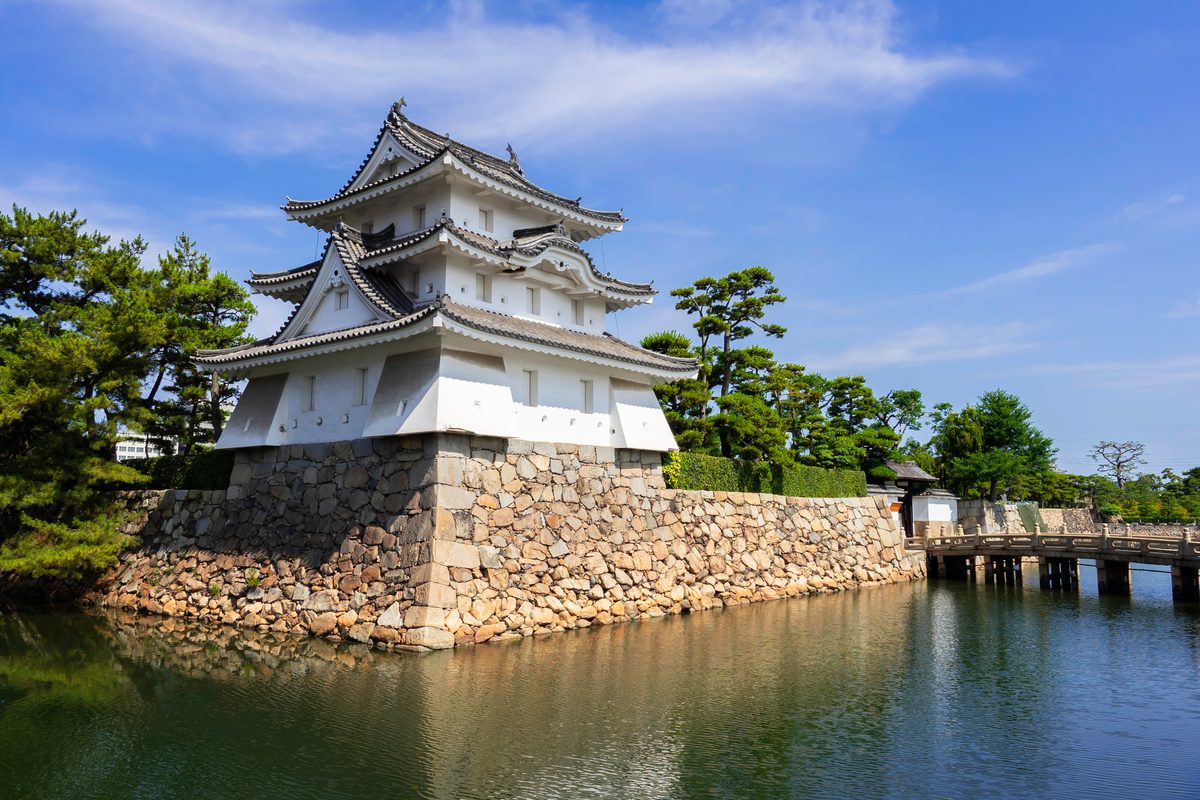
Kagawa: Udon, Art Islands, and the Most Climbed Stairs in Shikoku
11 min read
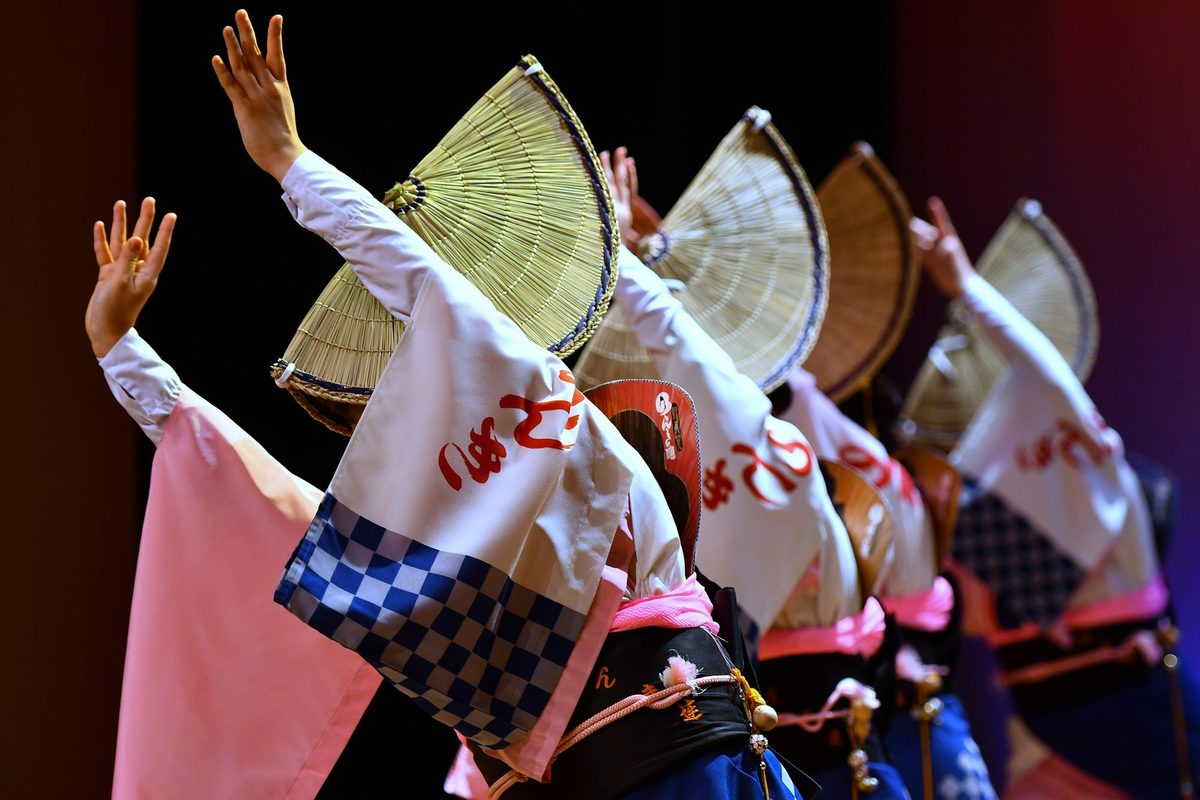
Tokushima: Whirlpools, the Valley That Time Missed, and Japan's Loudest Dance
11 min read
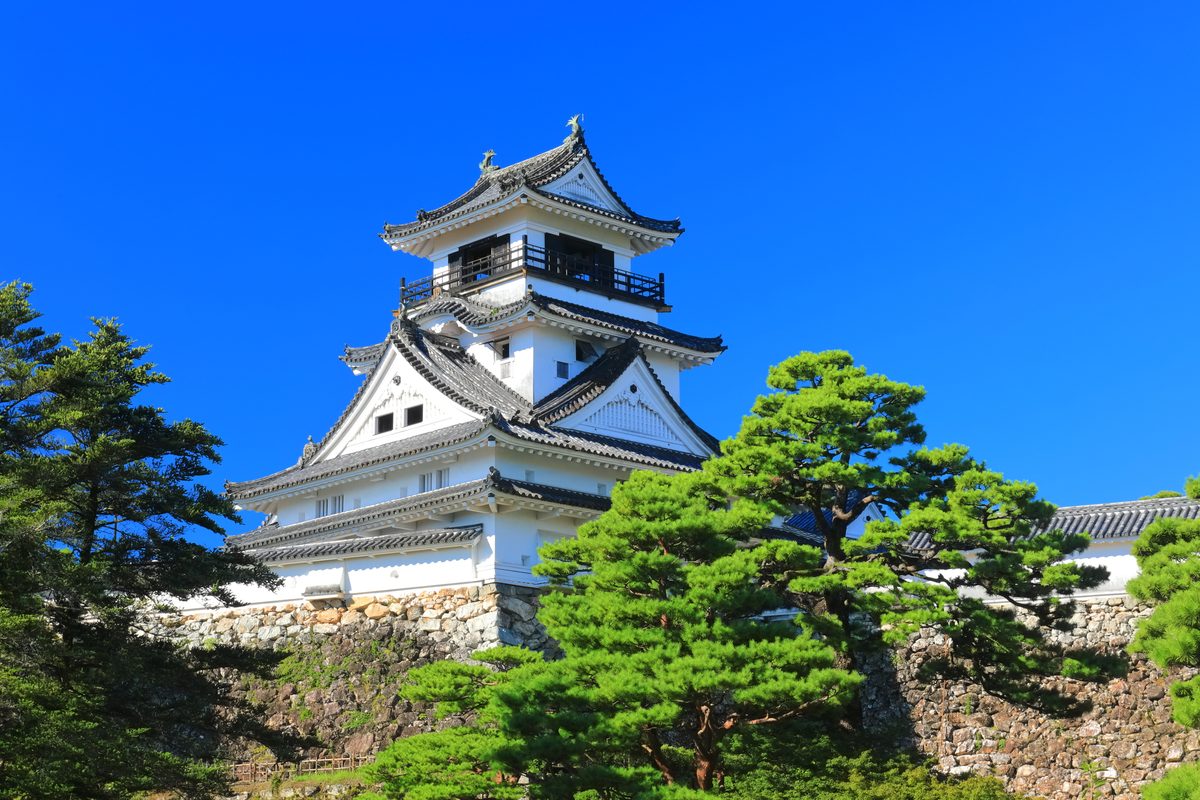
Kochi: The Wild Coast That Japan Forgot to Tame
12 min read
Ehime: Islands, Castles, and the Road That Goes Between
13 min read
Fukushima: Three Regions, One Prefecture, No Simple Story
12 min read
Akita: Snow Country, Rice Country, and Monsters on New Year's Eve
12 min read
Yamagata: Cherries, Sacred Mountains, and Snow That Eats the Trees
12 min read
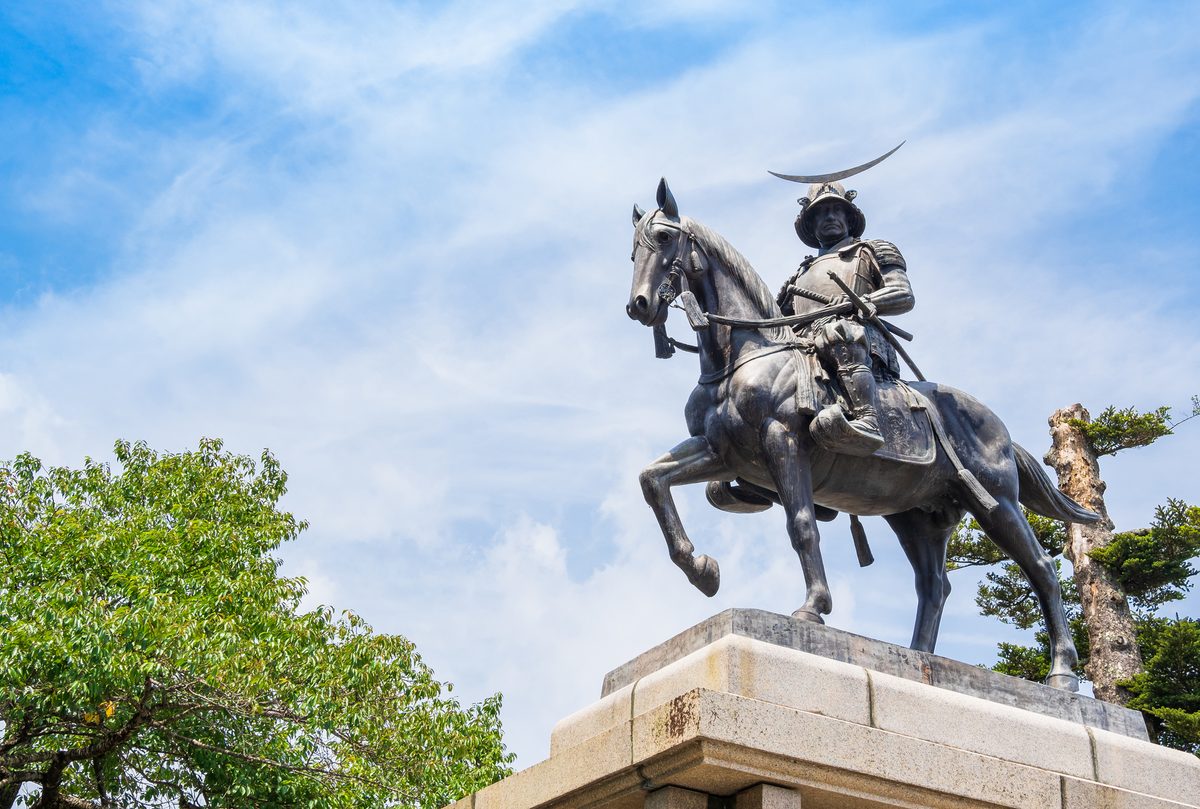
Miyagi: The Coast, the Castle, and Sendai Between Them
11 min read
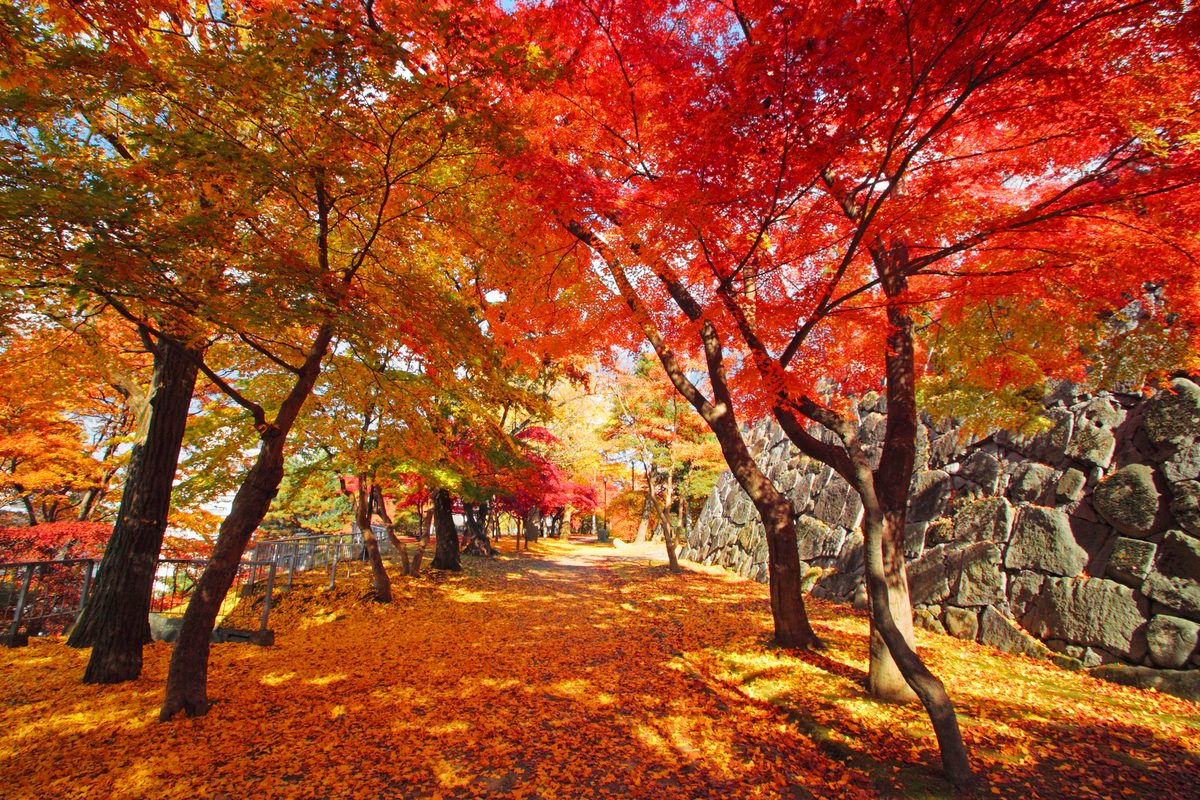
Iwate: Where the Mountains Lean Against the Pacific
12 min read
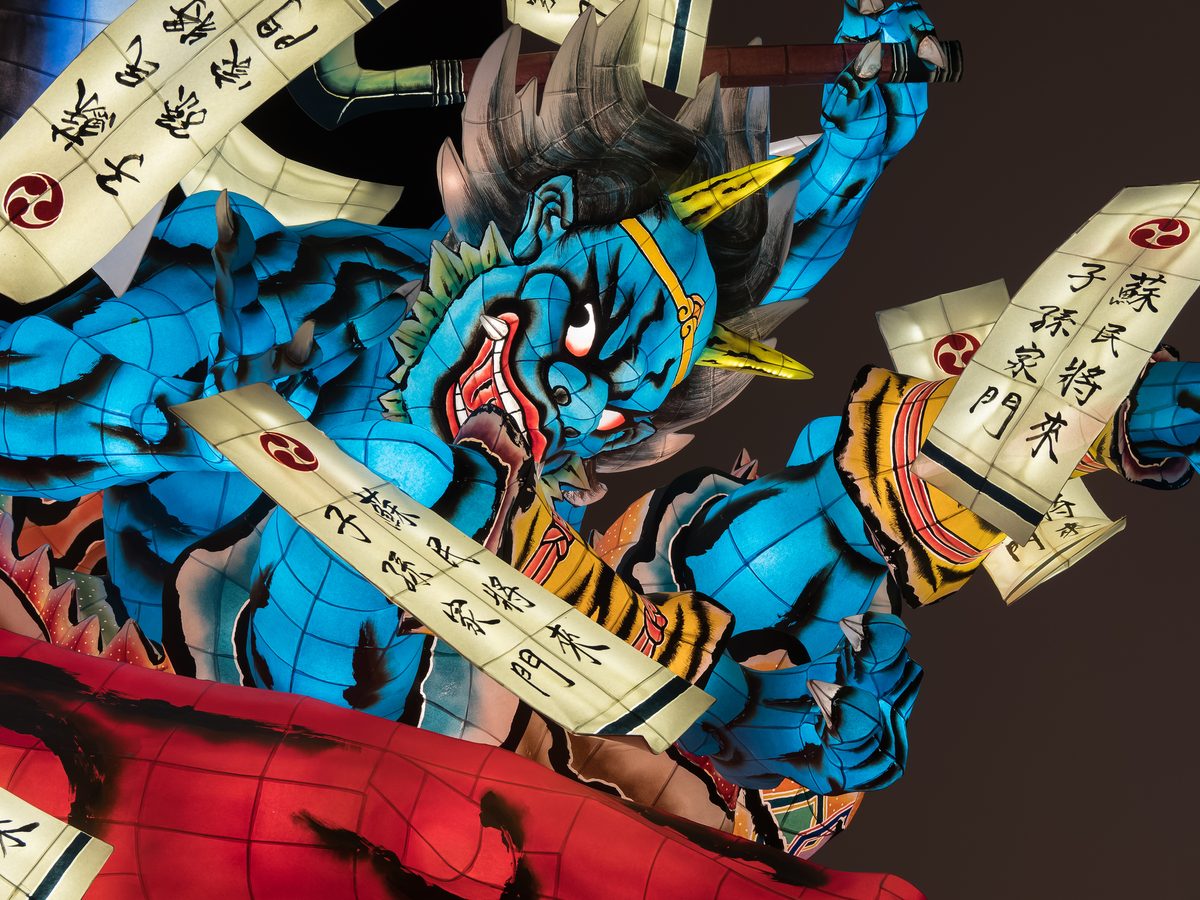
Aomori: Where Winter Invented Its Own Festival
12 min read
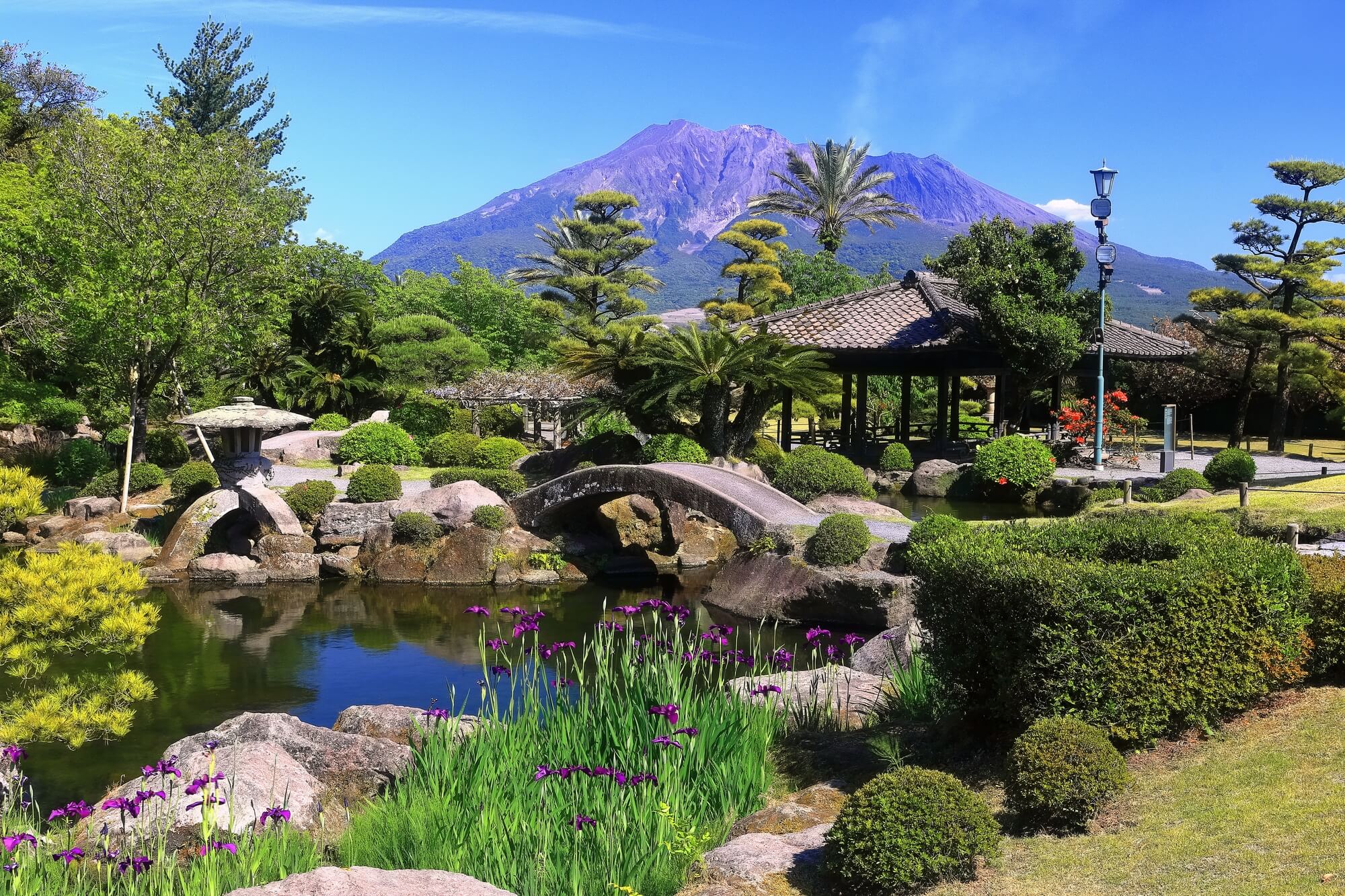
Kagoshima: Where the Mainland Finally Runs Out of Land
12 min read
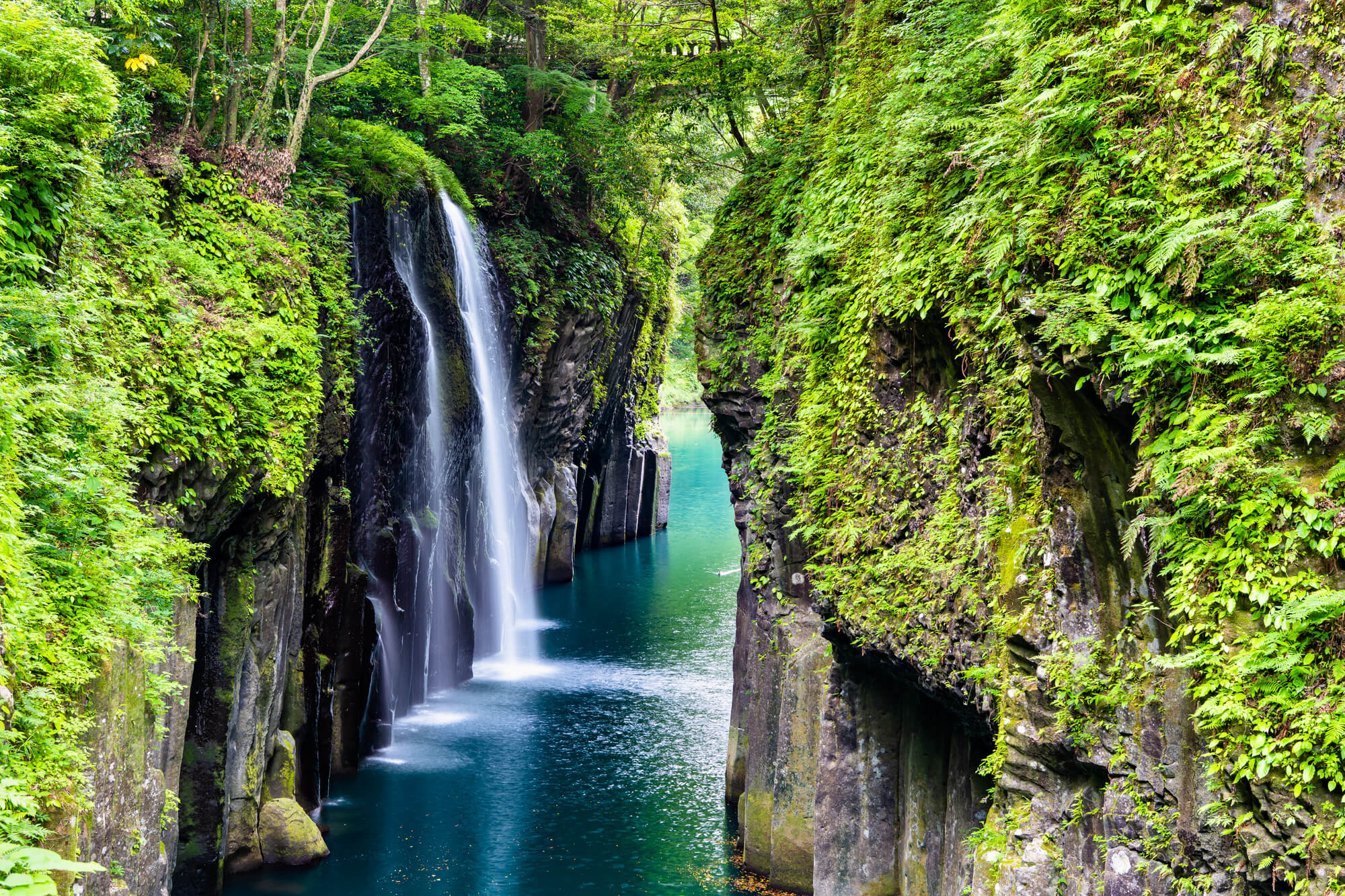
Miyazaki: Where the Sun God Hid and the Horses Run Wild
11 min read
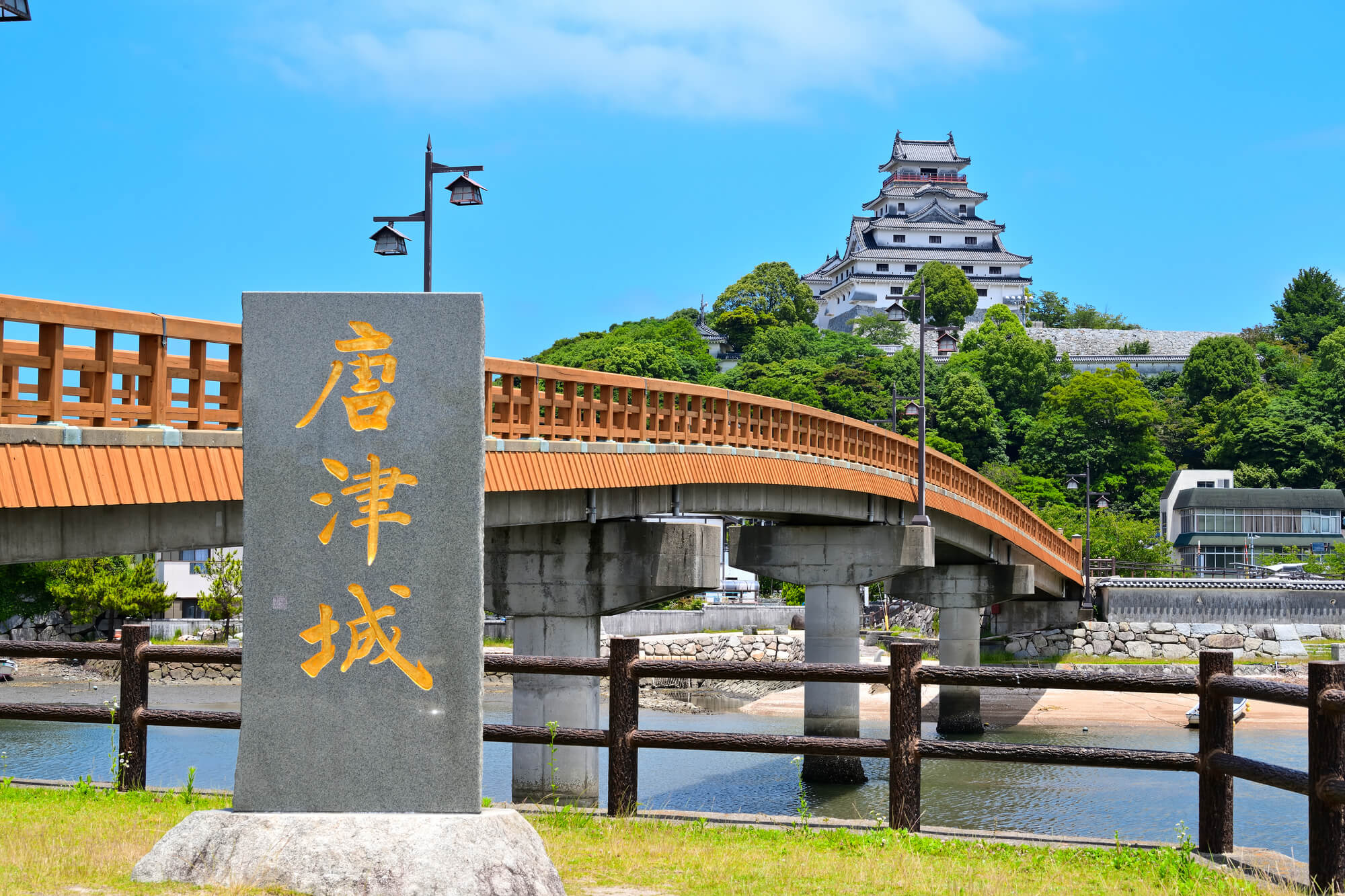
Saga: Older Than You Think, Quieter Than Most
11 min read
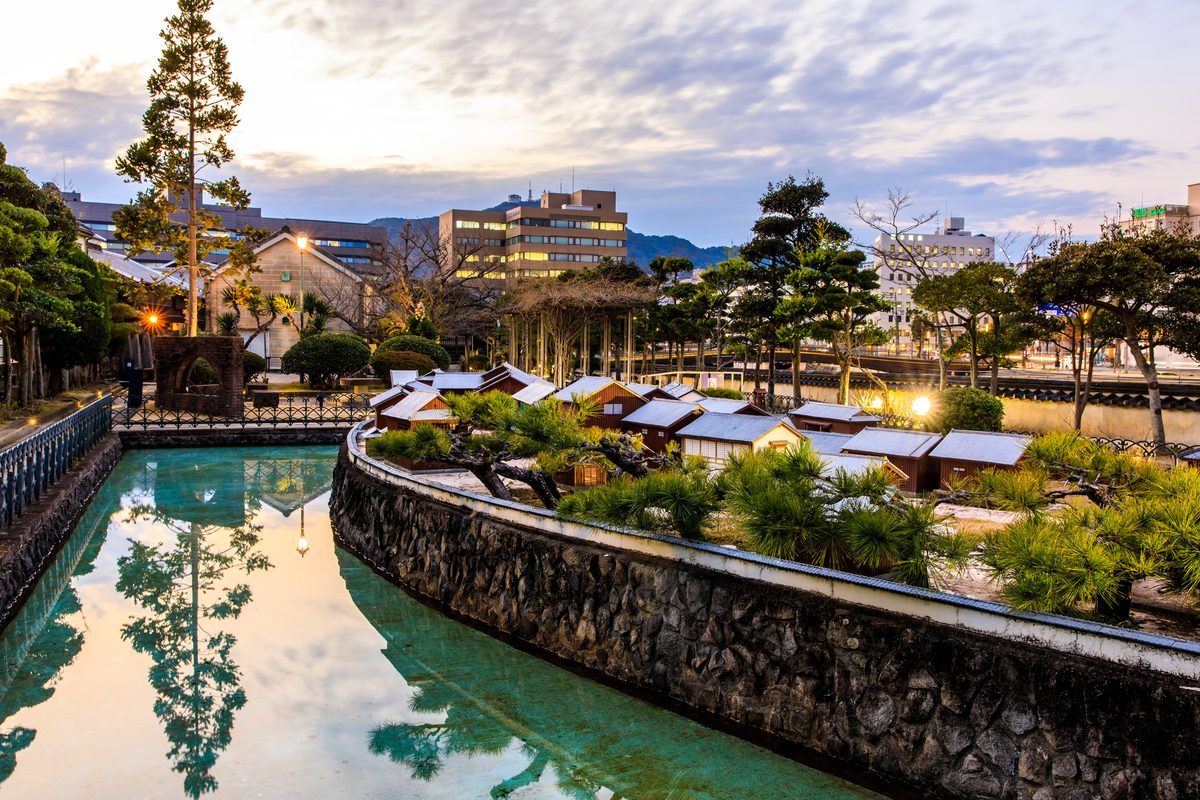
Nagasaki: Where Every Century Left Something Behind
13 min read
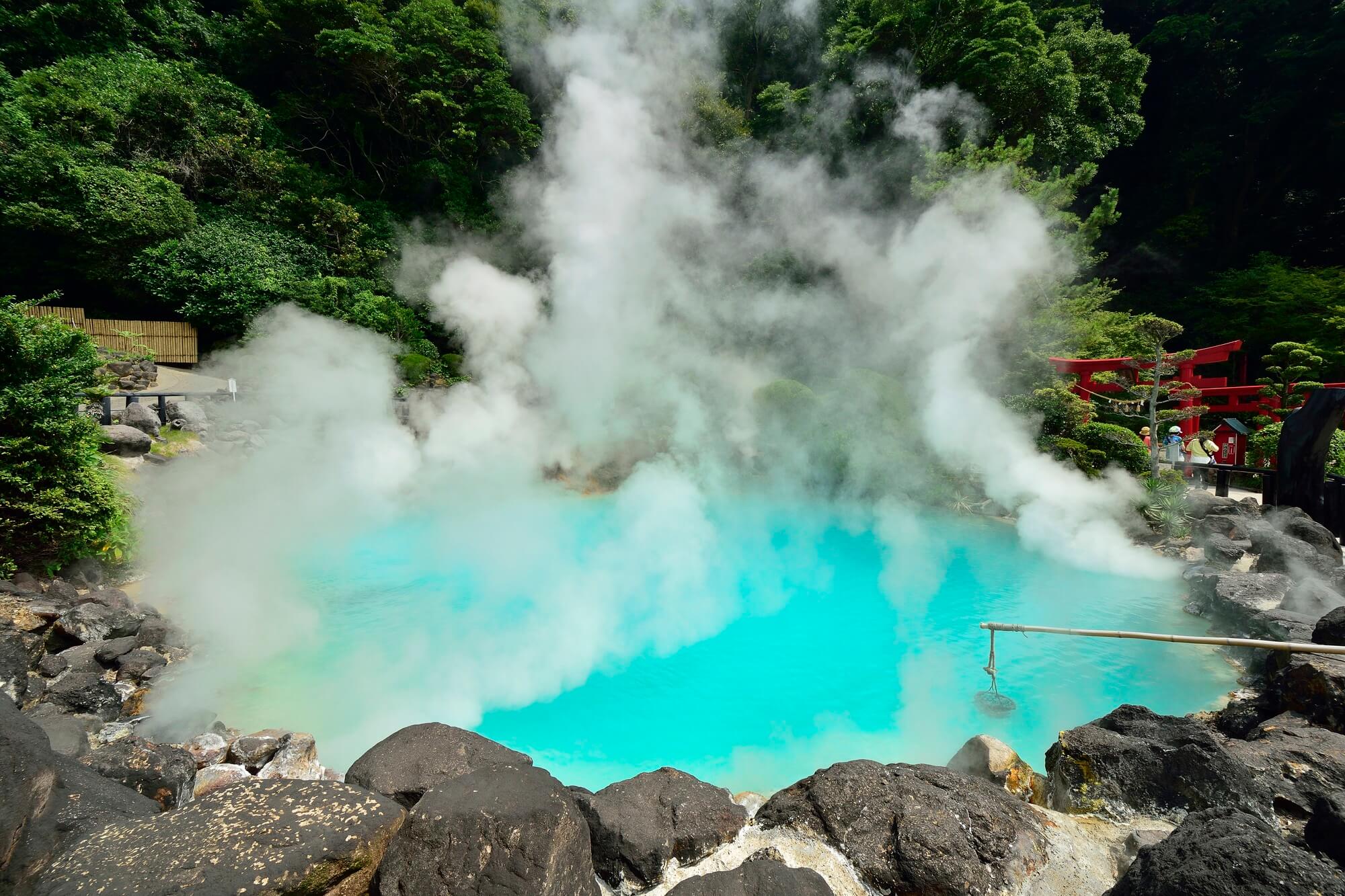
Oita: Where the Earth Still Boils
12 min read
Hokkaido Travel Guide: Ten Places Beyond Sapporo
16 min read